


What is ThermiVa?
ThermiVa is a non-surgical treatment that uses temperature-controlled radiofrequency energy to warm the tissue of the vaginal canal and the labia from the surface, without cutting it. The warmth prompts the tissue to build new collagen and improves its elasticity and tone over the weeks that follow, inside the canal and outside on the labia minora and labia majora: a handpiece held at a set, comfortable temperature, a series of sessions, and a change that arrives gradually rather than on the day.
At Dr. Cat Plastic Surgery, ThermiVa is the practice's non-surgical vaginal rejuvenation treatment: done in the office, with no anesthesia and no downtime. Laxity that needs surgical correction is treated with a perineoplasty, and because both are performed by the same surgeon, the advice at your appointment is not shaped by which one is on offer.
What ThermiVa treats
Childbearing, hormone changes and aging change the labia and the vaginal tissues, and Dr. Cat describes the changes ThermiVa treatment is used for:
- Vaginal laxity: a canal and an opening that feel looser after childbirth or with age
- Stress urinary incontinence: the small leaks that come with a cough, a laugh, a jump or a run
- Dryness: loss of natural lubrication
- Sensation: a decrease in erotic sensation; the treatment increases blood flow to the tissue
- The labia majora: loss of tone, and outer skin that has become baggy or crepey
- Appearance: the skin of the labia sits tighter, though the amount of tissue does not change; labia minora that hang need a labiaplasty, not heat
It is mainly for women who have noticed these changes after natural childbirth or with age, and Dr. Cat notes that many younger women have the treatment as well.
Non-surgical vaginal rejuvenation: what ThermiVa can and cannot do
Non-surgical vaginal rejuvenation means improving the tone, moisture and appearance of the vaginal tissue without an operation, and ThermiVa is the vaginal tightening treatment the practice uses for it. Its limit is simple: heat tightens and conditions tissue that is there. It does not remove tissue, and it does not repair structures that were torn or cut.
- Labia minora that hang past the outer lips, chafe or show in clothing are a matter of how much tissue is present, and no heat device shrinks them; that is a labiaplasty, which Dr. Cat performs with her own technique, and ThermiVa can follow it once the labia have healed.
- A perineum that healed short or scarred after a tear or an episiotomy, an opening that gapes at rest, or a gap between separated muscles is a structural change, and the repair is a perineoplasty, surgery Dr. Cat performs on its own or together with a labiaplasty.
- Vaginal prolapse is not treated with ThermiVa, and a patient with any degree of prolapse is not a candidate for it.
What ThermiVa does well is the middle ground: tissue that is intact but less toned, drier or less responsive than it was, and outer labia whose skin has loosened. The examination at your appointment sorts one from the other.
How a ThermiVa session goes
You lie back in the position of a gynecological exam, in a private treatment room on Rodeo Drive. A slim handpiece, the wand that delivers the radiofrequency energy, is moved slowly over the tissue in a gentle massaging motion, first inside the vaginal canal and then over the labia. The device reads the temperature of the tissue continuously and holds it in a set, comfortable range: warm enough to prompt collagen, never hot enough to injure the skin. You feel warmth and gentle pressure, which patients compare to a hot stone massage, and no pain.
A ThermiVa session lasts 30 to 45 minutes. There is no anesthesia of any kind, no numbing and no injection, so you drive yourself home or back to work. The skin may look slightly pink and feel warm to the touch for several hours.
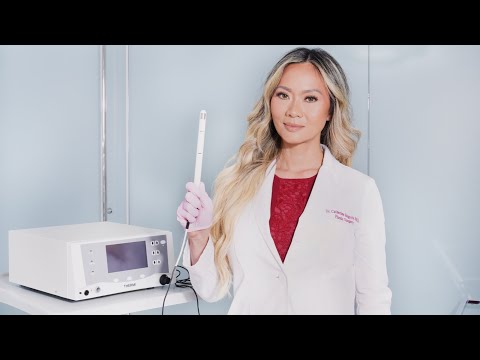 ThermiVa at Dr. Cat Plastic Surgery
Before your ThermiVa treatment: the week before and the day of
ThermiVa asks little of you; the few rules keep the treatment safe and get the most from the energy.
Screening first
Before the first session you answer a set of screening questions, sign the consent forms and receive the practice's pre- and post-treatment instructions. The screening matters because ThermiVa is not right for everyone. You must have had a normal pap smear within the last two years: an abnormal result can point to conditions that radiofrequency energy could aggravate, so tell the team if you have had one. Recent vaginal surgery, any degree of vaginal prolapse, a history of cancer in the area or a current sexually transmitted infection means waiting until the issue is resolved; pregnancy, the possibility of pregnancy and breastfeeding mean waiting until after the birth and after weaning.
Hydration, hair removal and your cycle
- Water: radiofrequency works best on well-hydrated tissue, so drink an extra four to six glasses of water the day before, and empty your bladder just before the session.
- Hair removal: the treatment area should be free of hair. Shave completely the day before; waxing or laser hair removal is done five to seven days before, so the skin is not irritated on the day.
- Your period: a light flow does not stop the session; a moderate to heavy flow does, so reschedule for when it has ended.
ThermiVa results: when they show and how long they last
Most patients notice a change after the first session, and the complete result comes with two to three sessions, because collagen is built over weeks rather than on the day. Dr. Cat's plan is three initial sessions spaced 4 to 6 weeks apart, which gives the tissue time to produce collagen and begin to tighten between visits; the tightening from each session keeps developing for a month or two afterwards.
The result lasts several months to a year. The collagen is your own and it fades gradually as the tissue keeps aging, so a maintenance session every three to six months keeps it. Results vary from patient to patient.
ThermiVa before and after: what changes over the series
ThermiVa before and after photographs show the outside: the labia majora smoother and less baggy, the skin firmer, the opening sitting tighter, after two or three sessions. The cases in our vaginal rejuvenation before and after gallery are ThermiVa patients. Where a patient also had a labiaplasty, the change in the labia minora in those photographs is the surgery, and the tightening of the skin around it is the heat; read the note under each case.
What a photograph cannot show is most of what patients come for: lubrication restored, more sensation, fewer leaks when they run or laugh. Those are reported rather than photographed, and results vary. At your appointment you are shown photographs matched to your anatomy, and patient reviews of the practice are on Google, collected on our reviews page.
Your ThermiVa timeline, from the first visit to maintenance
There is no recovery to plan around; what the calendar holds is the series.
- The consultation and examYour concerns, your history and the screening questions, then the examination that tells you whether ThermiVa, a labiaplasty, a perineoplasty or a combination fits. You leave with the plan and the price.
- Session oneWell hydrated, hair-free and with an empty bladder: 30 to 45 minutes of warmth, then you drive yourself home or back to work. Most patients notice a change after this first session.
- The same day and the days afterNo downtime: work, exercise and intercourse the same day; no hot baths or saunas for a day or two.
- Session two, 4 to 6 weeks laterThe tissue has had time to build collagen and begin to tighten; the second session adds to it.
- Session three, 4 to 6 weeks after thatThe last session of the initial series; most patients reach their full result with it.
- The following weeksThe tightening keeps developing for a month or two as the new collagen matures.
- Maintenance, every three to six monthsA single session when you notice the change fading, every three to six months.
Who is a good candidate for ThermiVa?
The right candidate has tissue that is intact but has loosened, dried or lost sensation, and wants it improved without an operation.
You may be a good candidate if
- Your vagina feels looser since childbirth or with age, and intercourse gives less sensation than it did
- You leak small amounts of urine when you cough, laugh, jump or run
- Dryness or less natural lubrication bothers you
- The skin of your labia majora has become loose, baggy or crepey
- You have had a labiaplasty, are fully healed, and want the remaining tissue tightened
Not yet, or a different plan, if
- You are pregnant, could be pregnant, or are breastfeeding: the treatment waits until after the birth and after weaning
- Your last pap smear was abnormal, or you have a history of cancer in the area
- You have had vaginal surgery recently, including a labiaplasty within the last month
- You have any degree of vaginal prolapse, a skin condition in the area that heat could irritate, or a current sexually transmitted infection
- Your complaint is labia minora that hang or chafe, or a perineum torn in childbirth: those are surgery, not heat
Risks and safety
ThermiVa is a low-risk treatment: no incisions, no sutures, no scars and no anesthesia. In patients without vaginal abnormalities, which is what the screening is for, the things that can happen are mild and short-lived.
What can happen
- Pinkness, warmth or mild swelling of the treated skin for several hours
- Mild discomfort during or after the session, usually settled with a cool compress
- A temporary change in discharge in the days after a session
- Irritation in patients with prolapse or an underlying skin condition, which is why they are screened out
- A burn: a risk with any device that heats tissue, and rare with a temperature-controlled one
How the practice keeps it safe
- Screening before the first session: pap smear history, recent surgery, prolapse, infection, pregnancy and breastfeeding
- A device that reads the tissue temperature continuously and holds it in a set range, so the tissue is warmed, not overheated
- The handpiece kept moving in a slow massaging motion rather than held on one spot
- Sessions 4 to 6 weeks apart, written pre- and post-treatment instructions, and a team you can call
How much does ThermiVa cost in Beverly Hills?
ThermiVa costs $3,000 per treatment and $8,500 for a series of three at Dr. Cat Plastic Surgery, the prices on the practice's published non-surgical price list. A treatment is one 30 to 45 minute session, inside and out. The series of three is the plan Dr. Cat recommends for a full result; a maintenance session later is booked as a single treatment.
ThermiVa is cosmetic and not covered by insurance; Dr. Cat's office does not bill insurance. To pay over time, the practice partners with Cherry, its primary financing partner, and also accepts CareCredit and Alphaeon Credit; see financing and payment plans. If a labiaplasty or a perineoplasty turns out to be the answer, those carry surgeon's fees quoted separately at your consultation.
Labiaplasty and ThermiVa together
Many women have both: a labiaplasty for labia minora that hang or chafe, and ThermiVa afterwards for the tone of the tissue around them. The order is fixed by healing. A labiaplasty removes and reshapes the labia minora; about one month later, once you have healed completely, ThermiVa tightens the remaining tissue and the skin of the labia majora, which the surgery does not address. One labiaplasty case in our gallery had a single ThermiVa session one month after surgery for bagginess of the labia majora. Our post on labiaplasty and ThermiVa together sets the two side by side.
Your ThermiVa appointment
It starts with a free 15-minute discovery call with our Patient Concierge, who answers your first questions and books your appointment in the office at 421 N. Rodeo Drive in Beverly Hills, a short drive from anywhere in Los Angeles. At the visit you go through your concerns and your history, answer the screening questions and are examined, so that you are told whether ThermiVa, a labiaplasty, a perineoplasty or a combination is the answer, and the first session is scheduled from there. Out-of-town patients can have the consultation by private video through OnPatient, the HIPAA-secure patient portal; the sessions themselves are in person on Rodeo Drive.


