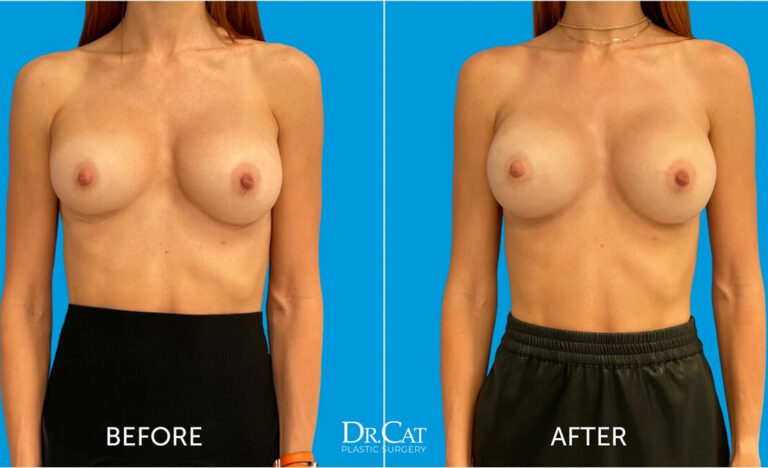

At Dr. Cat Plastic Surgery, our expertise extends beyond creating beautiful transformations, we specialize in all aspects of breast implant care, including the lifespan and maintenance of your new assets.
Join us as we share everything you need to know about maintenance and care for breast implants, from longevity and considerations to breast implant warranty, cost, and more.
Breast implants aren’t like a carton of milk with a definitive expiration date, but they’re not made to last forever, either. Now, don’t get us wrong, they’re certainly designed to be durable. However, they’re just not immune to wear and tear over time.
The good news? Many breast implant manufacturers offer warranty coverage for a certain period, which includes implant replacement in many cases (but more on that in a bit).
There are two main types of breast implants: saline and silicone. The FDA notes that breast implants are not lifetime devices. Here is how the two types are handled:
When it comes to the duration between breast implant replacements, various factors come into play, let’s explore these a little closer.
How Long Do Breast Implants Last on Average?
Modern breast implants are designed as long-term devices, not lifetime devices. Dr. Cat recommends exchanging silicone implants about every 8 to 10 years to reduce the chance of a leak; saline implants announce a leak by deflating and are replaced then. Today’s cohesive silicone gel implants and improved saline shells have significantly lower rupture rates than older generations, and manufacturer data shows the majority remain intact at the 10-year mark.
That said, the longer an implant is in place, the higher the cumulative chance of rupture or capsular changes. We tell patients to think of implants the way you might think of any medical device: durable, reliable, but worth monitoring over time.
Factors that influence longevity include implant type, surgical technique, placement (submuscular vs. subglandular), trauma, pregnancy, weight changes, and individual tissue response. This is why Dr. Cat recommends exchanging silicone implants on a schedule, about every 8 to 10 years, rather than waiting for a leak.
Factors Determining Breast Implant Replacement
Apart from your implant type, several other factors could influence the lifespan of breast implants and the need for replacement, such as:
As you can see, your breast implant replacement path can be as distinctive as you are.
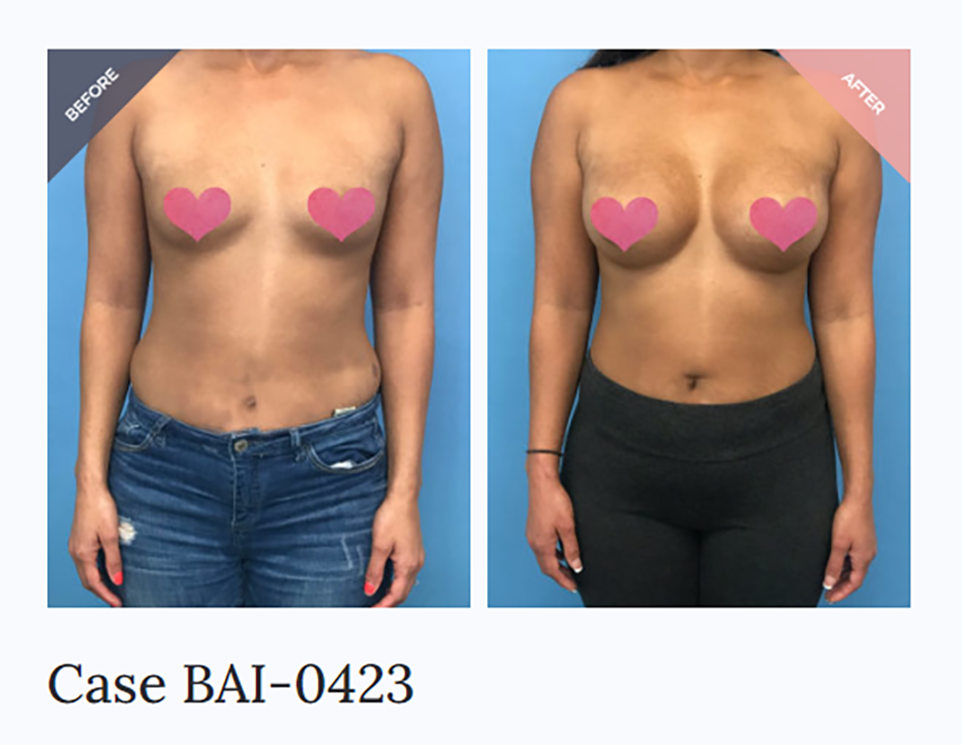
Silicone vs. Saline: Longevity and Rupture Differences
Both silicone and saline implants are FDA-approved and built to last, but they behave differently when damaged. Saline implants, filled with sterile salt water, deflate visibly when the shell tears. The breast appears smaller within days, making rupture easy to detect. The saline is harmlessly absorbed by the body.
Silicone implants contain a cohesive gel that holds its shape even if the shell is compromised. This is why silicone ruptures are often called silent ruptures, since they may produce no visible change. According to the FDA, silicone gel implant patients should receive MRI or high-resolution ultrasound screening starting 5 to 6 years after surgery and every 2 to 3 years thereafter to detect silent ruptures.
Cohesive gel implants, sometimes called gummy bear implants, have the lowest reported rupture rates and tend to maintain shape longest. Saline tends to ripple more in thin tissue, while silicone offers a softer, more natural feel. Choice of implant influences both aesthetics and the type of monitoring you’ll follow long-term.
Common Reasons Patients Choose Implant Replacement
Clients often ask us why someone would replace implants that still feel fine. The reasons are both medical and personal. Medical reasons include rupture or deflation, capsular contracture (when scar tissue tightens around the implant), implant malposition, rippling that becomes visible, and rare but serious concerns like BIA-ALCL or breast implant illness symptoms.
Personal reasons are equally common. Many women want to change size, switch from saline to silicone, or update older round implants to a more anatomical shape. Pregnancy, breastfeeding, weight loss, and natural aging shift breast tissue over time, sometimes prompting a lift combined with implant exchange. Some patients simply want their implants removed entirely, a procedure known as explantation.
In our practice, lifestyle and aesthetic goals drive roughly half of revision consultations, while the other half are tied to a specific medical finding. Whatever the reason, the timing is planned with your surgeon; for silicone implants Dr. Cat recommends an exchange about every 8 to 10 years.
How Breast Implant Replacement Works
Breast implant replacement is a surgical procedure that involves removing your existing breast implants and replacing them with new ones.
After receiving general and local anesthesia, surgeons like Dr. Cat starts with a precisely calculated incision overlapping your previous one to prevent additional scarring. She then gently removes your old implants and replaces them with your carefully chosen new ones.
Throughout the procedure, the surgeon evaluates your breast tissue and chest wall to determine if any adjustments or modifications are necessary. Dr. Cat meticulously ensures a nearly natural outcome and aesthetic improvement.
Depending on the complexity of your procedure, breast implant replacement typically takes around one to three hours.
As for the cost of breast implant replacement, Dr. Cat's surgeon's fee for a simple implant removal and replacement is $19,500 to $21,500, and for a revision with capsule work $60,000 to $75,500, depending on whether a lift is added; the implants, whichever type you choose, the operating room and anesthesia are quoted at the consultation. Surgeon's fees are typical ranges: a more complex case can cost more, and your fee is set at your consultation and is final only in your written quote. Manufacturer warranties may cover the cost of new implants in cases of confirmed rupture.
More importantly, we value your peace of mind at Dr. Cat Plastic Surgery. That’s why we ensure every patient has a comprehensive understanding of their breast implant warranty and the associated costs of future replacements.
Curious to know when it might be time for an upgrade?
Signs of Breast Implant Damage or Rupture
Understanding the symptoms of breast implant rupture or damage can help you determine when it’s time for a replacement.
Keep an eye out for these potential warning signs:
Your proactive approach helps ensure the longevity of your breast implants and your peace of mind.
On that note, can you do anything to prolong the lifespan of breast implants?
Maintenance and Care for Breast Implants
Caring for your breast implants is an essential aspect of maintaining their health and aesthetics.
Here are some best practices to help maintain your breast augmentation results so you enjoy your new curves for years to come:
Learning how to care for breast implants can make all the difference in extending their lifespan and safeguarding your silhouette. That said, even with perfect care, the need for eventual replacement is a possibility for most patients.
In addition to your commitment to caring for your breasts, the expertise and skill of your surgeon can truly be the defining factor.
Embrace Lifelong Confidence with Dr. Cat Plastic Surgery
Breast implants may have an expiration date, but your confidence is timeless.
One common question we get from patients is whether implants must be swapped out at a specific year mark. The short answer: for silicone implants, Dr. Cat recommends an exchange about every 8 to 10 years to reduce the chance of a leak; saline implants announce a leak by deflating and are replaced then. Some patients choose revision sooner for aesthetic or medical reasons. Routine self-monitoring and periodic imaging still matter between exchanges.
At Dr. Cat Plastic Surgery, we understand breast implant replacement is a natural part of your transformative journey. But that doesn’t mean it can’t be seamless and empowering.
Dr. Cat's years of experience and legion of happy patients make her a natural choice for your breast transformation journey. With her skill and artistry at the helm, you can rest assured that you're in capable hands as you embark on the path to your desired breast goals.
Your self-love deserves to stand the test of time. Why let the lifespan of your breast implants hinder that journey?