

What Bra Strap Indentations Are and Why They Happen
A bra is built so that the band carries most of the weight of the breasts and the straps only steady the cups. When the band is too loose, the straps get tightened to compensate, and two narrow strips of elastic end up holding the breasts up from the shoulders for twelve hours a day. The pressure sits on soft tissue over the collarbone, and over months and years it compresses the fat under the skin into a groove that outlasts the bra. The heavier the breasts, the more weight goes to the straps and the deeper the groove: shoulder grooving is one of the classic symptoms of breasts that are too large for the frame, alongside neck and back pain, poor posture and rashes in the fold beneath the breast.
Other things deepen the grooves: thin or unpadded straps, a bra worn a size too small, breasts that have dropped and hang further from the chest wall, rounded shoulders that let the straps slide toward the neck, long hours in the same bra, and skin that has lost elasticity with age. When the straps also compress the nerves and vessels that pass between the collarbone and the first rib, the aching, numbness or tingling down the arm that results is sometimes called bra strap syndrome.

Wide straps spread the weight; narrow straps concentrate it on a strip of soft tissue over the collarbone.
Next step: if the grooves come with neck or back pain and breasts that feel too heavy for your frame, read about a breast reduction in Beverly Hills with Dr. Cat, or book a free discovery call to talk through your options.
Are Bra Strap Indentations Permanent?
Only while the weight stays. A red mark from a single day fades within a few hours of unhooking the bra, and a shallow groove after a few months of a badly fitting bra rebounds within weeks once the fit is corrected. A deep groove that is visible with the bra off, and still there in the morning, has been pressed into the fat and skin over years, and it softens over weeks to months once the pressure stops; after decades of heavy wear a faint depression can remain because the skin over it has stretched and lost some elasticity. The groove is not the problem, it is the record of one: as long as the straps carry the weight, the groove stays, and no cream, massage or exercise removes it while the load is still there.
How to Get Rid of Bra Strap Marks on Shoulders
Everything that works takes weight off the straps. In order of how much difference it makes:
Get the band right
Measure snugly under the bust for the band size and around the fullest part for the cup; the difference between the two in inches gives the cup letter, one letter per inch. Most women wear a band that is too loose and a cup that is too small, which is the exact combination that hands the weight to the straps. A band that fits sits level around the body, does not ride up at the back, and holds the breasts without the straps. Re-measure every six months and after any change in weight, a pregnancy or breastfeeding.
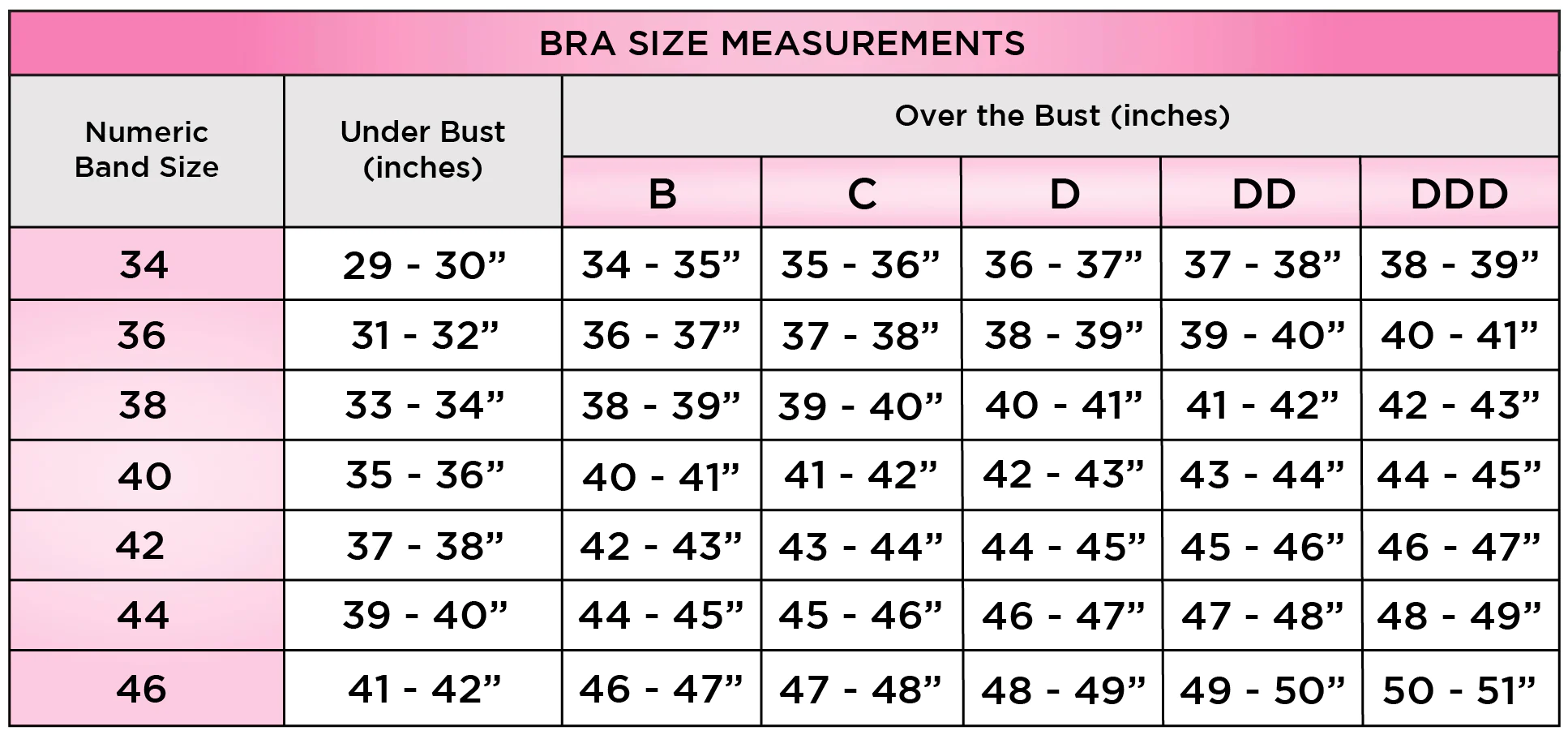
Bra size chart in inches. Measure under the bust for the band and over the fullest part for the cup; the band should carry the weight, not the straps.
Choose straps that spread the weight
Wider straps, padded straps, and styles that cross at the back or run as a racerback spread the same weight over more skin and move it off the tender spot near the neck. A full-coverage cup with a wide band and side support holds the breast closer to the chest, so less of it hangs from the straps. Alternate styles from day to day so the pressure does not land on the same line every day, loosen the straps once the band is doing its job, and take the bra off at home. For exercise, a high-support sports bra with a wide band beats tightening the straps of an everyday bra.
Fix the posture the straps exploit
Rounded shoulders and a head carried forward tilt the shoulders so the straps slide toward the neck and dig in. Sitting and standing with the ears over the shoulders and the shoulder blades drawn gently down and back flattens the strap against the shoulder and shares the load with the band. Heavy breasts pull the posture forward in the first place, which is why the grooves, the neck pain and the rounded back tend to arrive together.
Care for the skin
Moisturize the shoulders daily and keep the skin protected from the sun so it keeps its elasticity; skin that has lost collagen holds a groove longer. Nothing applied to the skin fills a groove, and filler, massage and laser treatments do not treat the cause, so the practice does not recommend them for shoulder grooves.
Exercises to Get Rid of Bra Strap Dents: What They Can and Cannot Do
No exercise lifts a groove out of the shoulder, because the groove is compressed fat and skin, not a weak muscle. What exercise does is change how the straps sit and how the weight is carried. Strengthening the upper back pulls the shoulders back and down, so the straps lie flat instead of sliding into the neck, and it eases the neck and shoulder ache that heavy breasts cause. A few minutes, three or four times a week, is enough:
- Rows with a band or dumbbells, drawing the shoulder blades together
- Band pull-aparts and face pulls for the rear shoulders
- Reverse flys and shoulder-blade squeezes, held for five seconds
- Chin tucks for a forward head, and a doorway chest stretch for tight chest muscles
Weight loss can reduce breasts that are mostly fat, and our post on how to reduce breast size without surgery explains what diet and exercise can do. Dense, glandular breasts do not shrink with exercise, and chest exercises that build the pectoral muscle can make large breasts sit more prominently, not smaller. If you have done all of this and the grooves and the pain are still there, the weight itself is the problem.
When a Breast Reduction Is the Fix
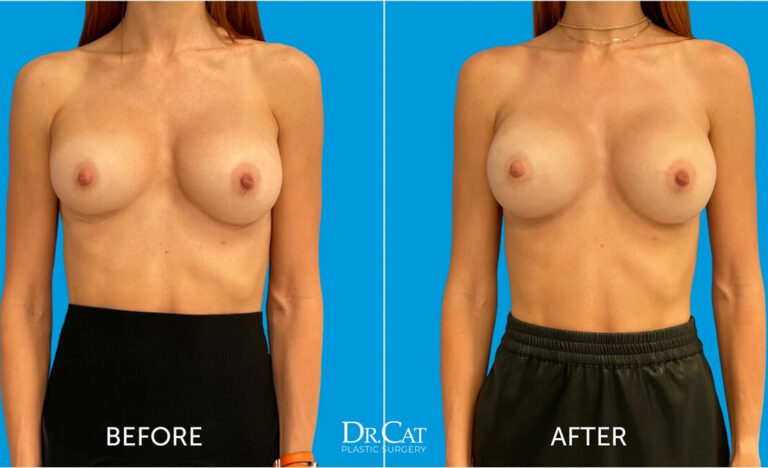
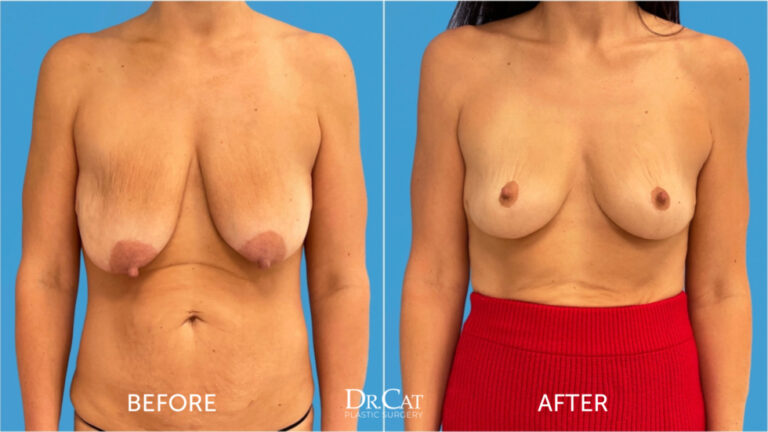
Shoulder grooving from bra straps is one of the symptoms a breast reduction is designed to relieve, together with back, neck and shoulder pain, poor posture, rashes under the breasts, and difficulty exercising, sleeping and breathing freely; our posts on the medical benefits of breast reduction and on breathing problems from large breasts cover them. The operation removes the weight that made the grooves: Dr. Cat removes the excess breast tissue, fat and skin, reshapes the tissue that remains into a smaller, rounder breast, moves the nipple and areola up to the center of the new breast on their own blood supply, and reduces an areola that has stretched. Every breast reduction is therefore also a lift. Any size can qualify if the size causes you discomfort, and she measures each side and removes a different amount from each so the breasts finish level.
Dr. Cat is a board-certified plastic surgeon, trained in both head and neck surgery and plastic and reconstructive surgery, Harvard-educated and UCLA trained, and she has had breast surgery herself. Breast reduction is one of her favorite operations to perform. The surgery takes about two to four hours under general anesthesia with a board-certified physician anesthesiologist, in her QUAD A accredited surgery center on Rodeo Drive, with one major surgery scheduled that day and nothing else; she performs every step herself, from the markings to the last suture. You wake in a support bra measured for you, walk within a few hours, and spend the first night in a plastic surgery aftercare center, where nurses check the drains and see you through the night. Most patients have soreness rather than pain and manage with Tylenol. Drains come out at one week, the arms stay below shoulder height for two weeks, silicone scar strips start at two weeks, vigorous exercise resumes at one month, and the support bra comes off after at least two months. The weight is gone from the day of surgery; the grooves soften over the months that follow, as the shoulders stop carrying it. Our post on lost feeling in the nipples after breast reduction explains the sensation changes, which usually settle over the first months, and the practice's breast reduction before and after gallery shows her results.
Reduction or lift?
A breast that is low but a size you like needs a breast lift, which raises and reshapes it without removing volume. A breast that is heavy as well as low needs a reduction, because a lift alone leaves the weight in place: the straps keep carrying it, the grooves stay, and the sag returns under its own weight. Dr. Cat never performs breast surgery on the same day as a tummy tuck; the two are staged.
What a breast reduction costs, and insurance
Dr. Cat's surgeon's fee for a breast reduction is $50,000 to $70,000; the operating room and the board-certified physician anesthesiologist are quoted at your consultation, once she has examined you and set the operating time your surgery needs. Surgeon's fees are typical ranges: a more complex case can cost more, and your fee is set at your consultation and is final only in your written quote. Where your fee lands depends on the amount of tissue removed, the pattern and the asymmetry, and the quote is itemized in writing with your support bra and your follow-up visits; our plastic surgery cost guides explain what a quote is made of. Dr. Cat's practice does not accept insurance: a breast reduction with her is self-pay, and the office provides the paperwork to submit a claim to your insurer after surgery, without verifying coverage or billing on your behalf. The practice partners with Cherry, its primary financing partner, and also accepts CareCredit and Alphaeon Credit; see financing and payment plans.
Talk to Dr. Cat About Heavy Breasts and Shoulder Grooves
Start with a free 15-minute discovery call with our Patient Concierge, who answers your first questions and books your consultation. The consultation with Dr. Cat is $500 for a first consultation and $1,500 for a revision consultation, credited in full toward your surgery; out-of-town patients consult by private video through OnPatient, the practice's HIPAA-secure patient portal. Book a free discovery call to get started.