
When Can I Vape After Surgery?
Four to six weeks after surgery at the earliest, six weeks after a BBL, and only once your surgeon has cleared you. The incision seals in about two days and is closed by two weeks, but that is not what the rule protects. Any operation that lifts skin, a tummy tuck, a breast lift, a facelift, or moves fat, a BBL, severs thousands of tiny vessels, and the tissue survives on the ones that regrow in the following weeks. Nicotine constricts those vessels and cuts the oxygen reaching the tissue; a study by the American Association of Nurse Anesthetists found vaping had the same adverse effects on surgical patients as smoking. The six-week mark is when the lifted skin has a stable blood supply again and when transferred fat has grown the capillary network that makes it permanent, which is why Dr. Cat's other six-week rules, the garment, the BBL sitting rule and the return to full exercise, end at the same point.
Waiting longer costs nothing. Scars keep maturing for a year, and Dr. Cat's rules for that year are sunscreen on the scar, a stable weight and no nicotine, so the patients who get the thinnest scars are the ones who never go back.

Next step: if you are planning a tummy tuck, the operation most affected by nicotine, read how Dr. Cat performs a tummy tuck in Beverly Hills, or book a free discovery call and tell us about your vaping so the timeline is set right from the start.
What Nicotine Does to a Flap, an Incision and Transferred Fat
Ordinary surgery makes an incision, repairs what is inside and closes it, and few blood vessels are disturbed. Plastic surgery is different. In a tummy tuck, a breast lift or a facelift the skin and the tissue under it are separated from their base and repositioned, which severs the small vessels that fed them; the repositioned tissue, a flap, then depends on the vessels that remain at its base and on the new ones that grow in. In a BBL, fat is moved from one part of the body to another and arrives with no blood supply at all. Successful healing requires those thousands of tiny vessels to re-establish a blood supply as fast as possible. Nicotine does the opposite: it constricts the vessels, impairs the circulation and starves the flap of oxygen, and the tissue at the far edge of the flap, the part with the least supply, is the first to die.
Tummy Tuck
Dr. Cat lifts the abdominal skin up to the ribs, and the blood supply to that lifted skin runs through the fat beneath it, which is why she never combines a tummy tuck with aggressive liposuction of the same skin. Nicotine attacks the same supply from the inside. The center of the low incision, where the tension is highest and the supply the farthest from its source, is where a smoker's tummy tuck opens or loses skin, and a scar that opened and healed a second time is always wider. She operates on patients who are off nicotine, at a stable weight within 10 to 15 pounds of their goal with a BMI of about 30 or less; the six-week garment and the two-week silicone strips are in our tummy tuck recovery guide, and the effect of nicotine on the line itself in the tummy tuck scar guide.
Breast Lift
In a breast lift the nipple and areola stay attached to the breast tissue and its blood supply and are moved upward on it while the skin around them is rearranged. Loss of blood supply to part of the nipple or areola is rare, and the risk rises sharply in smokers, which is why Dr. Cat lists being a non-smoker among her selection criteria and asks patients who smoke or vape to stop for the period she specifies. A nipple or areola that turns dark after surgery is a same-day call.
Facelift
A facelift lifts the skin of the face and neck off the tissue beneath it as one large flap with a long incision around the ear, and it is the operation with the most published data on nicotine: reviews of the literature report a many-times higher rate of skin necrosis in facelift patients who smoke than in those who do not, with the skin in front of and behind the ear the usual casualty. At the practice, facelifts are performed by our board-certified facial plastic surgeon, and the nicotine rule for his patients is the same.
BBL and Any Fat Transfer
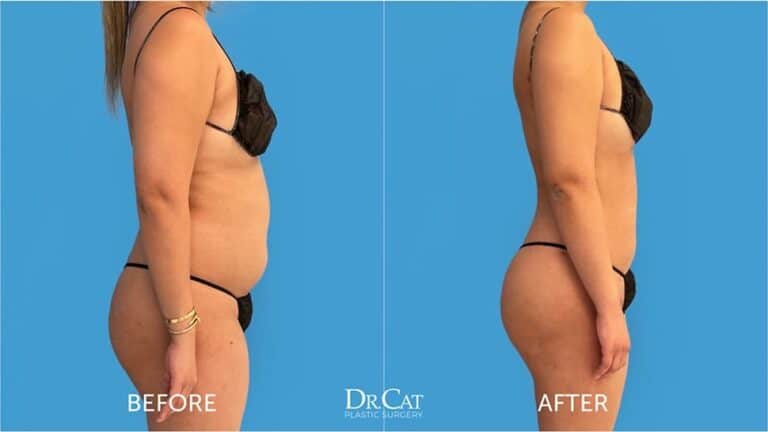
Transferred fat survives its first weeks by soaking up nutrients from the tissue around it, and it becomes permanent only when capillaries grow into the graft. Nicotine closes those capillaries as they form, so fat that would have taken dies and is absorbed, and the result shrinks. In Dr. Cat's experience more than 80 to 90 percent of the fat she transfers survives, and the three things that lower that number after surgery are pressure, nicotine and dieting: six weeks of no sitting, no smoking or vaping, and no crash diet. She requires two months to a year without smoking before a BBL. The sitting rule and the rest of the six weeks are in our BBL recovery guide; the operation is on the Brazilian butt lift page.

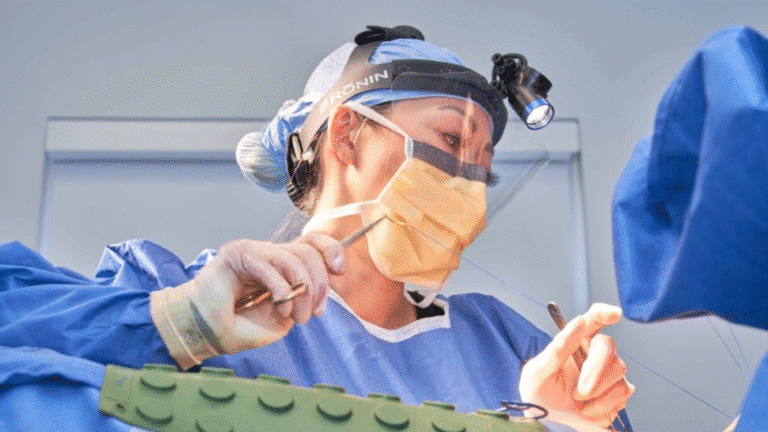
Dr. Cat in the operating room. The blood supply she preserves during surgery is the same supply nicotine narrows afterward.
Vaping After Breast Augmentation
A breast augmentation with implants does not lift a flap, so it is less exposed than a tummy tuck or a lift, but it still has an incision to heal, in the breast crease or around the areola, and a pocket around a foreign body that must stay free of infection. Nicotine slows the healing of the incision and raises the risk of infection, and an infection around an implant is a serious problem. Dr. Cat asks every breast augmentation patient to stop nicotine as she specifies before surgery, and vaping waits until she clears you, at least four to six weeks after, the same point at which every other restriction ends in our breast augmentation recovery guide. When a lift is added, the nipple's blood supply is in play and the breast lift rule above applies.
Nicotine-Free Vapes, Patches, Gum and Pouches
Vaping is not safer than smoking for a surgical patient; it is another vehicle for the same drug. Vaping liquid contains nicotine, propylene glycol, glycerol and flavorings, which can be a proprietary blend of chemicals the maker does not have to disclose. The products patients ask about most:
- Nicotine-free vapes. Not allowed. E-cigarette vapor has been found highly toxic to the cells that line the arteries even when no nicotine was detected, many zero-nicotine liquids test positive for it anyway, and Dr. Cat's pre-operative rule is written to cover every inhalant, because anything that affects your lungs affects how you recover from anesthesia.
- Nicotine patches, gum, lozenges and spray. Not allowed. They deliver the same nicotine as a cigarette, and it is the nicotine, not the smoke, that narrows the vessels. Switching from a vape to a patch before surgery changes nothing for the flap.
- Nicotine pouches. The same answer: nicotine absorbed through the gum is nicotine in the blood.
- Cannabis vapes and other inhalants. Covered by the same rule, for the lungs and the anesthetic.
The practice's rule, in full, is on our pre-op instructions page: stop smoking, every nicotine product and any other inhalant two months before surgery.

How Long Before Surgery to Stop Vaping
Two months, and up to a year depending on how long and how much you have been vaping. Abstaining after surgery but not before is not enough: the body needs time to clear the nicotine and its chemicals, restore the small-vessel circulation the lifted skin will rely on, and go into anesthesia with lungs that are working properly. The two-month mark is the first step of the pre-op timeline, before medical clearance at one month, the medication stop at two weeks and the Hibiclens wash two days before. Be honest at the consultation about how much and how often you vape, so Dr. Cat can set your date far enough out; some surgeons will not operate on patients who smoke or vape at all, and every surgeon will ask.
The Nicotine Test
Some plastic surgeons require a nicotine test as part of pre-operative clearance, to confirm the body has cleared the drug before surgery. The test measures cotinine, the breakdown product of nicotine, in urine or blood; it turns positive with vapes, patches, gum and pouches as well as cigarettes, stays detectable for several days after the last nicotine and longer in heavy users, and a positive result on the day of surgery means the surgery is postponed. Whether or not your clearance includes one, the test is not the point: a surgeon who finds out about the vaping from a dead patch of skin at the one-week visit cannot undo it.
What Happens if You Vape Too Soon After Surgery
The risks the wait protects you from, from the serious to the cosmetic:
- Necrosis, the irreversible death of skin or fat cells at the edge of a flap or in a fat graft
- An incision that opens, and a higher rate of infection
- Blood clots, and the cardiovascular strain of nicotine on top of surgery
- More pain, and interactions between nicotine and pain medication
- Slow wound healing, hypertrophic scarring and pigmentation of the scar
- After a BBL, fat that dies instead of taking, and a smaller result
If you have already vaped after surgery, stop now and tell the office rather than hiding it. A patch of skin that turns dusky, purple or black, an incision edge that separates, or a nipple or areola that darkens is a same-day call, and it is treated far more easily on the day it starts.
Getting Through the Weeks Without Nicotine
Set the quit date at the consultation, two months or more before surgery, and treat it as part of the operation. Fruit and vegetables help: vaping liquid generates free radicals, and vitamin C and E in food, berries, broccoli, tomatoes, nuts, seeds and leafy greens, neutralize them and support the collagen and elastin that skin and blood vessels are built from. Do not add supplements on your own, though: Dr. Cat's pre-op instructions stop all vitamins, herbal medications and diet pills two weeks before surgery, because some of them increase bleeding, so ask the office before starting anything. Water through the day, sleep and walking do the rest, and after surgery the walking is prescribed anyway.

Talk to Dr. Cat About Your Surgery
Start with a free 15-minute discovery call with our Patient Concierge, who answers your first questions and books your consultation. The consultation with Dr. Cat is $500 for a first consultation and $1,500 for a revision consultation, credited in full toward your surgery; out-of-town patients consult by private video through OnPatient, the practice's HIPAA-secure patient portal. Book a free discovery call to set your date and your quit date together.