
What Belly Fat Is and Why It Is Stubborn
There are two kinds of belly fat. Subcutaneous fat sits under the skin and is the layer you can pinch; visceral fat sits deeper, around the organs, and is the one linked to heart disease, type 2 diabetes and metabolic problems. Research published in the Journal of Obesity found visceral abdominal fat more strongly associated with metabolic risk than subcutaneous fat, so the health case for a smaller waist is as strong as the cosmetic one. Belly fat is stubborn because hormones such as cortisol and insulin steer where the body stores fat, and genetics decide where it is stored first and lost last. That is also why spot reduction does not exist: the fat you burn in a workout comes from everywhere, not from the area you are working.

Next step: if loose skin or separated abdominal muscles are what stands between you and a flat stomach, read about a tummy tuck in Beverly Hills with Dr. Cat, or book a free discovery call to talk through your options.
The 3 Things That Decide Whether Your Stomach Looks Flat
1. Fat distribution. Some bodies store fat at the waist first and lose it last. If you gain weight at the stomach, overall fat loss slims it, but it will be the last place to change, and the last few pounds there are the hardest.
2. Bloating. Gas, water retention and constipation distend the abdomen even when there is little fat on it. A stomach that is flat in the morning and round by evening is bloating, and it responds within days to salt, fiber, water and the foods that trigger it.
3. Muscle tone and the abdominal wall. A strong core holds the abdomen flat. After pregnancy the two vertical abdominal muscles often stay separated (diastasis recti) and the skin stays stretched, so the belly pushes forward and folds however lean you are; that is a structural problem, and it is the one this list cannot fix.
How to Get a Flat Tummy Fast Naturally in 1 Week
What you can change in a week is water and bloat, and it is worth doing. Cut salt and processed food, because sodium holds water; skip carbonated drinks, alcohol and sugar alcohols, which bloat; eat vegetables, fruit and whole grains with plenty of water so the bowel moves every day; keep dinner earlier and smaller; walk 30 minutes a day; and sleep seven to nine hours. Most people look visibly flatter in three to five days, and it holds as long as the habits do.
What you cannot change in a week is fat. A pound of body fat holds roughly 3,500 calories, so a week of real dieting removes about a pound of fat spread over the whole body, not a belly. Anyone promising a flat stomach in seven days is selling water loss, and loose skin or a separated abdominal wall does not change in a week or a year.
17 Tips for a Flat Stomach
1. Eat regular, portion-controlled meals
Meal frequency does not raise your metabolism; total calories do the work. Choose the pattern that keeps your hunger steady, three meals with a snack or five or six small ones, and keep portions modest enough for a small daily deficit. Eating on a schedule also stops the late, oversized meals that show up as a bloated stomach the next morning.
2. Stay hydrated

Drink water through the day; a bottle on your desk works better than good intentions. Water relieves constipation and the bloating that comes with it, and it is the fix for water retention, which happens when you eat too much sodium and drink too little. A glass before meals also takes the edge off appetite.
3. Choose complex carbohydrates
Refined sugar, white bread and white rice spike blood sugar and leave you hungry and bloated. Swap them for oats, brown rice, sweet potatoes, beans and whole grain bread, in portions that fit your deficit. You do not need to cut carbohydrates out; you need to choose them.
4. Increase fiber
Put vegetables or fruit on every plate and a whole grain or legume on most of them: black beans, lentils, oats, sweet potatoes, berries and pears. Soluble fiber keeps you full and keeps digestion regular, and a regular bowel is a flatter stomach. Add it gradually, with water, or it bloats you for the first week.
5. Eat more lean protein and balance your macros
Protein keeps you full longer than carbohydrate or fat and protects muscle while you lose fat, so put a palm-sized portion of eggs, chicken, fish, Greek yogurt, tofu or lentils in every meal. If you track macros, raise protein and moderate carbohydrate and fat, and let a nutritionist set the numbers for your body. Protein without a calorie deficit still does not burn belly fat.
6. Use quality fats
Fat does not make you fat; excess calories do. Small portions of olive oil, avocado, nuts, seeds and natural nut butter keep meals satisfying, while fried and highly processed fats add calories without fullness. Measure them, because a tablespoon of oil is about 120 calories.
7. Skip high-calorie drinks
Soda, sweetened coffee, energy drinks and juice add hundreds of calories a day without filling you up, and carbonation bloats. Drink water, black coffee or tea, and eat whole fruit instead of drinking it. For many people this is the single biggest calorie cut available.
8. Write down what you eat and drink
Most people underestimate what they eat. A food-tracking app or a notebook makes the real number visible for two weeks, which is usually enough to find the extra 300 to 500 calories that keep a stomach from flattening. Track drinks, sauces and bites while cooking, because that is where the calories hide.
9. Identify food sensitivities
If your stomach is flat in the morning and distended by evening, a food may be bloating you rather than fat. Common culprits are dairy, gluten, sugar alcohols and large servings of beans or cruciferous vegetables. Remove one at a time for two weeks and note the difference, and see a doctor before cutting a whole food group for good.
10. Prioritize cardio through the week
Aim for at least 150 minutes of moderate cardio a week, brisk walking, cycling, swimming or running, plus more movement in the day: stairs, a standing desk, a walk at lunch. Cardio burns calories and improves insulin sensitivity, which helps the body stop storing fat at the waist. A walk after meals is the easiest place to start.

11. Add strength training
Two or three full-body sessions a week of squats, deadlifts, rows and presses build lean muscle, which raises the calories you burn at rest and changes your shape as fat comes off. Start with a weight you can lift with good form and add a little each week. Muscle is also what gives a flat stomach its definition once the fat layer thins.
12. Work your core the right way
Planks, dead bugs, bird dogs and slow leg lowers strengthen the deep core that holds the abdomen flat; crunches on their own do not burn belly fat. If you have had children, check for a gap along the midline first, because crunches and full planks can push a diastasis bulge outward, and a pelvic-floor physical therapist can guide the right program.
13. Manage stress
Chronic stress raises cortisol, which pushes fat storage toward the waist and drives snacking. Ten minutes of breathing or meditation, a walk, a simpler schedule and time away from screens are the tools that lower it; pick one you will do every day. Stress and sleep feed each other, so the next tip helps here too.

14. Improve your sleep
Short sleep raises hunger hormones and cortisol, so seven to nine hours a night is part of the plan. Keep a fixed bedtime, turn screens off an hour before it, finish caffeine by early afternoon and exercise earlier in the day. Alcohol in the evening fragments sleep even when it helps you fall asleep.
15. Decrease or avoid alcohol
Alcohol is calories without fullness, it loosens food choices, and it disrupts the sleep that controls appetite the next day. Cut it to one or two drinks a week while you are flattening your stomach, or skip it for a month and watch the difference. Beer and mixed drinks are the heaviest.
16. To be curvy with a flat tummy, shape the waist and hips together
Curves are proportion: a narrow waist reads as curvier when the hips and buttocks are fuller, so train the glutes with hip thrusts, squats and lunges while you lose the fat over the abdomen. When diet and training have taken you as far as your genetics allow, the surgical version is lipo 360 of the abdomen, flanks, hips and back, with the removed fat transferred to the buttocks and hips in a Brazilian butt lift for an hourglass shape; Dr. Cat performs both, never on the same day as a tummy tuck, and our post on plastic surgery for an hourglass figure sets out the combinations.
17. Talk to a plastic surgeon about a tummy tuck

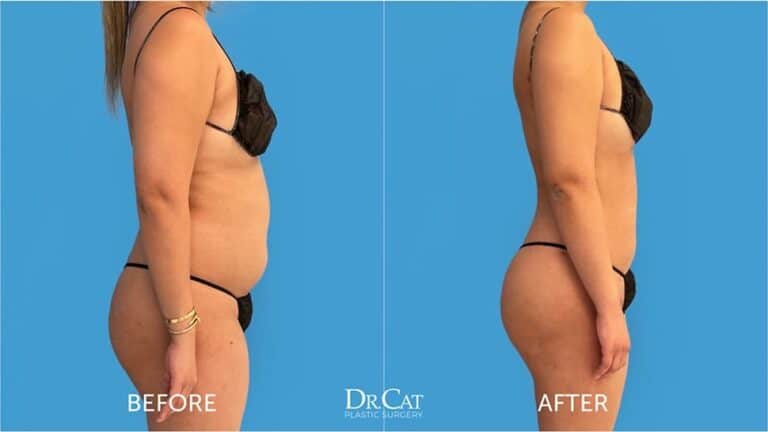
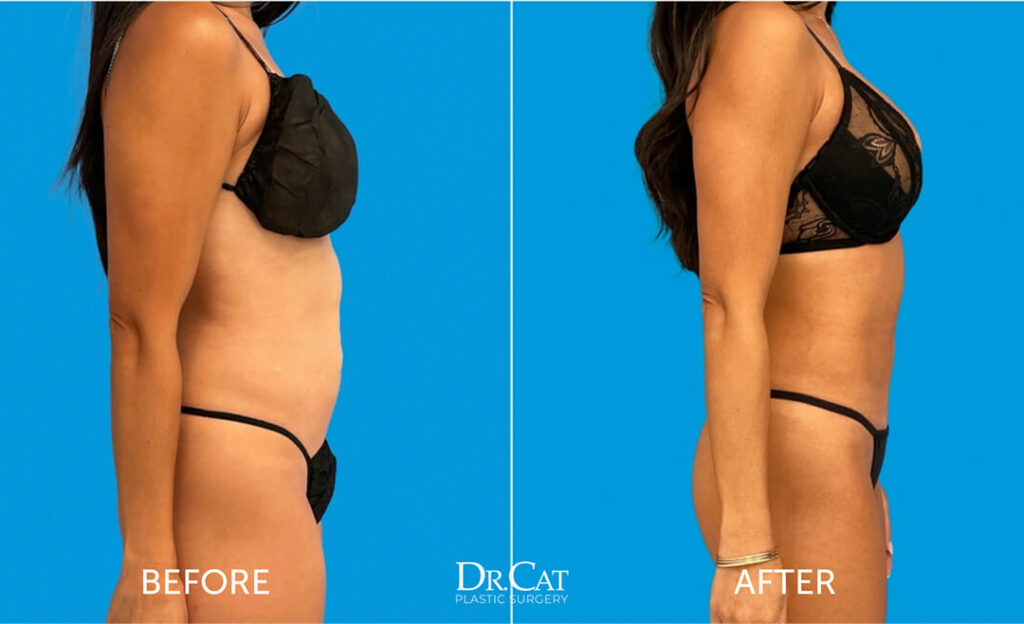
If your weight is stable and the belly still folds when you sit, or a ridge rises down the midline when you lift your head, the problem is skin or muscle, and no tip above changes either. A tummy tuck removes the loose skin, repairs the separated muscles and takes the stretch marks below the navel with it, as the side view above shows. Dr. Cat operates once you are within 10 to 15 pounds of a stable goal weight with a BMI of about 30 or less.
Is There One Trick to Losing Belly Fat?
No. There is no pill, wrap, tea or gadget that flattens a stomach, and spot reduction, the idea that working one area burns the fat over it, has been disproved repeatedly. What works is the combination above, held for months: a modest calorie deficit, daily movement, strength training, sleep and stress control, which lower your total body fat until the waist follows. For the stomachs that stay round after the weight is gone, the cause is skin, muscle or a fat pocket that ignores diet, and the answer is a consultation rather than another diet.
When Diet and Exercise Are Not Enough: The Surgical Options
Dr. Cat separates the causes with two tests at the consultation. The pinch test: skin below the navel that snaps back flat has kept its elasticity, and skin that stays in a fold has not. The head-lift test: lying on your back, a gap of two finger widths along the midline, or a ridge that domes when you lift your head, is diastasis recti. Firm skin with a pocket of fat that ignores diet is the case for liposuction, which removes the fat cells from that exact spot; our page on love handles and stubborn fat explains why those pockets stay. Loose skin or a separated muscle wall is the case for a full tummy tuck with muscle repair, which removes the skin from hip to hip, sutures the muscles back together with a double-layer repair, and creates a natural belly button; our comparison of a tummy tuck vs liposuction sets the two side by side. When the belly is one of several changes after pregnancy, a mommy makeover combines the tummy tuck with breast surgery on separate surgical days. If your concern is loose skin rather than fat, our post on tightening loose stomach skin covers both paths, and the tummy tuck before and after photos show what a flat result looks like.

Dr. Cat is a board-certified plastic surgeon, trained in both head and neck surgery and plastic and reconstructive surgery, Harvard-educated and UCLA trained. She performs every step of her body surgeries herself and schedules one tummy tuck per surgical day.
Talk to Dr. Cat About a Flat Stomach
Start with a free 15-minute discovery call with our Patient Concierge, who answers your first questions and books your consultation. The consultation with Dr. Cat is $500 for a first consultation and $1,500 for a revision consultation, credited in full toward your surgery; out-of-town patients consult by private video through OnPatient, the practice's HIPAA-secure patient portal. Book a free discovery call to get started.