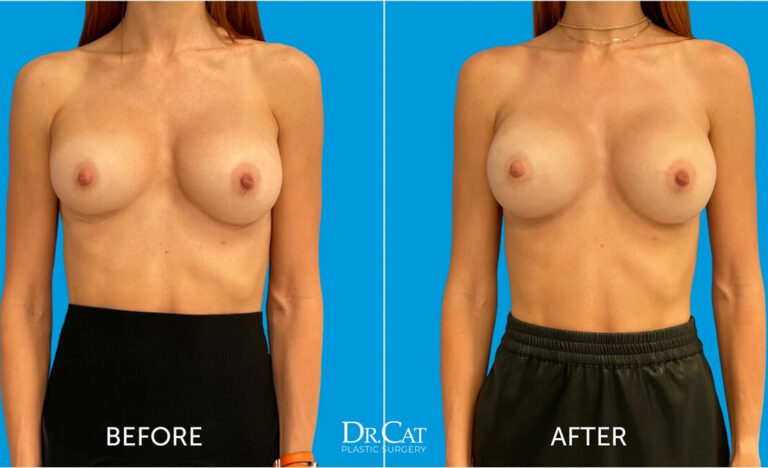

The Role of the Chest Muscle in Breast Implant Placement
The pectoralis major is the broad fan-shaped muscle that covers the upper chest, attaching at the collarbone, sternum, and upper arm. In breast implant placement over or under the muscle, this structure determines how the implant interacts with your natural anatomy. When the implant sits beneath the pectoralis, the muscle drapes over the upper portion of the device, softening its edges and creating a gradual slope from the collarbone to the breast.
One common question we get is whether muscle activity affects the implant. With submuscular placement, contracting the pectoralis can cause temporary movement of the implant, known as dynamic distortion. This is generally only noticeable during specific activities like chest exercises. Over-the-muscle placement avoids this entirely, since the implant sits in front of the pectoralis and is not affected by muscle contraction.
The chest muscle also influences healing. Submuscular procedures involve releasing a portion of the muscle to create the implant pocket, which extends initial recovery but provides long-term coverage that helps reduce visible rippling.
What is an under-muscle implant?
Breast implants placed under the chest muscle are also known as submuscular implants. A thick band of pectoral muscles runs high up in the chest, extending from the shoulder to the breast bone area. One placement option during surgery is to put the breast implant under both the breast tissue and this muscle. This type of under-muscle implant placement softens the lines of the breast's natural curves, preventing the implant “bulge” that was often visible in the early days of breast implants. Today, a much more natural look is able to be achieved, particularly with under-the-muscle placement.
This is typically the preferred placement for people with very small amounts of natural breast tissue. Then the muscle will help to conceal the implant so it doesn’t look unnatural or protruding. It can also provide additional support for the implant and hold it in place. It does however make the surgery a bit more complex and patients report a slightly longer recovery time than those with over-the-muscle implants. It’s also important to note that under-the-muscle placement can make the implant appear smaller, so this should be factored in when selecting implant size.
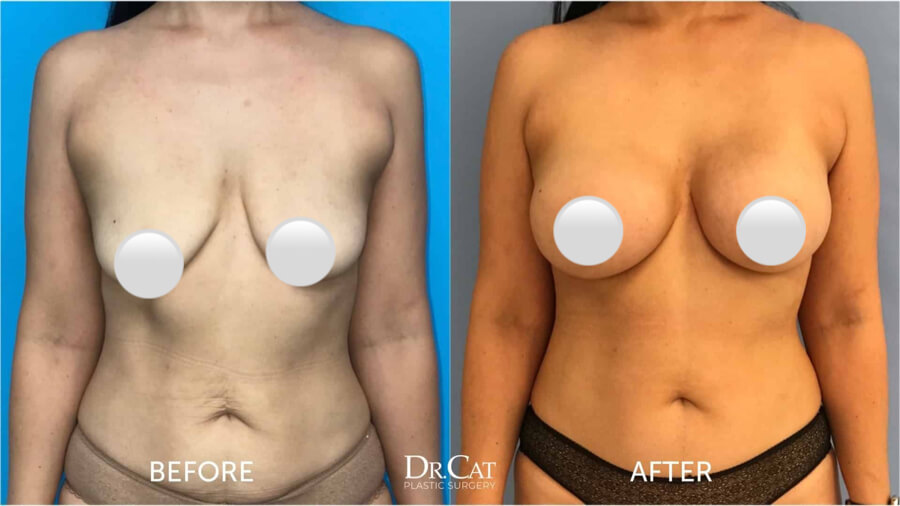
Pros of Under Muscle Breast Implant
Cons of Under-Muscle Breast Implant
What is an over-muscle implant?
Also known as subglandular implants, due to the implants being placed under the breast tissue, over-the-muscle implants are not as common as under-muscle implants. That’s due to the fact that in order for an over-the-muscle implant to look natural, there needs to be enough natural breast tissue already in place to cover the implant and smooth out its appearance. Since most women who seek breast augmentation don’t have this amount of tissue, under-the-muscle placement is usually preferable. However, there are some pros as well as cons to over-the-muscle implants worth considering:
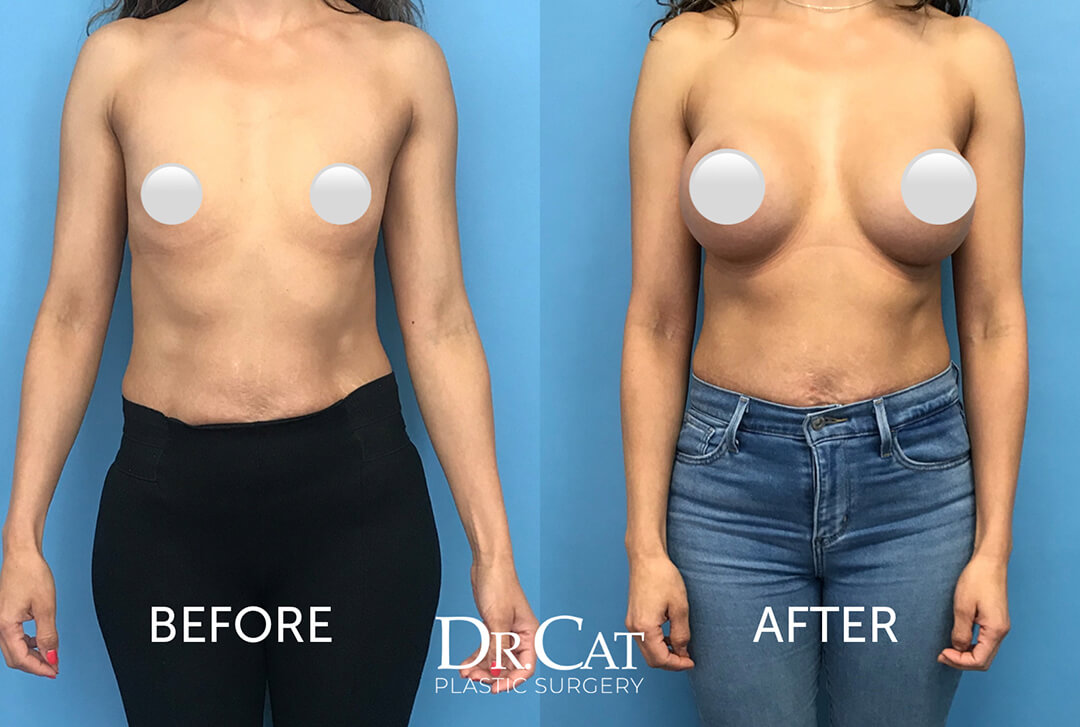
Pros of Over Muscle Breast Implant
Cons of Over-Muscle Breast Implant
How Much Breast Tissue You Have Affects Placement
The amount of natural breast tissue you have is one of the most important factors when choosing between subglandular and submuscular placement. Patients with limited breast tissue, often those with an A or small B cup, generally have thinner skin and less padding over the implant. In our experience, this group is better suited to under-the-muscle placement because the pectoralis provides an additional layer of coverage that hides implant edges and reduces visible rippling along the upper chest.
Patients with more existing breast tissue have natural padding that can mask the implant on its own. For these candidates, over-the-muscle placement is often a reasonable option and may produce a fuller, more rounded upper pole appearance. It also tends to offer a slightly shorter recovery period since the chest muscle is left undisturbed.
During consultation, we measure tissue thickness using a pinch test along the upper breast. A measurement under two centimeters typically points toward submuscular placement to ensure the implant is well concealed.
Problems with Breast Implants Under the Muscle
The main concern with under-the-muscle implant placement typically is the increased recovery time necessary for this type of procedure. Patients may experience greater discomfort in the initial days after surgery and it may take longer to fully return back to normal activities. However, for many women, particularly those who have a bra size of a B cup or less, this is a worthwhile tradeoff because of the more natural look and concealed appearance of the breast implant. Dr. Cat’s gentle approach helps patients ease into recovery and every step is taken to ensure a patient’s optimal comfort.
There are some rare deformity issues such as Dynamic Distortion and Snoopy Deformity that occur more frequently with under-the-muscle implant placement. These issues caused by either the implants moving or the breast tissue moving away from the implant are not common and can be corrected with additional surgery.
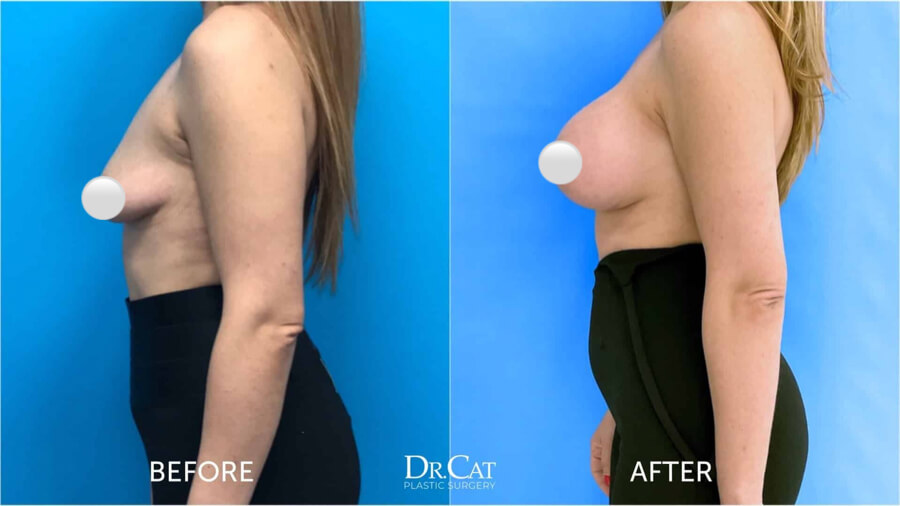
Recovery Differences Between Over and Under Muscle Placement
Recovery is one of the most noticeable differences between the two approaches. Submuscular placement involves working through the pectoralis, which means more initial soreness, tightness, and a longer return to upper body activity. Most patients are back to a desk job in about one week and resume all exercise, including chest exercises, at six weeks. Discomfort is most pronounced during the first 72 hours, when the muscle is adjusting to the implant beneath it.
Subglandular placement, because it leaves the muscle untouched, typically allows for a faster and less painful recovery. Patients return to a desk job in about one week here as well, and all exercise resumes at six weeks. Bruising and swelling still occur but tend to resolve more quickly. Final results from either approach take three to six months to fully settle as tissues relax and the implants reach their final position.
Where are breast implants placed for best results?
As you can see, there isn't a specific placement option that is "better" than another. Implant placement depends on a variety of factors such as the patient's anatomy, lifestyle and appearance preference. Dr. Cat guides patients through their options during your in-depth consultation. While there are pros and cons to both types of breast implant placement, with Dr. Cat’s guidance, you can choose the placement that’s right for you.
When discussing breast implant placement over or under the muscle, we typically find that the right choice comes down to three anatomical factors: how much natural breast tissue you have, the thickness of your skin envelope, and the position of your existing breast tissue on the chest wall. Patients with thin tissue coverage usually benefit from submuscular placement, while those with adequate tissue and mild sagging may prefer subglandular. A thorough physical evaluation is the only reliable way to determine which approach will produce the most natural-looking result for your body.
Learn About Your Breast Implant Options in Beverly Hills
One of the perks of breast augmentation surgery is the number of choices you have when it comes to implants. Since all of these options can be overwhelming and sometimes a bit confusing, it’s important to have an experienced, informed cosmetic surgery team who can guide you through the decision-making process.
During your consultation with Dr. Cat, you can expect a relaxed, no-rush experience that allows you to ask questions and get answers. Here, Dr. Cat discusses implant type (silicone vs saline), implant placement (over or under the muscle), incision placement (in the crease below the breast or around the areola), and also size. “In my office, we have a wide range of sizes that you can put in your bra to see how they look on your frame,” explains Dr. Cat. “We’ve found this is the best way to pick your new size. I’ll have you feel the difference between saline and silicone breast implants and we talk about the differences. I will also perform detailed measurements and discuss the differences in the types of implant shapes."
Having a plastic surgeon like Dr. Cat take the time to explore all of your options with you is an essential part of the breast augmentation process that allows you to fine-tune your procedure to suit your needs and lifestyle. If you’re considering breast augmentation surgery in Beverly Hills, schedule a consultation with Dr. Cat to begin the process and learn more about the procedure.