

What to Eat After a Tummy Tuck, Stage by Stage
Days 1 to 3
You spend the first night in a plastic surgery aftercare center and see Dr. Cat the next morning. Appetite is low and the abdomen is tight, so eat small amounts often: clear broth, chicken or vegetable soup, plain or Greek yogurt, applesauce, scrambled or soft-boiled eggs, oatmeal, a banana, or a smoothie made with yogurt or milk. Sip water steadily. Most of Dr. Cat's patients take a few Tylenol and no prescription pain medication, which also means less nausea and constipation than patients expect. Skip carbonated drinks and the foods that give you gas, because a bloated abdomen pulls against the repair.
Week 1
By day three most patients are eating normal, smaller meals. Build each one around protein: eggs, chicken, fish, Greek yogurt, cottage cheese, tofu or lentils. Add cooked vegetables, fruit and whole grains for fiber, because less activity slows the bowel; if you need a stool softener, ask at the day-one visit. Keep salt low: salty food holds fluid in the tissue you are trying to settle, and swelling peaks around the end of the first week. Drink water, herbal tea and broth; no alcohol and no sodas.
Weeks 2 to 6
The drains are out at one to two weeks, you stand straight, and scar treatment starts. Eat normally, with protein at every meal and snack while the incision and the muscle repair gain strength, salt low while the swelling clears, and alcohol out until Dr. Cat clears it. Fruit, vegetables and whole grains keep digestion regular, and smaller meals suit most patients because the compression garment makes a large one uncomfortable.
After 6 weeks
Full exercise resumes at six weeks, as our post on exercise after a tummy tuck sets out, and from here the diet is the one that keeps the result: a stable weight close to where you had surgery, because the repaired abdominal wall and the remaining skin stretch again with a large gain. A fullness above the incision comes and goes for months, worse after salty meals and long days, and clears over six to twelve months. The week-by-week detail is in our tummy tuck recovery guide.
Next step: the diet supports the surgery, and the result comes from how the surgery is done. Read about a tummy tuck in Beverly Hills with Dr. Cat, or book a free discovery call.
Foods to Eat After a Tummy Tuck: The List
- Protein for tissue repair: eggs, chicken, turkey, fish (salmon also brings omega-3 fats), Greek yogurt, cottage cheese, tofu, lentils, and beans once gas is no longer a problem
- Vitamin C and zinc for collagen and wound healing: citrus, berries, kiwi, bell peppers, pumpkin seeds and lean beef
- Fiber for regular digestion: oatmeal, whole grains, sweet potatoes, cooked vegetables, fruit and prunes
- Anti-inflammatory foods: berries, leafy greens, olive oil, salmon and walnuts
- Hydrating foods: watermelon, cucumber, oranges, soups and broths
- The easiest first-days foods: broth, yogurt, applesauce, oatmeal, eggs and smoothies
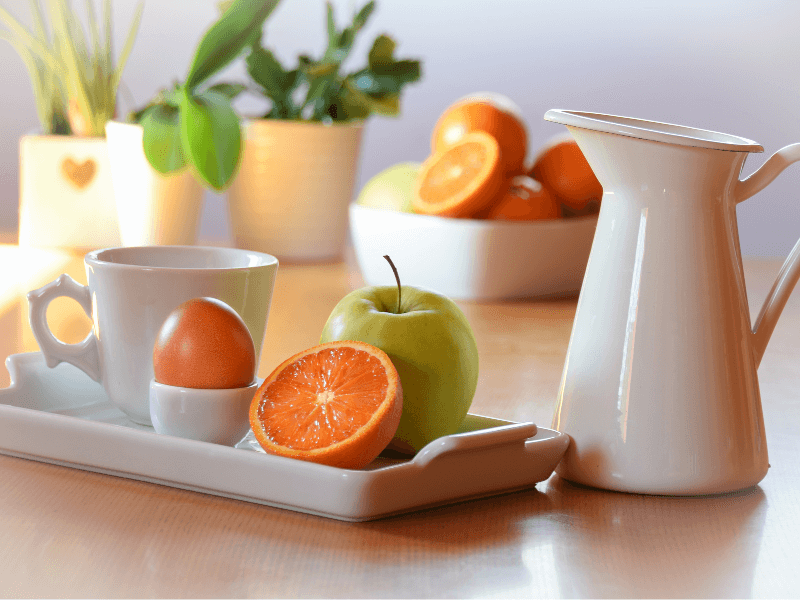
An egg, fruit and water: the simple, protein-first breakfast that suits the first days after a tummy tuck, when appetite is low and the abdomen is tight.
What to Avoid After a Tummy Tuck
- Salt: restaurant food, processed meat, chips, soy sauce and canned soup hold fluid in the swelling
- Alcohol: none in the early weeks, until Dr. Cat clears it; it dehydrates you and interacts with medication
- Nicotine in any form, before and after surgery: it restricts the blood supply the lifted abdominal skin needs to heal, so it stops two months before surgery and stays off through healing
- Anti-inflammatory painkillers such as ibuprofen, naproxen and aspirin, unless your surgeon has told you to take them, because they increase bleeding; Tylenol is the usual choice
- Carbonated drinks and gas-producing foods in the first days
- Greasy, heavy or very sugary meals, which slow digestion and add nothing to healing
- Large portions, which the garment and the tightened abdomen make uncomfortable
- Herbal supplements that thin the blood, such as fish oil, vitamin E, ginkgo, ginseng, garlic or ginger capsules and St. John's wort, until Dr. Cat clears them
How Much Protein After a Tummy Tuck
Protein is the nutrient the healing incision and the muscle repair use most, so the rule is simple: a palm-sized portion at each of three meals and a protein-based snack or two between them, every day from the first week. This page does not set a gram target, because the right amount depends on your weight and your health; if you track macros, ask at your pre-op appointment and your surgeon or a registered dietitian sets your number. Patients who struggle to eat enough in the first days do well with Greek yogurt, eggs, cottage cheese and a protein smoothie, which go down more easily than a full plate.
Pre Tummy Tuck Diet: What to Eat Before Surgery
Two things matter before surgery: arriving at a stable weight and arriving well nourished. Dr. Cat operates on patients within 10 to 15 pounds of their goal weight with a BMI of about 30 or less, so the months before surgery are for reaching that weight slowly and holding it, not for a crash diet in the last week, which leaves you depleted on the day. Eat the pattern you will use afterward: lean protein at every meal, vegetables and fruit for vitamin C, whole grains, healthy fats such as olive oil, avocado and nuts, and water through the day.

Daily walking and a stable weight in the months before surgery do more for your result than anything you eat in the last week.
The timeline from Dr. Cat's pre-op instructions is the same one you receive in your surgical packet:
- Two months before: stop smoking and every nicotine product
- Two weeks before: stop aspirin, ibuprofen, naproxen and every other NSAID, all herbal medications, vitamins and diet pills, and alcohol; take Tylenol for a headache, never Advil
- Two days before: a light diet, so you are not bloated during or after surgery
- The night before: nothing to eat or drink after midnight, water included; blood pressure medication with a sip of water on the morning of surgery is the one exception
Foods and Supplements to Avoid Before a Tummy Tuck
The two-week stop covers the supplements that raise bleeding risk: fish oil, vitamin E, ginkgo, ginseng, garlic and ginger capsules, turmeric, St. John's wort, echinacea, saw palmetto and melatonin among them. This post has long carried a list of kitchen herbs and spices with mild blood-thinning properties, and it still applies as a rule of thumb: ginger, garlic, turmeric, cumin, cinnamon, cayenne, oregano, rosemary, sage, thyme, basil, parsley, peppermint, chamomile, fenugreek, red clover, aloe, and chia and flax seeds. A pinch in cooking is not a supplement dose; if you use any of them daily, as a tea or in concentrated form, tell the team at your pre-op appointment. In the last days also cut heavily processed food and added sugar, which feed inflammation, excess sodium, which holds fluid, and caffeine, which raises blood pressure and heart rate and disturbs the sleep you need before surgery.
A Tummy Tuck Diet Plan: A Sample Day
These are Dr. Cat's sample meals, the same before and after surgery, and none of them uses a herb or supplement that has to stop.
Breakfast
- Scrambled eggs with spinach and mushrooms, or hard-boiled eggs
- Whole grain toast or plain oatmeal
- Fresh fruit such as berries or an orange
- A fruit or vegetable smoothie with yogurt or milk
Lunch
- Chicken noodle soup or chicken broth
- Salad with a protein, cucumbers, olive oil and a light dressing
- Steamed or roasted vegetables: broccoli, spinach, carrots, zucchini
- Quinoa with sweet potatoes and green beans
- Water with a slice of lemon
Snack
- Greek yogurt
- A handful of nuts
- Fruit salad
Dinner
- Lean meat or fish seasoned with a little salt or lemon
- Steamed or roasted vegetables
- Soup or porridge
- Quinoa or couscous
Reach a Stable Weight First
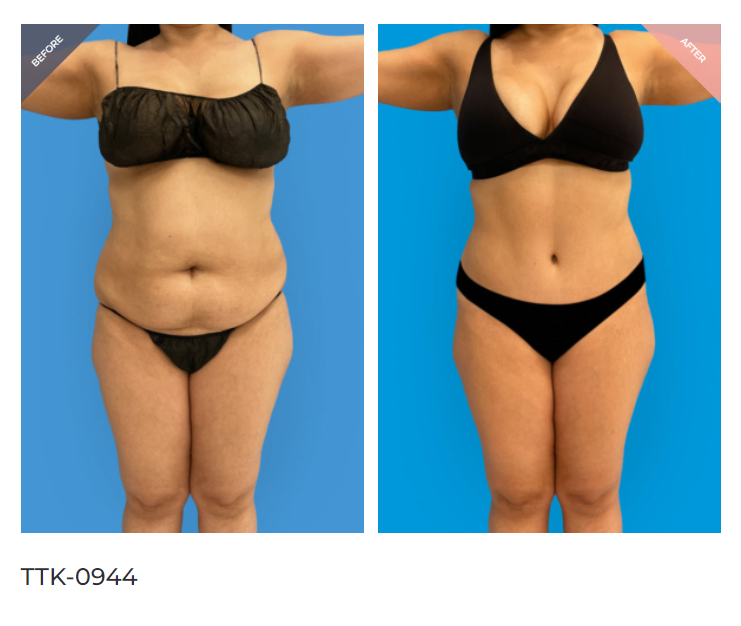
Case TTK-0944 at 3 months post-op: Dr. Cat removed about 9 inches of excess skin and repaired about 5 centimeters of muscle separation. A stable weight before surgery is what makes a result like this last.
Dr. Cat asks for a weight within 10 to 15 pounds of your goal, stable for months, with a BMI of about 30 or less. Lose the weight slowly and hold it, because skin tightened now loosens again if another 20 or 30 pounds come off later, and a large gain stretches the repair. If you take a GLP-1 medication such as semaglutide or tirzepatide, reach a stable weight and hold it for several months first, and tell us at the discovery call, because it slows stomach emptying and the anesthesiologist plans around it. Our post on the BMI requirement for plastic surgery explains the numbers.
What to Eat After a Tummy Tuck and Lipo
Conservative liposuction of the love handles or the mons pubis is the only liposuction Dr. Cat adds to a tummy tuck; lipo 360 is a separate surgery on a separate day, because the blood supply to the lifted abdominal skin runs through that fat. The diet is the same, with one emphasis: the liposuctioned areas bruise and swell, so salt matters even more in the first two weeks and water helps the tissue settle. The compression garment covers both areas, and Dr. Cat advises against lymphatic massage.
Meal Planning if You Travel for Surgery
About 30 percent of Dr. Cat's patients come from other states and countries. You arrive at least one full day before surgery, spend the first night in the aftercare center, and stay in Los Angeles about two weeks after a tummy tuck, until the drains are out and Dr. Cat clears you to fly. Plan the food before you land: choose lodging with a kitchen or arrange meal delivery, stock broth, yogurt, eggs, oatmeal, fruit and a large water bottle for the first days, and bring the adult who is staying with you into the plan, because you will not be shopping or cooking in the first week. Our page for out-of-town patients covers the partner hotel, post-op nursing and the nine steps from your first call to flying home.
If Your Tummy Tuck Is Part of a Mommy Makeover
Dr. Cat stages a mommy makeover on separate surgical days: a tummy tuck is never done on the same day as a breast augmentation with implants, a breast lift with a tummy tuck is staged, and a labiaplasty is never the same day as a tummy tuck. Breast surgery waits until at least three months after breastfeeding ends. Between stages, keep the after-surgery pattern above and your weight steady, so that you arrive at each surgery at the same stable weight and each recovery starts well nourished.
Talk to Dr. Cat About Your Tummy Tuck
Start with a free 15-minute discovery call with our Patient Concierge, who answers your first questions and books your consultation. The consultation with Dr. Cat is $500 for a first consultation and $1,500 for a revision consultation, credited in full toward your surgery; out-of-town patients consult by private video through OnPatient, the practice's HIPAA-secure patient portal. Book a free discovery call to get started.