
What is Ozempic Face?

Because Ozempic's active ingredients work on parts of our brain that control hunger and cravings as well as our digestive system, causing us to feel fuller for longer, it can lead to significant weight loss. This weight loss solution for those who are obese has caused a social media sensation over the past year as more people use the drug to help shed pounds. However, this type of significant and rapid weight loss can cause the skin in the face to sag and appearance loose. That's where the term "Ozempic Face" comes from, however it's not just the drug that can cause this effect.
Any type of rapid weight loss can result in sagging, loose skin on the face. Weight loss that occurs quickly can result in a gaunt look to the face that includes a hallowing of the cheeks, sunken eyes and more pronounced fine lines particularly around the mouth and cheeks. If you've lost weight either by using Ozempic, undergoing bariatric surgery or by natural methods like diet and exercise, you may be wondering what options exist for improving the look of your face and giving it a more balanced, youthful fullness. The good news is there are options when it comes to Ozempic Face and reducing the loose sagging skin of your face.
Understanding Ozempic and GLP-1 Weight Loss Drugs
Ozempic belongs to a class of medications called GLP-1 receptor agonists. These drugs mimic a naturally occurring hormone called glucagon-like peptide-1, which regulates blood sugar and appetite. Originally developed for type 2 diabetes management, GLP-1 medications like semaglutide and tirzepatide have become widely prescribed for weight loss due to their ability to reduce hunger signals in the brain.
When patients lose a significant amount of weight quickly, sometimes 15% or more of their body weight, the skin and soft tissues of the face may not bounce back at the same rate. This is what leads to the gaunt, deflated look commonly referred to as ozempic face. The facial fat pads that give the cheeks, temples, and under-eye area their youthful fullness shrink, leaving behind loose skin and a hollow appearance. We typically find that patients who lose weight gradually experience less dramatic facial changes than those with rapid results.
According to a systematic review published in Aesthetic Surgery Journal, GLP-1 receptor agonist mediated weight loss is associated with increased demand for facial rejuvenation procedures, including fat grafting and dermal fillers.
Why Does Skin Sagging Occur?
Skin sagging can happen for many reasons. Facial skin sagging can be caused by weight loss but it can also be due to a number of other factors such as aging. When we gain weight however, our skin needs to stretch and this can cause our facial skin to become less resilient to "bouncing back." Think of elastic that loses its "snap," the elastin in the skin experiences a similar effect, which results in skin sagging when larger quantities of fat are no longer present to add volume to the face.
Many patients who experience significant weight loss face the challenge of what to do about excess skin throughout their body. Cosmetic surgery can help to remove this excess skin from parts of the body such as the legs, abdomen and arms. But facial skin sagging requires a more refined and delicate approach.
How to Prevent Facial Volume Loss During Weight Loss
While not every patient can fully prevent ozempic face, there are steps that may reduce its severity. Staying well hydrated supports skin elasticity, and a diet rich in protein, collagen-supporting nutrients, and healthy fats helps maintain tissue integrity during weight loss. Clients often ask us whether slowing the rate of weight loss makes a difference, and the answer is generally yes. A more gradual approach gives the skin time to adapt.
Consistent use of medical-grade skincare with ingredients like retinol and vitamin C can also support collagen production. Sun protection is essential since UV damage accelerates the breakdown of collagen and elastin, making sagging worse. For patients already noticing early signs of facial hollowing, scheduling a consultation sooner rather than later allows Dr. Cat to recommend preventive treatments before the changes become more pronounced.
Should I Get Facial Fillers to Correct Ozempic Face?

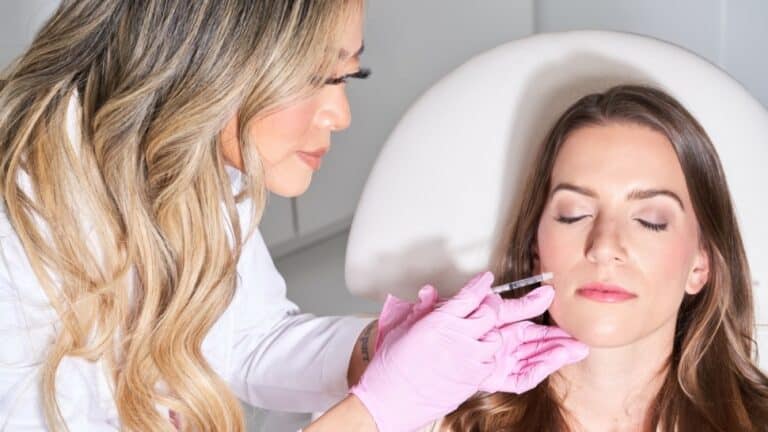
Facial fillers can be used to help smooth out the loose skin that can result from taking Ozempic and experiencing rapid weight loss. Dr. Cat recommends a conservative approach to facial fillers, which provides a more natural look than excessive amounts. Since we all have seen celebrities who have overdone facial fillers, attaining a natural look is usually a priority for most patients.
However, when weight loss is significant there may be many areas of the face that require attention with significant skin sagging. Adding in too much filler to correct this Ozempic Face will look unnatural. That's why it's best to explore all of the options available for Ozempic Face. It's also important to rely on a skilled and highly-regarded cosmetic surgeon like Dr. Cat, who can provide the most natural solution, rather than a quick fix that looks less than ideal.
Fat Grafting for Ozempic Side Effects
While facial fillers can provide a short-term solution to minimal facial sagging, fat grafting can be a better solution that Dr. Cat recommends for Ozempic Face. Fat grafting uses your own fat which is taken from a discrete part of the body, such as the thigh area or buttocks. Because this type of fat transfer uses a patient's own fat cells, it's safe and effective. In fact, fat grafting offers several benefits over facial fillers, including:
Longer-lasting: Your body's own fat cells typically last longer than the artificial fillers like Juvederm and Restylane, which typically last between six to 12 months.
More Natural Looking: Because fat grafting uses your own fat cells, the look can be more natural, and replace the fat cells that were lost during weight loss.
Suitable for Deeper Sagging: Ozempic Face can cause pronounced sagging and loose skin. Using too much facial filler can create an unnatural look. But fat grafting can provide a natural look while providing skin tightening and a way to diminish the look of Ozempic Face.
Dr. Cat has developed a unique technique that involves minimal pain and is only minimally invasive. Her fat grafting procedure only takes a few hours and recovery is fast with most patients returning to daily activities within a few weeks.
Skin Tightening with Radio Frequency for Sagging Skin Caused by Ozempic

Another option for addressing Ozempic Face is the use of ThermiSmooth Face, which employs non-invasive radio frequency to stimulate the body's own skin cells to nurture collagen and elastin production. This efficient procedure doesn't involve any needles, incisions, or scarring. In fact, many patients find the skin therapy relaxing. With ThermiSmooth, Dr. Cat expertly uses a small hand-held device that transmits radio frequency waves which warm up the skin and encourage revitalization and production of the elements of youthful skin like elastin and collagen.
Since this is a non-invasive procedure, there is no need for rest or recovery after the therapy is completed. Patients can return right back to their daily life and many begin to notice immediate results, such as tighter skin and a smoother look to the skin. Beyond these immediate results, patients should look forward to longer-term results as collagen production levels increase.
Choose the Solution to Ozempic Face that's Right for You
In our experience, patients who come in concerned about facial changes from GLP-1 receptor agonist medications often feel caught between two goals: keeping the weight off and looking like themselves again. The good news is you don't have to choose. A personalized treatment plan can address volume loss while you continue your weight management journey.
Ozempic and other weight loss prescription medications offer another option for obese patients who have struggled to lose weight. While the results of these weight loss drugs can be dramatic and offer patients a healthier, more active life, Ozempic Face can be one of the downsides of rapid weight loss. But there are numerous solutions to tighten and smooth the skin of the face and remove any gaunt, sagging look after weight loss. It's important to choose a skilled cosmetic surgeon like Dr. Cat who can guide you through the right approach that will restore that youthful and radiant look that you had prior to weight loss. Schedule a consultation with Dr. Cat's team to learn more about your options for skin tightening and smoothing. With the right approach you can fully enjoy your weight loss without having to contend with Ozempic Face.