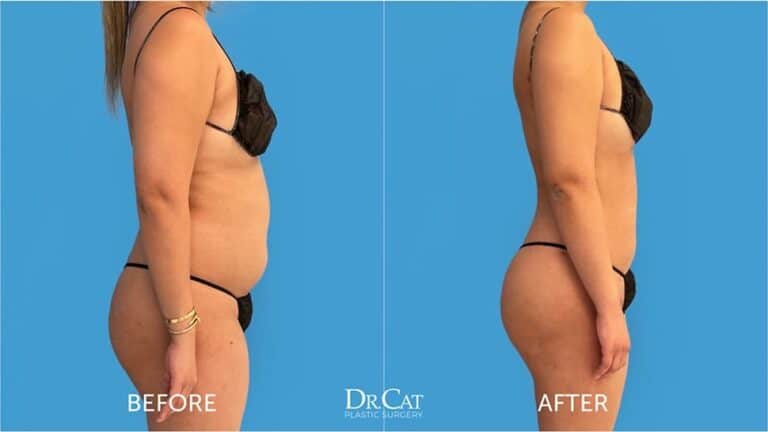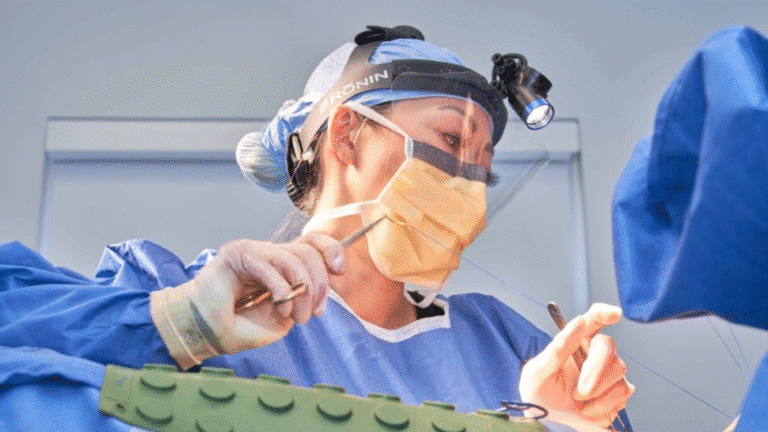

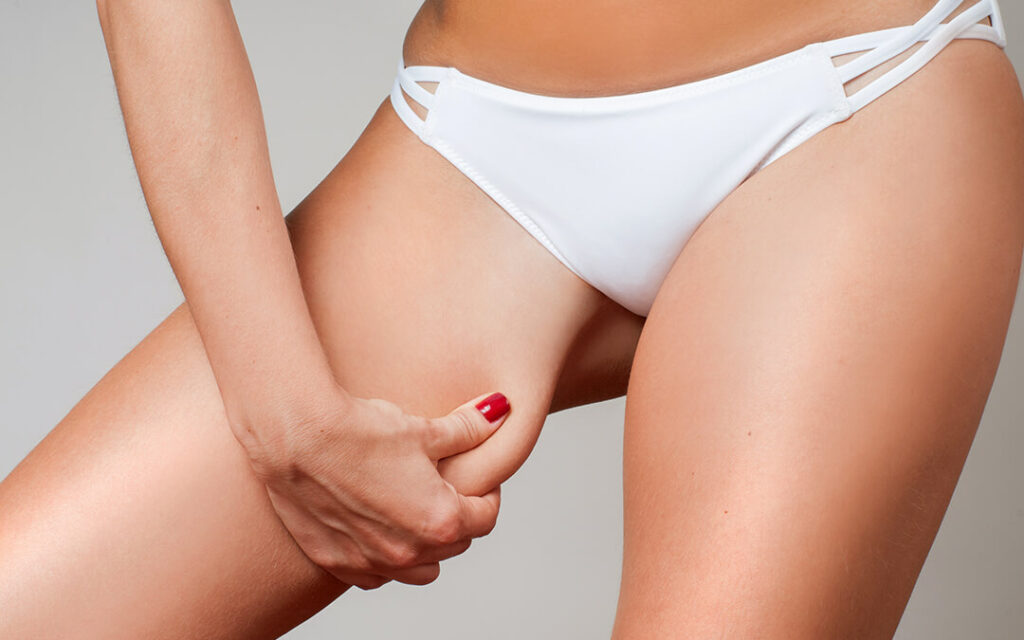
Like most patients, you want your transformation to be as inconspicuous as possible. That's why Dr. Cat Plastic Surgery specializes in contouring your thighs so seamlessly that there are hardly any signs of surgical intervention.
The key? Exceptional skill, proper aftercare, and Dr. Cat's exclusive scar minimization techniques. That's precisely what we're here to discuss today.
Understanding the Different Thigh Lift Scars
Many patients ask us what thigh lift scars after 1 year actually look like. The answer depends on the type of incision, your body's healing response, and how closely you follow post-operative care instructions. Below, we break down each incision type so you can understand where scars form and how they mature over time.
Before diving into scar management after surgery, we have to understand the placement and reasoning for different thigh lift incisions.
There are different types of thighplasty procedures. The extent of your thigh lift scars depends greatly on which you receive:
Medial (inner) thigh lift
This is Dr. Cat's most commonly performed type of thigh lift. In this case, Dr. Cat removes a triangular portion of tissue from the inner thigh (groin to buttock crease to upper leg). This allows her to elevate the skin on your thigh for a tighter, smoother look.
This incision is discretely hidden behind the midline, making it virtually invisible from the front and the back.
Lateral (outer) thigh lift
A lateral thigh lift focuses on the outer thighs and is usually performed with other surgeries (like a tummy tuck or BBL). This is because these incisions can extend, allowing for seamless integration of other procedures.
Incisions for lateral thigh lifts are located near the upper edge of your buttocks, extending down into the hips.
Crescent (mini) thigh lift
In this type of thigh lift, Dr. Cat only removes a thin, crescent-shaped portion of upper inner thigh skin and fat.
These incisions are practically invisible since they follow the natural crease of your inner groin.
Spiral (full) thigh lift
This type of thigh lift targets both the outer and inner thighs and even the knees (sometimes).
For this thigh lift, incisions can run from the groin to the knee along the side of the thigh. However, they can also run from the groin up to the crease of the buttocks, curving back towards the hips.
No matter what type of thigh lift you receive, one crucial aspect makes all the difference in how your scars look: aftercare.
Next step: where the scar sits is decided by the incision pattern, which is decided at the consultation. Read about thigh lift in Beverly Hills with Dr. Cat, or book a free discovery call.
Thighplasty Recovery: Paving the Way to Discreet Results
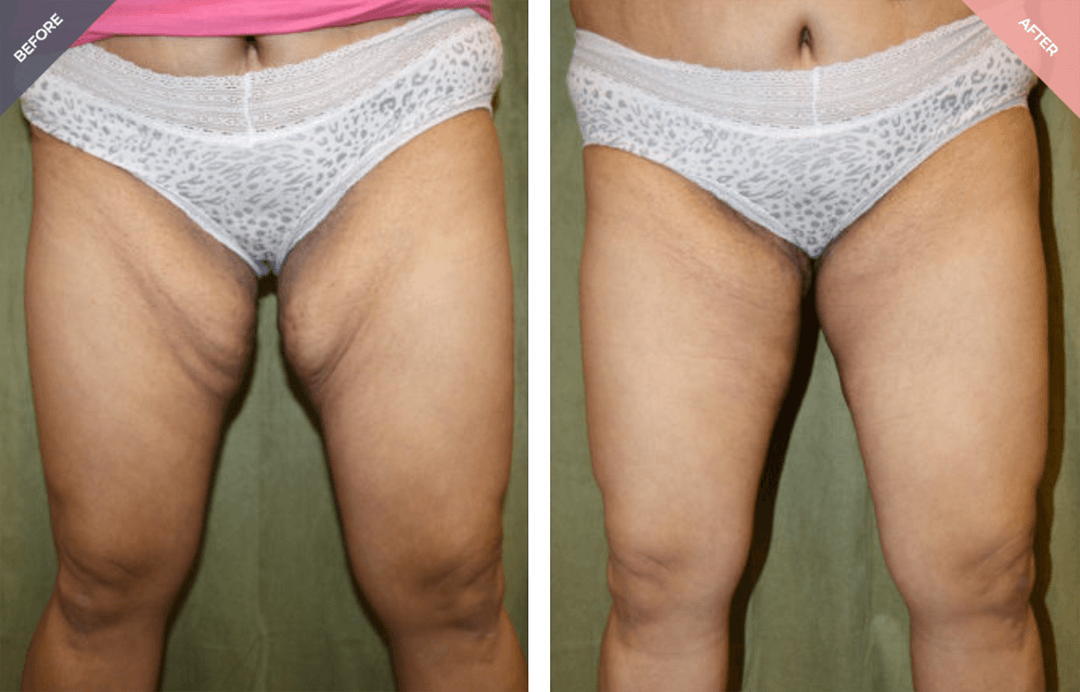
Dr. Cat's gentle, meticulous technique allows for a thighplasty recovery that's both swift and comfortable.
Immediately post-op, you'll spend your first night recovering in Dr. Cat's aftercare facility. You may feel some tightness, tenderness, and swelling but no pain. The next day, you'll be picked up and brought back to her office for your very first post-op check-in.
For the first one to two weeks, rest is essential. You'll have to walk carefully to ensure healing and lock in your gorgeous thighplasty results. You'll also wear a custom-fitted compression garment to support your thighs for at least six to eight weeks post-op.
Any rigorous workouts must wait at least six weeks to a month. Don't worry, you'll show off your new legs at the gym in no time.
About two weeks post-op, Dr. Cat incorporates her post-operative scar treatment.
Dr. Cat's Approach to Surgical Scar Care
In addition to a pain-free recovery, most of Dr. Cat's patients never need laser scar therapy. This is thanks to her comprehensive scar minimization techniques.
It all starts with your thighplasty itself, in which Dr. Cat works through incredibly thin incisions. Once your procedure is done, she closes them in multiple layers for optimal security, and a barely-there scar.
Two weeks after surgery, she begins integrating silicone sheets for scars. These strips keep your surgical site clean, protected, and hydrated. They also help to promote faster healing.
Next, Dr. Cat transitions patients to a scar gel until fully healed. She monitors your scar with every follow-up appointment, adjusting your surgical scar care as needed.
In just one year, your thigh lift scars are almost completely gone. Daisy-dukes, anyone?
That said, there are other factors that could shift this timeline. Let's talk about how to get ahead of these.
The First Year Post-Op: How Thigh Lift Scars Change Over Time
Thigh lift scars go through several distinct phases during the first twelve months. In the initial weeks, incision lines appear red or pink and may feel firm to the touch. Between months two and four, scars often look their worst as collagen remodeling causes them to thicken slightly and deepen in color. This is completely normal and not a reason to worry.
By months six through nine, most patients notice significant fading. The raised texture flattens, and the color shifts from red to a lighter pink or pale tone. At the one-year mark, scars typically settle into thin, soft lines that blend more naturally with surrounding skin. In our experience, patients who follow Dr. Cat's scar care protocol consistently see the most dramatic improvement during this window. Every body heals at its own pace, but the twelve-month milestone is when most patients feel confident wearing shorts and swimwear again.
According to a study published in the Aesthetic Surgery Journal, thigh lift scars continue to improve in color, texture, and overall appearance for up to 18 months following surgery.
Are Thigh Lift Scars Visible After 1 Year?
One common question we get is whether thigh lift scars after 1 year are noticeable to others. For most patients, the answer is reassuring. Scars from a medial thigh lift sit along the inner groin crease, a naturally concealed area hidden by underwear and swimwear. Lateral and spiral thigh lift scars may extend further, but they still fade considerably by the twelve-month point.
Factors that influence long-term visibility include skin type, genetics, age, and sun exposure habits. Patients with darker skin tones may experience hyperpigmentation that takes longer to resolve, while lighter skin tones sometimes show pink or red tones for several extra months. Smoking and poor nutrition can also slow the fading process. We typically find that patients who protect their scars from UV light and stay consistent with silicone-based treatments achieve the most discreet results by the one-year mark.
Tips for Maximizing the Scar Healing Process
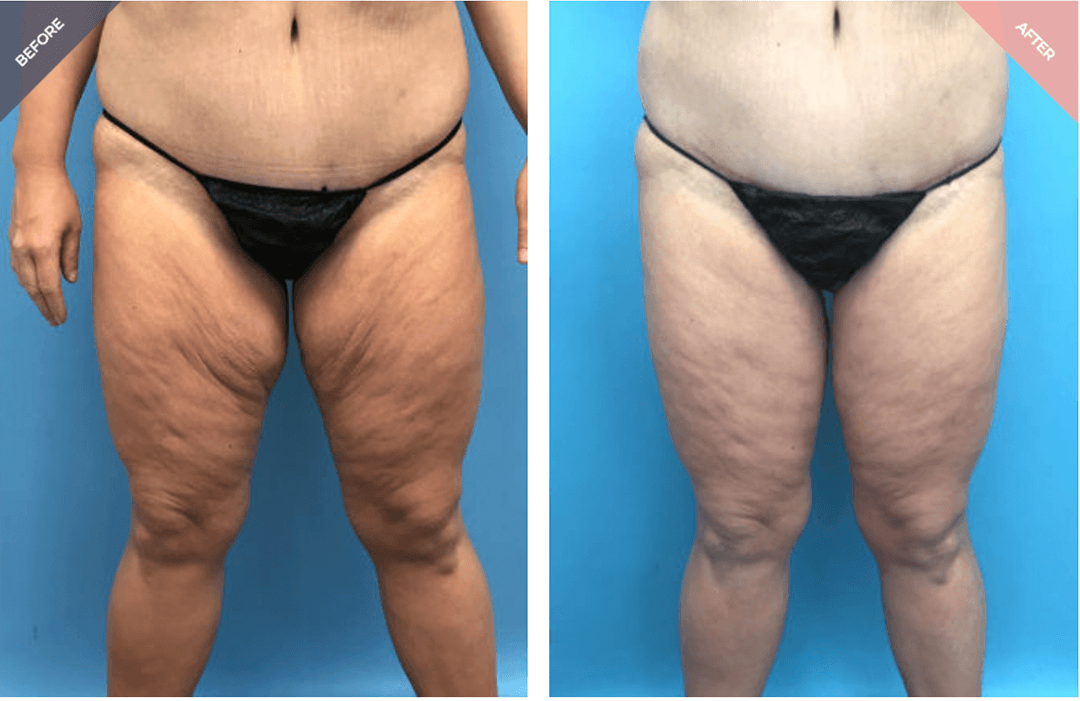
Dr. Cat's gentle approach and scar minimization techniques lay the groundwork for seamless results. The rest, however, is entirely up to you.
To ensure your thigh lift scars fade into obscurity, here are some tips you'll want to put into practice:
Shield your incisions from too much sun
Some people think tanning helps scars blend into their complexion better. However, Dr. Cat warns the opposite is true, emphasizing that fresh scars are highly vulnerable to UV radiation. It's best to keep your scars out of the sun for at least six to twelve months to prevent them from becoming more pronounced.
Avoid smoking and vaping until fully healed
One of Dr. Cat's pre-operative instructions for thighplasty (and any procedure) is to quit smoking or vaping for an extended timeframe before and after surgery. This is because nicotine drastically hinders healing and, therefore, the scar-healing process. Beyond aesthetics, it can distort your immune system and leave the door open for complications during/after surgery. No, thanks!
Stay consistent with post-operative scar treatment
Listen, we get it: the thought of applying silicone sheets for scars, then a gel, avoiding sunlight, periodic follow-ups for a year: it's a lot. But patience and consistency are pivotal when it comes to surgical scar care. Our advice? Don't book your surgery unless you're fully ready to commit.
Maintain a healthy diet and drink plenty of water
The food you eat also plays a big part in your recovery. Stick to lean proteins, antioxidant-rich fruits, nutritious veggies, leafy greens, and healthy fats. Drinking plenty of water also supports healing and less noticeable scars.
Review your medications with your surgeon
Speaking of what you put in your body, certain medications can also alter the healing process. Talk to your doctor about any medications you're currently taking. This can help determine whether you need to pause or change them to lower your risk of compromised healing and scarring.
Balance your expectations and practice patience
Having safe plastic surgery means understanding each phase that comes with recovery. Everyone's body is different; some heal faster, and others heal slower. Be patient with yourself, be kind to your body, and remember it'll all be worth it in time.
When to Seek Additional Scar Treatment
While most thigh lift scars after 1 year have faded significantly, some patients may notice scars that remain raised, thickened, or darker than expected. Hypertrophic scars and keloids are less common but can develop in patients with a genetic predisposition. If your scar feels ropy, itchy, or continues to grow beyond the original incision line after several months, it is worth scheduling a follow-up.
Dr. Cat offers several options for scars that need extra attention. Laser scar therapy can reduce redness and smooth texture. Steroid injections may help flatten hypertrophic or keloid scars. Silicone sheeting used consistently over several months can also soften stubborn scar tissue. The key is addressing concerns early rather than waiting, because intervention during the active remodeling phase tends to produce better outcomes. Clients often ask us about revision surgery, but in most cases, non-invasive treatments are enough to achieve a satisfying result.
Dr. Cat Plastic Surgery: Love Yourself with Every Stride
There's only one definitive way to guarantee barely-there thigh lift scars, and that's choosing the right surgeon. With a track record of stunning, scar-free outcomes, there's no better choice than Dr. Cat.
We know how life-changing a thigh lift is, granting you the freedom to wear the clothes you've always wanted and live a life that's even more fulfilling. As for your newfound self-love and confidence? It's one heck of a bonus.
Enough with the doubts: it's time to fall back in love with your legs.
Book your consultation with Dr. Cat today.Frequently Asked Questions About Thigh Lift Scars After 1 Year
Q: What do thigh lift scars after 1 year typically look like?
A: By the one-year mark, most thigh lift scars have faded to thin, flat lines that are pink or skin-toned. They sit in natural creases like the groin fold, making them easy to conceal under clothing and swimwear.
Q: How long does swelling last after a thigh lift?
A: Noticeable swelling usually subsides within the first four to six weeks. Mild residual swelling can linger for three to six months, but it gradually resolves and does not typically affect daily activities after the initial recovery period.
Q: Can I speed up thigh lift scar healing?
A: Yes. Consistent use of silicone scar sheets, avoiding sun exposure on healing incisions, eating a protein-rich diet, staying hydrated, and not smoking all support faster scar maturation. Following your surgeon's post-op instructions closely makes the biggest difference.