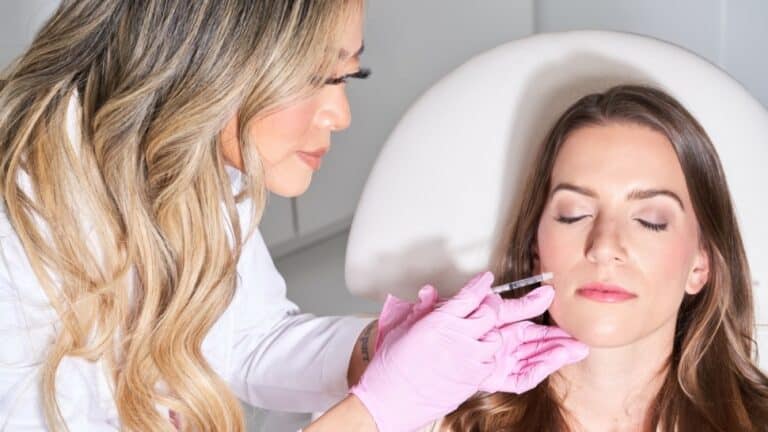


Today, we’ve teamed up with Dr. Cat, renowned worldwide for her surgical expertise and revered as a top medical influencer on social media.
Together, we’ll explore the intricacies of this transformative procedure, share invaluable tips for a slimmer face, and guide you in selecting the right medium for fulfilling your dream transformation.
Next time you snap a selfie, you’ll be happy with every angle.
What is Buccal Fat Removal?
Buccal fat removal has grown increasingly popular in recent years, especially in the summertime. But what is it exactly?
Dr. Cat explains, “Buccal removal removes the buccal fat pad in the cheek area through an incision made inside the mouth, slimming the mid-face and creating a contoured appearance.”
Goodbye, “baby face,” hello, high-fashion contour!
The best part? The quick, minimally invasive procedure only takes about an hour, and all incisions are done in the mouth, so there’s no visible scarring post-op.
The results?
Curious if you meet the criteria for surgery?
Ideal candidates

If any of the following applies, you may qualify for buccal fat removal:
Unfortunately, not everyone is a candidate, especially if you:
During your one-on-one consultation with our board-certified facial plastic surgeon, who performs buccal fat removal at Dr. Cat Plastic Surgery, he’ll guide you through the process and make sure you understand the qualifying factors and intricacies.
If you’re a suitable candidate, here’s a glimpse of what to expect during your procedure:
Procedure
Here’s what your buccal fat removal surgery will look like:
1. Either in Dr. Cat’s office or a surgery center, you’ll receive local anesthesia on your face.
2. You’ll remain conscious and pain-free as your surgeon makes a small incision inside your cheek.
3. You’ll feel gentle pressure as the buccal fat pad is exposed and removed.
4. Your surgeon will then close your incision with dissolving stitches.
5. They then repeat the process on the opposite side of your face.
6. Given that this is the only procedure performed, you’ll be done in about an hour!
Great! So, what does the healing process look like?
Recovery
After surgery, you’ll gargle a special mouthwash that helps fight infections. Your doctor will give you aftercare instructions and ask you to stick to a liquid diet for the first few days.
In our experience, most patients fully heal from buccal fat removal in about three weeks, and any bruising or swelling typically subsides just as quickly.
It takes some time for your cheeks to settle into their new, contoured shape. But if you adhere to your surgeon’s post-op instructions, you’ll enjoy the results of your new, enhanced look in a few short months.
Cost
Buccal fat removal costs anywhere between $2000 to $6000, depending on factors such as:
Since buccal removal is typically considered an elective cosmetic procedure, insurance coverage varies. The good news? Most surgical facilities, including Dr. Cat Plastic Surgery, offer payment plans and flexible financing to help you manage surgical procedures.
But what if your main problem area is around the chin, rather than the cheeks? If this resonates, chin liposuction may be a worthwhile consideration.
How to Prepare for Buccal Fat Removal Surgery
Preparation begins at your consultation, where we review your medical history, examine your facial structure, and discuss your goals. We’ll take photos from multiple angles to plan the procedure and may simulate expected results so you can visualize the change.
In the 2 weeks before surgery, avoid blood thinners such as aspirin, ibuprofen, fish oil, and certain herbal supplements, as these increase bleeding risk. Stop smoking at least 4 weeks before surgery; nicotine impairs healing and raises infection risk. Arrange for someone to drive you home if you’re receiving sedation or general anesthesia.
The day of surgery, eat a light meal if instructed, wear comfortable clothing that doesn’t pull over your head, and skip makeup. Stock your kitchen with soft foods and a non-alcoholic mouthwash beforehand, since you’ll be on a liquid-to-soft diet for the first several days of recovery.
Long-Term Results: What to Expect Years After Buccal Fat Removal
One question we get often is whether buccal fat removal results are permanent. The short answer: yes, the fat cells removed during surgery do not grow back. Patients typically see their final contour around 3 to 6 months after surgery, once residual swelling fully resolves. The slimmer cheek hollow tends to remain stable over time.
That said, faces change with age. As you move into your 40s and 50s, natural facial volume loss continues, and some patients who had buccal fat removal in their 20s find their cheeks appear hollower than peers. This is why patient selection matters so much. We typically recommend the procedure for those with truly full cheeks rather than borderline candidates, since aggressive fat removal in a thin face can accelerate an aged appearance later. A conservative approach protects long-term results.
Risks and Side Effects to Consider
Buccal fat removal is generally safe in experienced hands, but every surgery carries risks. Common temporary side effects include swelling, bruising, mild discomfort, and tightness when opening the mouth. These usually resolve within 1 to 2 weeks.
More serious but rare complications include infection, hematoma, asymmetry, damage to the facial nerve or salivary duct, and over-resection leading to a gaunt appearance. Choosing a board-certified plastic surgeon with specific experience in facial anatomy significantly reduces these risks. If over-resection does occur, fat grafting can restore volume, though prevention through conservative removal is always preferable to correction.
What is Chin Lipo?
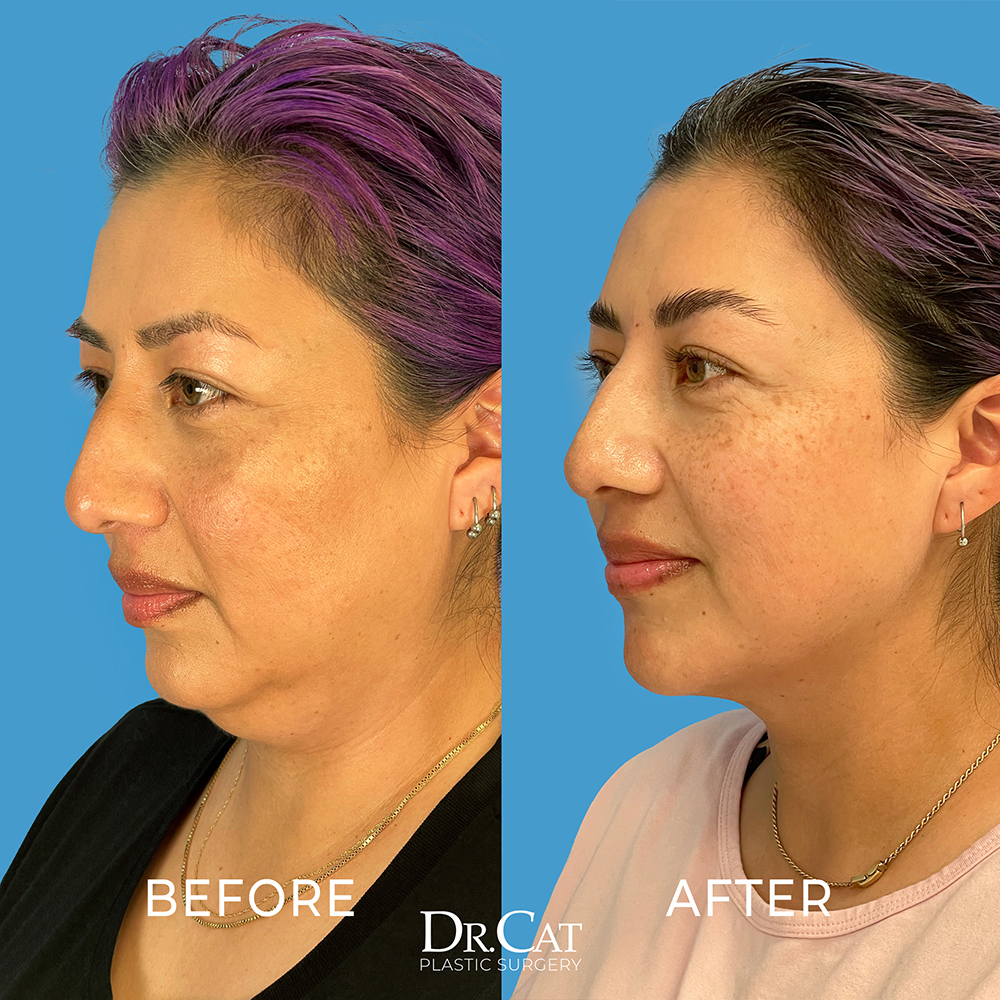
Dr. Cat explains that sub-liposuction (or chin lipo) involves removing fat from beneath the chin and upper neck with tiny liposuction cannulas (or tubes), creating a more defined jawline and sleeker neckline.
Unlike buccal removal, which is geared towards creating a more sculpted facial appearance around the cheeks, chin lipo is geared more towards defining the jaw and necklines.
The most prominent chin lipo benefits include:
Who will benefit most from this procedure?
Ideal candidates
If any of the following applies, you may qualify for chin liposuction:
However, you will likely want to skip chin lipo if you:
Even if you’re a perfect fit for surgery, you’ll want to know what to expect in the operating room:
Procedure

Here’s what you can expect on surgery day:
1. Either in Dr. Cat’s office or a surgery center, you’ll receive local or general anesthesia on your face.
2. Depending on the technique used, your surgeon will start by making tiny incisions under the chin and possibly behind the ears.
3. They’ll then insert an extra tiny tube into the incisions and suction out excess fat from the area.
4. You won’t feel any pain but may feel slight pressure as your surgeon works.
5. After sufficient fat is removed, your surgeon closes your incisions and wraps your chin with a compression garment to minimize swelling and support healing.
6. Given the extent of your individual needs and that it’s the only procedure performed, your chin lipo surgery should be done in about one to two hours.
What happens next? Ensure adequate time and space to heal properly.
Recovery
Ready to show off your slimmer face? Fortunately, you won’t have to wait too long while your body heals.
Minimal swelling or bruising is normal after surgery but subsides after a few days. Instead of lymphatic massages, Dr. Cat recommends wearing your compression garment until fully healed.
In most cases, her patients recuperate for a few days and return to their regular routine in about one week.
Cost
Chin lipo generally costs around $2,500 to $8000. Price varies according to:
Like buccal removal, chin lipo is generally considered an elective cosmetic procedure. Therefore, it isn’t typically covered by insurance.
We’ve covered both procedures, but how do buccal removal and chin lipo stack up against each other?
Buccal Fat Removal vs. Chin Lipo: Dr. Cat Weighs In
Overall, is one procedure better than the other? According to Dr. Cat, it varies.
“Most patients tell me they want their face and jawline to look more contoured or defined in their selfies and photos. When evaluating each patient, I take the time to understand what they’re trying to accomplish, such as more definition, as well as assessing how much fat they have in each area.”She affirms that both procedures have dramatic results and quick recoveries. As for which is “better,” it ultimately depends on your unique goals and anatomy.
Buccal fat removal targets fat in the cheeks, while chin lipo targets fat under the chin and neck. Ultimately, your goals are top-of-mind.
That’s why we take the time and care to assess patients physically and holistically to determine which approach, or if a combination of both, is best for getting you the results you desire.
But before curating your surgical plan, it’s essential to find the right surgeon who understands your unique circumstances and goals to bring your facial contouring dreams to fruition.
Things to Remember When Choosing Your Surgeon

To minimize your risk of botched results, Dr. Cat emphasizes the importance of ensuring your surgeon has specialized training and proven techniques in whatever procedure you’re considering.
Dr. Cat’s world-renowned ability to blend technical precision with an artist’s touch sets her apart, creating subtle and harmonious changes that enhance your unique features and beauty. And her patients travel from all across the globe to receive her artistry and magic.
Her patients’ health and needs are always at the forefront of her meticulous approach.
“Removing too much fat or doing it unevenly in these areas can be disastrous. Specifically for submental liposuction. I’ve developed a special multi-phase technique that uses very thin cannulas, removing the fat in a precise, meticulous, symmetric, and even fashion with little to no pain and quick recovery.”Ready to book an appointment for face fat reduction surgery? Here’s what you’ll want to remember when consulting a new surgeon:
Don’t be shy about interviewing potential surgeons. Ask questions about the procedure, pricing, experience, past results or referrals, pre-op and post-op care, and any other details that will help you make an informed decision.
Fact-check your surgeons. Research their reputation and credentials. Look up testimonials and online reviews, before-and-after photos, and visit their facility beforehand if possible.
If something seems off or makes you feel uncertain about a surgeon’s abilities, it’s time to move on. At the end of the day, your body and health are too valuable to gamble on.
Doing your due diligence and selecting a surgeon with a reputation for gorgeous results and a patient-first approach, like Dr. Cat, will ensure you achieve your desired outcome.
That said, can you achieve facial contouring without surgery?
Non-Surgical Treatments for Reducing Face Fat
If the thought of surgery isn’t something you’re ready to commit to just yet, there are alternative treatments for slimming your face and achieving a more defined facial profile.
However, it’s important to remember that non-surgical treatments for reducing face fat typically aren’t as effective or long-lasting as surgery.
Kybella
Kybella is an injectable treatment used to reduce the appearance of a double chin. It destroys fat cells under the chin, which your body naturally eliminates.
Multiple treatments are usually needed to get optimal results, some patients report pain and stinging during injections, and there’s a risk of nerve damage if performed incorrectly.
ThermiSmooth® Face
ThermiSmooth® Face is Dr. Cat’s proprietary technology that uses radiofrequency energy to target tissues below the skin’s surface. It works for any part of the face, such as the forehead, cheeks, jawline, neck, and around the eyes and mouth.
This procedure is pain-free with no downtime. However, unlike chin lipo or buccal fat removal that surgically removes excess fat, ThermiSmooth® Face stimulates collagen production to tighten saggy or droopy skin, making the face appear more defined and contoured.
Optimal treatment for ThermiSmooth® Face involves three to four sessions, spaced one to one and a half months apart. Gradually, you’ll see smoother, firmer skin with full results in three to six months.
Put Your Best Face Forward with Dr. Cat Plastic Surgery
At Dr. Cat Plastic Surgery, we know how difficult it is to feel self-conscious about your appearance. It’s time to say goodbye to a swollen or puffy face and hello to a new, vibrant, rejuvenated you.
Our mission is to provide transformative solutions that empower you to embrace your true beauty and radiate self-love. With our personalized approach and state-of-the-art procedures, we can help you achieve your desired results and unlock your most confident self.
Ready to add more #NoFilter selfies to your feed? Book a consultation with Dr. Cat today.