
- A tummy tuck can remove stretch marks on the lower abdomen that are excised with the surplus skin, but marks above the navel typically remain.
- New stretch marks can form after surgery when the remaining skin is pulled tighter than its collagen can handle.
- Genetics, skin elasticity, smoking, and significant weight fluctuations increase the risk of new striae after abdominoplasty.
- Treatments like fractional laser, microneedling, and prescription retinoids can meaningfully improve stretch mark appearance.
- No treatment can fully eliminate stretch marks, but newer, red-toned marks respond better than older, white ones.
Stretch Marks After Tummy Tuck: What to Expect and How to Treat Them
Quick Answers
15-minute Patient Concierge call, no obligation. The consultation with Dr. Cat is $500, credited toward your surgery.


Tummy Tuck and Stretch Marks: What You Need to Know
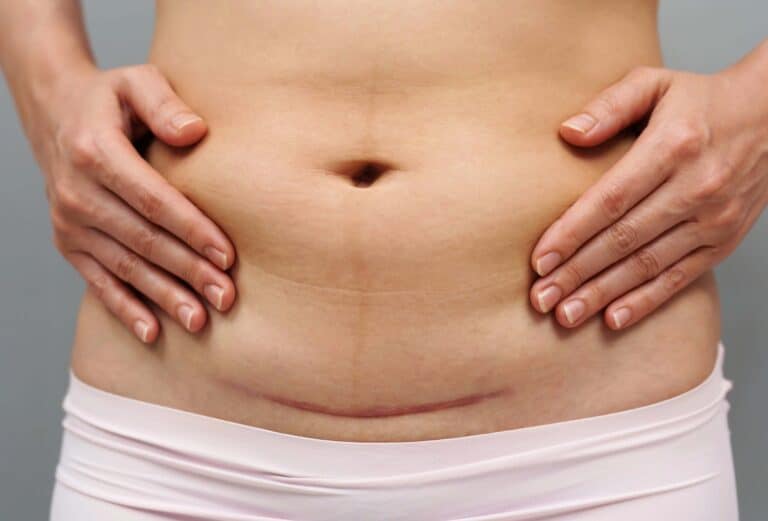
One of the most common questions patients ask before abdominoplasty is whether they will develop stretch marks after tummy tuck surgery. The answer depends on several factors, including skin elasticity, the extent of tissue removal, surgical technique, and individual healing patterns. A tummy tuck (also called abdominoplasty) removes excess skin and fat from the abdominal wall while tightening the underlying musculature. During this process, existing stretch marks located on the lower abdomen, between the navel and the pubic area, are often excised along with the surplus skin. However, stretch marks positioned above the belly button or along the flanks typically remain, though they may shift lower on the abdomen as the remaining skin is pulled taut.
It is equally important to understand that new stretch marks can sometimes appear after surgery. When the remaining abdominal skin is stretched and repositioned to create a flatter contour, the tension placed on the tissue may cause new striae to form, particularly in patients whose skin has reduced collagen integrity. This does not mean the surgery was unsuccessful; rather, it reflects the natural response of skin under tension. Knowing what to expect before your procedure allows you to set realistic goals and work with your surgeon on a prevention and treatment plan.
What Is an Abdominoplasty Procedure?
An abdominoplasty is a body contouring surgery that addresses loose, sagging abdominal skin, separated rectus abdominis muscles (diastasis recti), and stubborn pockets of fat that resist diet and exercise. The procedure involves a hip-to-hip incision placed low on the abdomen, typically within the bikini line. Through this incision, the surgeon removes excess tissue, repairs the abdominal wall, and re-drapes the remaining skin for a smoother, firmer profile. Full abdominoplasty, mini tummy tuck, and extended tummy tuck are the most common variations, each suited to different degrees of laxity and patient anatomy. Recovery generally spans several weeks, with most patients returning to light daily activities within two to three weeks and resuming exercise around six to eight weeks post-op, depending on the surgeon's guidance.
Understanding Stretch Marks (Striae)
Stretch marks, medically known as striae distensae, are a form of scarring that occurs when the dermis, the middle layer of skin, is stretched beyond its elastic capacity. Rapid weight gain, pregnancy, growth spurts, and hormonal fluctuations are the most frequent causes. When collagen and elastin fibers rupture under tension, the skin develops visible lines that initially appear red or purple (striae rubrae) before fading to white or silver (striae albae) over time. Stretch marks are extremely common and affect a significant portion of the population, particularly during pregnancy. Genetics play a major role in determining susceptibility: patients with a family history of stretch marks or those with naturally thinner, less elastic skin are more prone to developing them both before and after surgical procedures.
"I have this conversation with almost every tummy tuck patient. The stretch marks below your belly button will most likely be removed with the excess skin. But the ones above the navel are going to stay, and I want patients to understand that upfront so there are no surprises. The good news is that they usually shift to a lower, less visible position once the skin is re-draped."
, Dr. Cat Begovic, Board-Certified Plastic Surgeon
Can You Get New Stretch Marks After a Tummy Tuck?
Yes, new stretch marks can develop after a tummy tuck, though this outcome is not universal. When the surgeon excises lower abdominal skin and pulls the upper abdominal skin downward to close the incision, the repositioned tissue is placed under increased tension. If the skin lacks sufficient elasticity (due to genetics, age, sun damage, or prior pregnancies) the dermal fibers may tear under this new stress, producing fresh striae. New stretch marks after tummy tuck surgery most commonly appear in the area between the belly button and the incision line, or along the lateral aspects of the abdomen where tension is greatest.
Several factors influence the likelihood of developing new striae post-operatively. Patients who have experienced multiple pregnancies, significant weight fluctuations, or who smoke may have compromised skin quality that increases risk. The amount of skin removed also matters: more aggressive tissue excision creates greater tension on the remaining skin. Your surgeon will evaluate your skin laxity, tissue quality, and medical history during the consultation to help you understand your individual risk profile. While no surgeon can guarantee a stretch-mark-free result, careful surgical planning can minimize the chances.
Myth vs. Fact: Does a Tummy Tuck Cause Stretch Marks?
A common misconception is that the tummy tuck itself directly causes stretch marks. In reality, the surgery does not damage healthy skin fibers. What it does is redistribute tension across the abdominal skin. If the skin that remains after excision is already predisposed to striae (because of weakened collagen, prior stretching, or genetic factors) the new mechanical forces can trigger their formation. Think of it this way: the surgery reveals a vulnerability that already existed in the tissue rather than creating a new problem. Patients with strong, resilient skin and good collagen production are far less likely to develop new stretch marks, even when the skin is pulled tight during closure.
Minimizing and Preventing Stretch Marks Before and After Surgery
While no method can entirely prevent stretch marks, a proactive approach before and after your tummy tuck can meaningfully reduce the risk and severity of striae formation. Preparation begins well before the day of surgery and continues throughout the recovery period.
Preparing for Your Tummy Tuck Procedure
In the weeks leading up to surgery, focus on optimizing your skin health. Staying well-hydrated supports skin elasticity, and a nutrient-rich diet (particularly one high in vitamin C, zinc, and protein) provides the building blocks your body needs for collagen synthesis. If you smoke, your surgeon will strongly recommend quitting at least four to six weeks before the procedure, as nicotine constricts blood vessels and impairs tissue healing. Reaching and maintaining a stable weight before surgery is also critical; significant weight gain after a tummy tuck stretches the newly tightened skin and dramatically increases the chance of new striae. Discuss your goals and concerns openly during your consultation so your surgeon can tailor the surgical plan, including the amount of tissue removed and the degree of tension applied, to your unique anatomy.
Postoperative Care for Stretch Mark Prevention
After surgery, follow your surgeon's recovery instructions closely. Wearing your compression garment as directed helps distribute tension evenly across the healing tissue and supports the skin as swelling subsides. Once your incisions have fully closed and your surgeon gives clearance (typically around four to six weeks post-op) begin applying a medical-grade moisturizer or silicone-based scar treatment to keep the skin supple. Avoid rapid weight changes during recovery; gradual, controlled activity and a balanced diet help maintain your results. Protecting your abdominal skin from excessive sun exposure is also advisable, as UV radiation breaks down collagen and can worsen the appearance of both scars and stretch marks. Gentle massage of the abdominal area, once approved by your surgeon, may improve blood flow and promote healthier tissue remodeling during the months following your procedure.
Treatment Options for Stretch Marks After Tummy Tuck
If stretch marks do appear after your abdominoplasty, several treatment options may help reduce their visibility. No treatment can erase striae completely, but many patients see meaningful improvement with consistent care.
Topical treatments: Prescription retinoid creams (such as tretinoin) may help stimulate collagen production and improve the texture and color of newer, red-toned stretch marks. Over-the-counter products containing hyaluronic acid or centella asiatica extract can support skin hydration and repair, though results vary.
Laser therapy: Fractional laser treatments, including fractional CO2 and pulsed dye lasers, are among the most studied options for striae. These devices create controlled micro-injuries in the skin that trigger a healing response, encouraging new collagen and elastin formation. Multiple sessions are usually required, and results tend to be most noticeable on newer stretch marks.
Microneedling: Also known as collagen induction therapy, microneedling uses fine needles to create tiny punctures in the skin's surface. This stimulates the body's wound-healing cascade, promoting collagen remodeling over a series of treatments. Some practitioners combine microneedling with platelet-rich plasma (PRP) for enhanced results.
Chemical peels: Medium-depth chemical peels using trichloroacetic acid (TCA) or glycolic acid can improve the surface texture of stretch marks by encouraging controlled exfoliation and new skin cell turnover.
Your plastic surgeon or a board-certified dermatologist can recommend the best approach based on the age, color, and location of your stretch marks, as well as your skin type and overall treatment goals. Many patients benefit from combining two or more modalities for the best outcome.
Setting Realistic Expectations for Results
Stretch marks are a form of permanent scarring, and while their appearance can be significantly improved, complete elimination is unlikely with any current treatment. Newer, red or purple stretch marks generally respond better to treatment than older, white or silver ones. Patience is essential. Collagen remodeling is a gradual process, and most treatments require multiple sessions spaced weeks apart before visible improvement occurs. Discuss a long-term treatment timeline with your provider so you can plan accordingly. Individual results vary based on skin type, genetics, and adherence to the treatment plan. Always consult a qualified professional before beginning any post-surgical skin treatment to ensure it is safe and appropriate for your stage of healing.
"I always recommend starting a skin prep routine before surgery. Hydration, good nutrition, and quitting smoking if applicable. The patients who invest in their skin health before their tummy tuck consistently have better outcomes when it comes to both scarring and stretch mark prevention. It is one of those situations where a little preparation goes a long way."
, Dr. Cat Begovic, Board-Certified Plastic Surgeon
Frequently Asked Questions About Stretch Marks After Tummy Tuck
Answers reviewed by Dr. Cat Begovic, MD, FACS. Updated September 2026.
A tummy tuck can remove stretch marks located on the lower abdominal skin that is excised during surgery, typically the area between the belly button and the pubic region. Stretch marks above the navel or on the flanks usually remain, though they may shift to a lower position as the skin is re-draped.
New stretch marks may form because the remaining abdominal skin is pulled tighter during closure, placing increased tension on the dermal fibers. Patients with reduced skin elasticity, a genetic predisposition to striae, or a history of significant weight fluctuations are at higher risk for developing new marks after surgery.
Maintaining a stable weight, staying hydrated, eating a nutrient-rich diet, quitting smoking before surgery, and wearing your compression garment as directed can all help. Once cleared by your surgeon, applying medical-grade moisturizers and protecting the skin from sun exposure may also support healthier healing.
Fractional laser therapy, microneedling, prescription retinoid creams, and chemical peels are among the most commonly recommended options. Newer, red-toned stretch marks tend to respond better than older, white ones. A board-certified dermatologist or your plastic surgeon can recommend a personalized treatment plan based on your skin type and healing stage.
Treated stretch marks do not typically return, but new ones can form if the skin is stretched again due to weight gain, pregnancy, or other factors. Maintaining a stable weight and healthy skin habits helps preserve treatment results long-term.
Most surgeons recommend waiting until your incisions are fully healed (usually four to six weeks minimum) before starting any laser, microneedling, or topical retinoid treatments on or near the surgical area. Silicone-based scar treatments can often be started earlier with your surgeon's approval.
Keep reading
More tummy tuck articles from Dr. Cat's practice.
 Tummy TuckFleur de Lis Tummy Tuck: What to Know Before ConsultationA fleur de lis tummy tuck removes horizontal and vertical excess skin after major weight loss. Learn candidacy, recovery, scars, and results.
 Tummy TuckC-Section Revision: What to Know About Scar Treatment After Cesarean DeliveryExplore c-section revision options including surgical scar excision, laser therapy, and microneedling. Learn when to choose scar revision vs. tummy tuck.
 Tummy TuckCaring for Drains After a Tummy Tuck: What You Need to Know Before DecidingWhy tummy tuck drains are used, how long they stay in, and how to care for them, with practical tips to reduce...
About the author
Dr. Cat Begovic, MD, FACS
Board-certified plastic surgeon, trained in both head and neck surgery and plastic and reconstructive surgery. Harvard-educated, UCLA trained.
Dr. Cat Begovic is a board-certified plastic surgeon in Beverly Hills known for her gentle techniques, compassionate patient care, natural-looking results, and virtually painless recoveries. With Harvard and UCLA training, she brings world-class precision to every procedure she performs. Her articles come from her practice: the questions patients ask at consultations, answered with the prices and techniques in use today.
- 17 years in private practice, 6 years of surgical training
- Named one of the world's top 5 plastic surgeons by Chic Icon Magazine
- Featured on E!'s Dr. 90210 and founder of the luxury skincare brand MD GLAM
- Patients from all over the world
Have a question this article did not answer?
A 15-minute discovery call with our Patient Concierge answers your first questions and books your consultation with Dr. Cat, in person or by video.
15-minute Patient Concierge call, no obligation. The consultation with Dr. Cat is $500, credited toward your surgery.