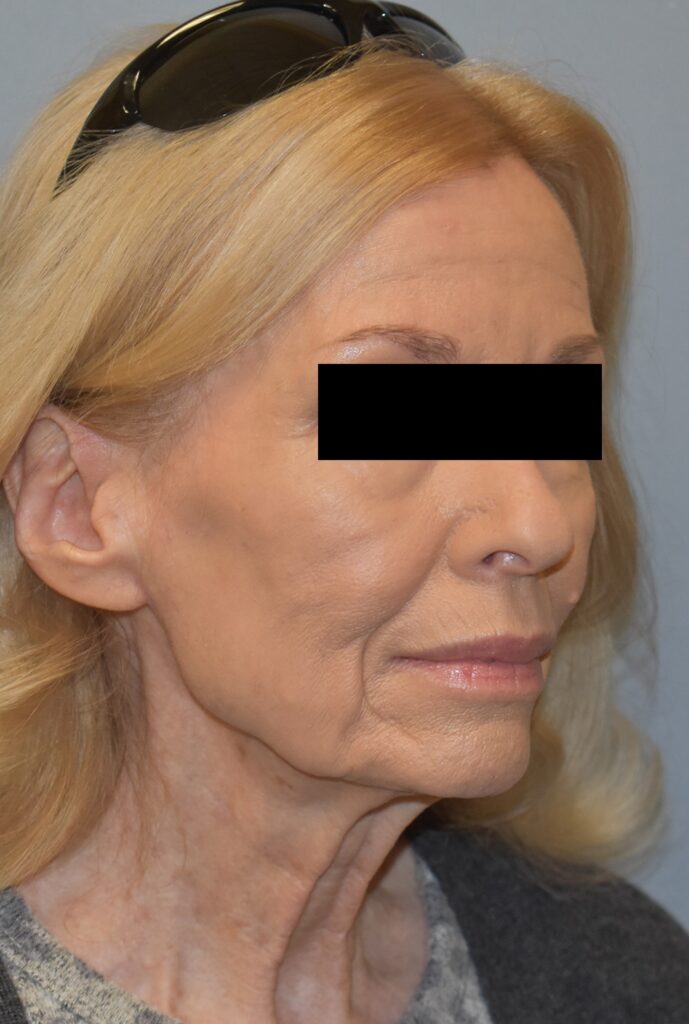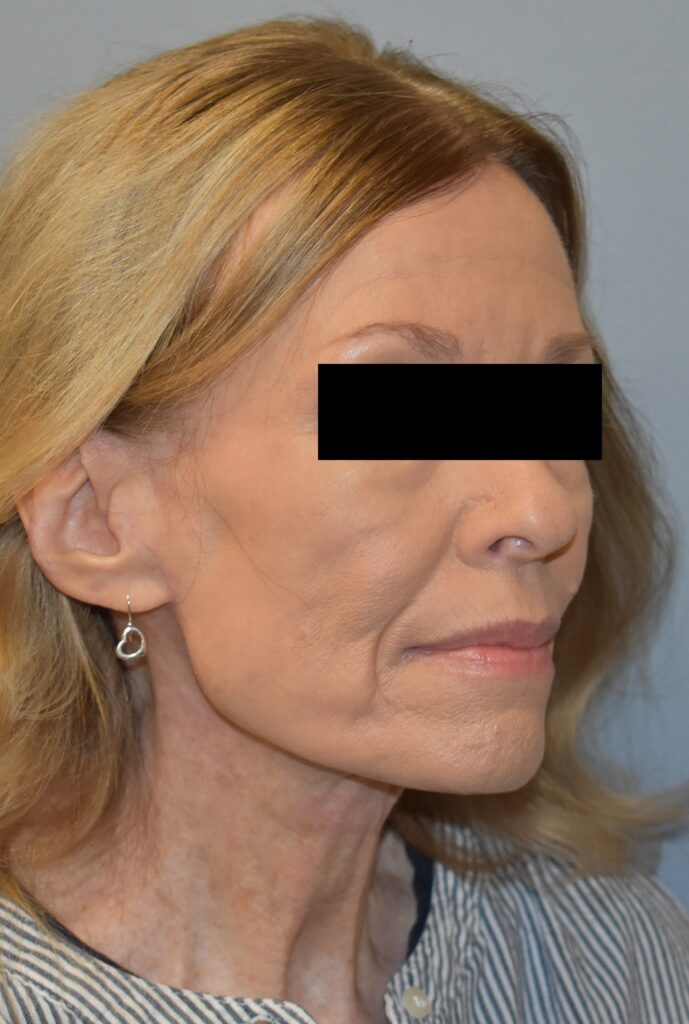


What is a deep plane facelift?
Every facelift technique is named for the layer it lifts. Under the skin is a thin layer of fat; under that is the SMAS (the superficial musculoaponeurotic system), a sheet of muscle and fibrous tissue that carries the muscles of expression and runs into the neck as the platysma; beneath it lie the retaining ligaments that tether the soft tissue to the bone and the branches of the facial nerve. A SMAS lift tightens the SMAS from above; a deep plane facelift enters beneath the SMAS and works in the plane below it. Our facelift page covers the face and neck lift, the mini facelift and the revision facelift; this page explains the deep plane operation.
That plane allows two things a SMAS lift cannot do fully. The first is release: the cheek is anchored to the bone by the zygomatic ligaments, the jowl by the masseteric ligaments, the corner of the jaw by the mandibular ligament and the neck by cervical ligaments, and as the tissue above them slackens these anchors stop it from being put back, so a SMAS lift can only pull against them. A deep plane lift divides them under direct vision, and the whole unit of skin, fat, SMAS and platysma moves as a single flap: the cheek fat back onto the cheekbone, the jowl back above the jawline, the platysma up with the neck. The second is direction: upward, along the path the tissue fell, not back toward the ears.
Deep plane facelift vs SMAS facelift
Deep plane facelift
- What is lifted: skin, fat, SMAS and platysma as one unit, after the ligaments are released; the deep layer carries the lift, so the closure heals finer
- Reach: past the ligaments into the cheek and jowl, and below the jaw when the neck is included
- Longevity: ten years or more; more deep swelling, settled at six to twelve months
- Who suits it: established mid-face descent, heavy jowls, a loose neck, thin or sun-damaged skin, revision of an earlier lift
- Price: our facial plastic surgeon's fee, $45,500 to $65,500; the operating room and anesthesia quoted at the consultation
SMAS facelift
- What is lifted: the SMAS is folded, overlapped or trimmed under a separately lifted skin flap, which takes part of the load and is likelier to widen a scar
- Reach: stops short of the ligaments; the cheek is pulled rather than released
- Longevity: several years to about a decade; less deep swelling, a shorter operation
- Who suits it: mild to moderate laxity, mostly in the lower face, with good skin
- Price: at our practice the SMAS lift and the deep plane lift are performed by the same facial plastic surgeon and carry the same fee, $45,500 to $65,500
Both are real facelifts that work on the SMAS through the same incisions; the difference is whether the SMAS is tightened from above or lifted from below. At our practice both are performed by our board-certified facial plastic surgeon, who uses the deep plane approach for most face and neck lifts, and the choice is not made on price; it is made on anatomy, and at the consultation you are told which operation fits your face. Our facelift page covers the face and neck lift, the mini facelift and the revision facelift.
What a deep plane facelift treats
Jowls first. A jowl is not loose skin; it is the tissue of the lower cheek that has dropped below the jawline as its ligaments stretched. Repositioning the flap puts it back, and because the jowl itself is lifted rather than the skin over it pulled, the jawline returns without the swept look of an older facelift; our page on sagging jowls explains why fillers and energy devices cannot do this. Deep nasolabial folds are the second group: the fold deepens because the cheek fat has slid down onto it, so filling it adds weight in the wrong place, while lifting the cheek takes the weight off.
The neck is the third, when the operation is extended: the platysma is repositioned with the flap, and the bands and the fat under the chin are treated through a short incision beneath it. A neck that has changed under a jawline that still holds is covered on our neck lift and turkey neck pages. What it does not treat matters as much: no facelift changes the quality of the skin, restores lost volume, lifts the brow or opens the eyelids, so resurfacing, fat transfer to the face, an eyelid lift or a brow lift is planned with it when those are the problem.
Who is a good candidate for a deep plane facelift?
The typical patient is between her mid-forties and early seventies, though the calendar matters less than the face: what makes a candidate is established descent, cheeks that have come down, jowls that have formed, a neck that has loosened.
You may be a good candidate if
- Your cheeks have come down, your jowls have formed and your neck has loosened, past what filler and skin care can disguise
- Your skin is thin or sun-damaged: the deep plane approach never asks it to carry the lift
- You had a facelift years ago that has relaxed, or one that left a pulled look
- Your blood pressure is controlled, and you can stop every nicotine product for at least four weeks before and after surgery
Not yet, or a different plan, if
- Early jowling in your forties with good skin: a smaller procedure, fat grafting or a SMAS lift may be enough
- Your concern is skin texture or lost volume rather than descent: resurfacing or fat grafting, not a lift
- Only the neck has changed under a jawline that still holds: a neck lift alone may be the operation
- Uncontrolled blood pressure, blood thinners that cannot be paused, or nicotine you cannot stop
Blood pressure must be controlled, because a rise in the first hours after surgery is the usual cause of a hematoma. Blood thinners, aspirin, anti-inflammatories, fish oil, vitamin E and most supplements stop two weeks before surgery (the list is in our pre-op instructions). Nicotine constricts the small vessels that keep the skin edges alive, so smoking turns a candidate into a non-candidate.
How a deep plane facelift is performed
The incision and the lift
The incision starts in the hair at the temple, follows the crease in front of the ear, usually tucked just inside the small cartilage at the ear canal, passes around the earlobe and runs up behind the ear into the hairline; a short incision under the chin is added when the neck is treated. The surgeon enters beneath the SMAS along a line from the angle of the jaw toward the outer corner of the eye, releases the ligaments under direct vision, moves the flap upward along the path the tissue fell and fixes it; in the neck, the platysma is repositioned with the flap. The skin is then redraped and the excess trimmed with no tension on the closure, so the scars usually heal as fine pale lines hidden by the ear and the hair.
Surgery day
A deep plane facelift is performed under general anesthesia with a board-certified anesthesiologist in the practice's QUAD A accredited surgery center on Rodeo Drive, over about four to six hours, longer when an eyelid lift, a brow lift or fat grafting is added. A light dressing goes on, sometimes with a small drain for a day or two, and the first night is spent with a nurse or a responsible adult, never alone.
Performed by our facial plastic surgeon
At Dr. Cat Plastic Surgery the deep plane facelift is performed by our facial plastic surgeon, whose whole practice is facial surgery. Our facial plastic surgeon is double board-certified, in otolaryngology-head and neck surgery and in facial plastic surgery, with a facial cosmetic surgery fellowship completed in Beverly Hills. A colleague of Dr. Cat's for more than a decade, he shares the practice's standard of meticulous technique and natural, refined results, with a gentle operative style aimed at minimal bruising.
Extended deep plane facelift and the deep plane neck lift
An extended deep plane facelift carries the release below the jaw: the platysma in the neck is the continuation of the SMAS in the face, so the flap is released and repositioned as one piece from the cheek to the neck. It is what most surgeons mean today by a deep plane facelift, and what our facial plastic surgeon's face and neck lift fee covers. A deep plane neck lift is the neck portion on its own, the platysma released and repositioned rather than only sutured, quoted at the consultation.
Deep plane facelift recovery timeline
A deep plane facelift asks for a longer initial downtime than a mini or SMAS lift, because it addresses deeper layers, but the milestones are those of any facelift. Our facelift recovery timeline takes each week in more detail.
- The night of surgeryYou wake with a light dressing and sometimes a small drain, and spend the first night with a nurse or a caregiver. The face feels tight and numb rather than painful; most patients manage with Tylenol and a few days of prescribed medication.
- Days two to threeSwelling and bruising peak and then begin to fade. Sleep with your head raised and avoid bending and lifting. Drains, if placed, come out within a day or two.
- One weekThe sutures around the ear come out; be at home, or at your hotel with a caregiver.
- Two weeksBy day ten to fourteen most patients are presentable with a little makeup and back at a desk. Silicone strips or gel start once the incisions have sealed, with sun protection for a year.
- Weeks three to sixVisible swelling is largely gone by the end of week three; deeper firmness and numbness resolve over months. Social life at two to three weeks, light exercise at about four weeks, full exercise at six.
- Months two to sixThe cheek and the jawline sharpen, the neck often last, and sensation returns.
- Six to twelve monthsThe incisions fade to fine pale lines; our facelift scar care post follows them to twelve months. The result is judged at a year.
Deep plane facelift results, and how long they last
The result of a well-done deep plane facelift is a face that looks rested and like itself, roughly ten years earlier: cheeks that sit high, a jawline with an edge, a neck with an angle, softened folds and a natural expression. Ten years or more is the typical durability: the tissue goes back to where it was a decade ago and the clock starts again from there, aging set back rather than switched off. Sun protection, a stable weight and not smoking protect it.
Deep plane facelift before and after photos
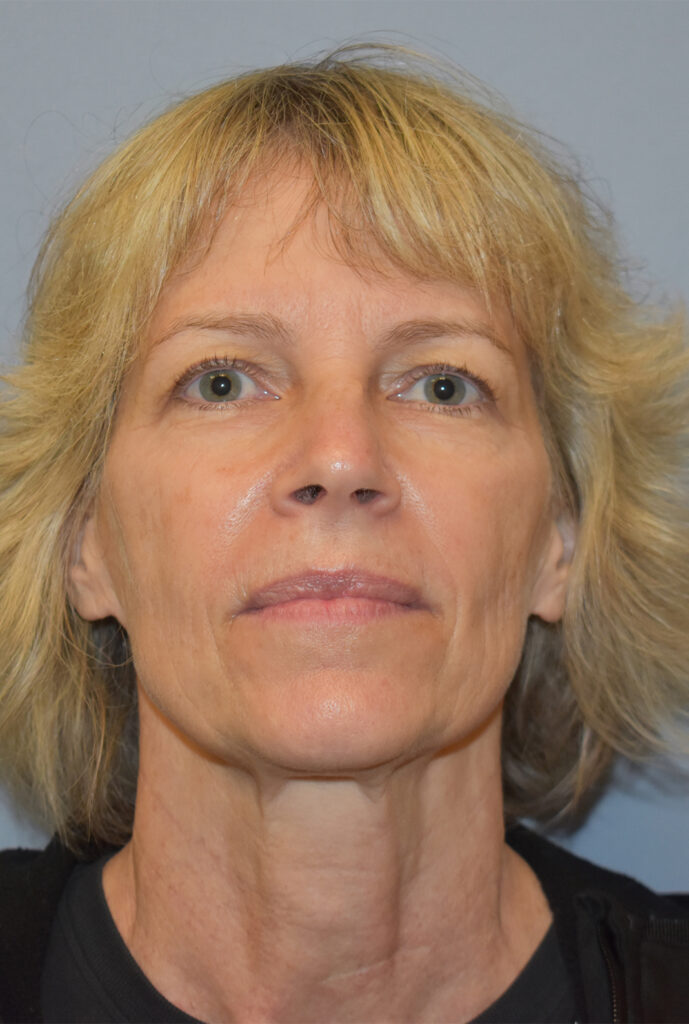
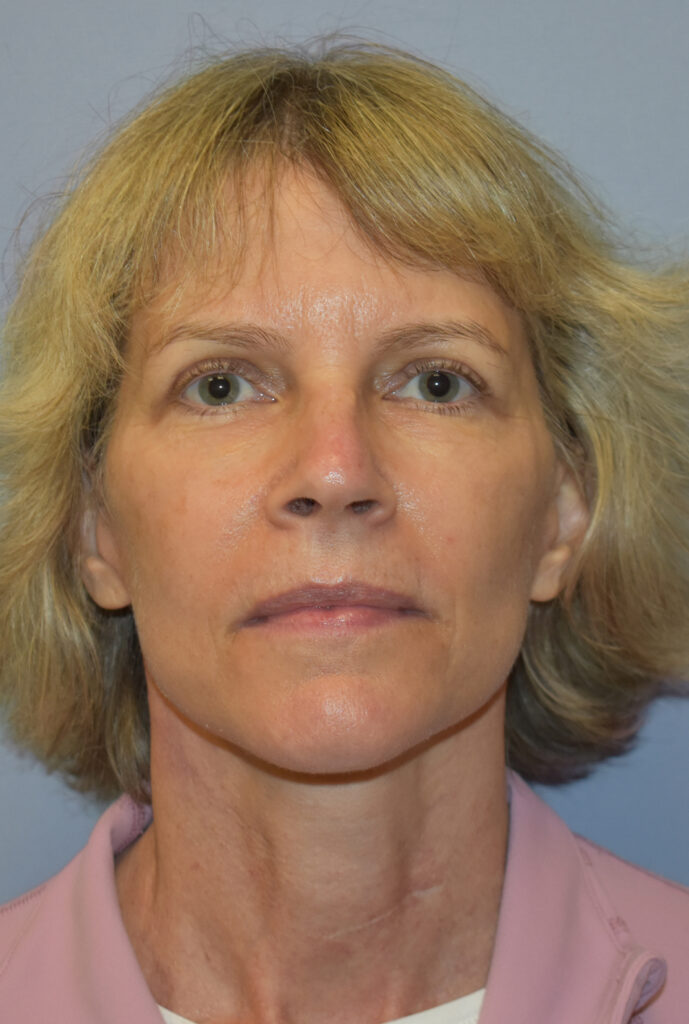
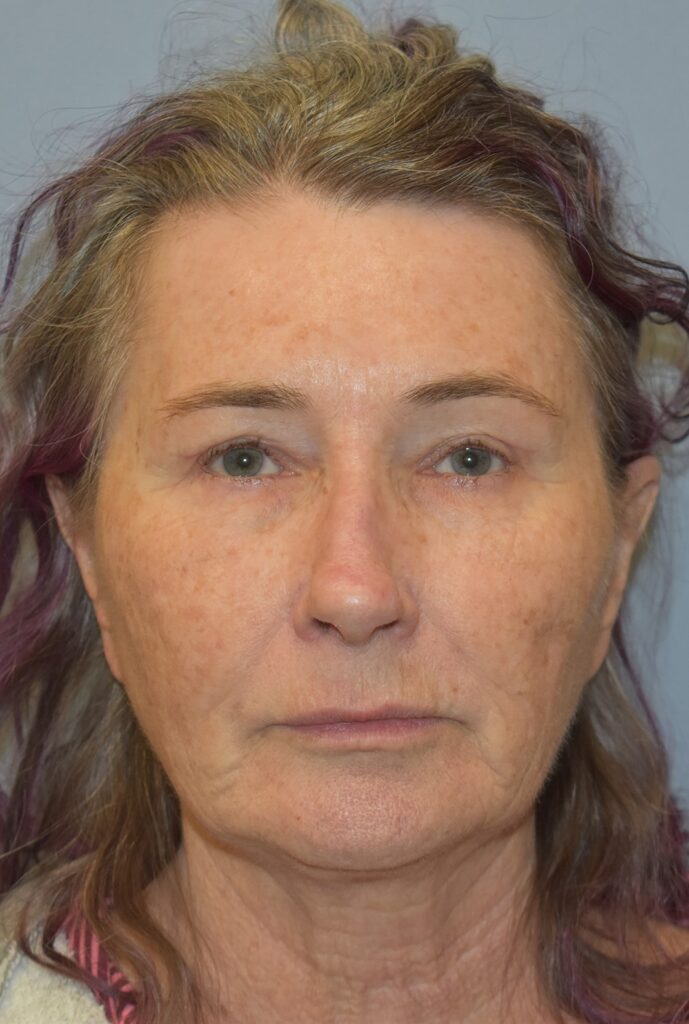
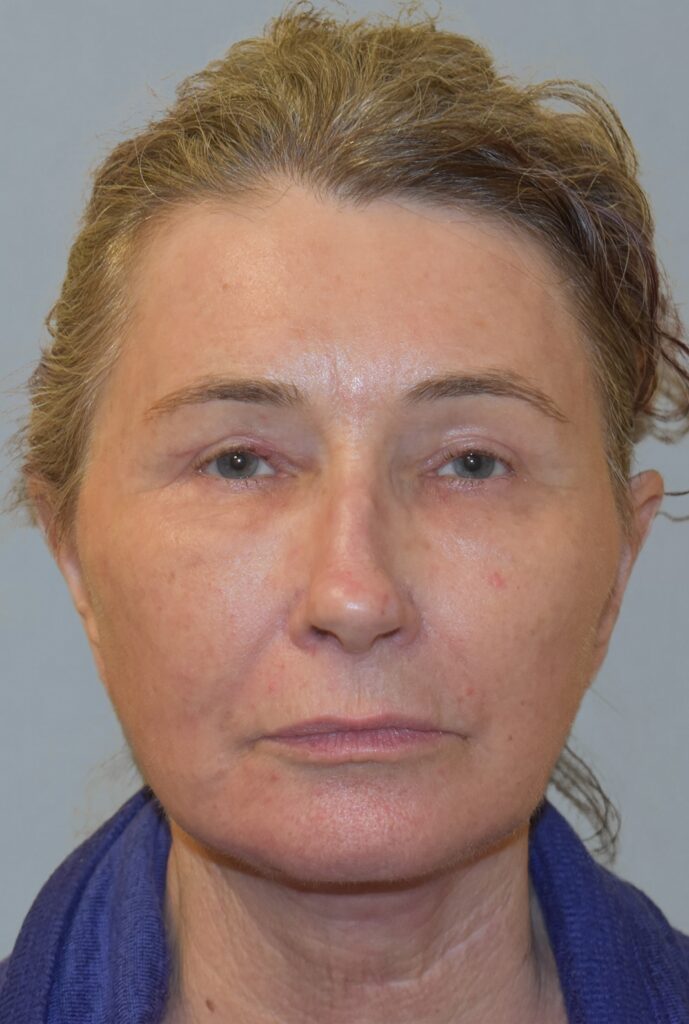
Read deep plane facelift before and after photos in three views: the profile for the neck and the edge of the jawline, the three-quarter view for the cheek, which should sit high over the cheekbone with the fold softened rather than erased, and the front view as the test of naturalness: the same person, rested, with the mouth, the earlobes and the hairline undisturbed. Two cases in our facelift before and after gallery, FLF-P18 and FLF-P25, are labeled deep plane facelift with fat grafting.
Risks and safety
A deep plane facelift is major surgery, and its risks should be read before its benefits. Here is what can happen and how the risks are reduced.
What can go wrong
- Injury to a branch of the facial nerve, which runs just beneath the plane the surgeon works in: temporary weakness in a small percentage of cases, recovering over weeks to months; permanent injury is rare in experienced hands
- A hematoma in the first day or two, more frequent when blood pressure rises, treated by returning to the operating room
- Skin loss behind the ear, the complication smokers court; the deep plane technique lowers that risk but does not remove it
- Infection; numbness of the cheek and ear for months; asymmetry
- Widened scars, a pulled earlobe, a shifted hairline or sideburn, a result that needs a revision, and the risks of general anesthesia
How the risks are reduced
- A surgeon whose practice is facial surgery and who performs this specific dissection regularly
- Careful patient selection: blood pressure controlled, nicotine stopped for four weeks before and after, blood thinners and supplements paused two weeks before
- The release and the repositioning done under direct vision, never hurried
- A tension-free closure, incisions inside the folds of the ear and along the hairline, the earlobe and the sideburn left where they belong
- A board-certified anesthesiologist in a QUAD A accredited surgery center, and the first night with a nurse or a caregiver, when a hematoma would declare itself
- Silicone and sun protection on every scar from week two, and follow-up visits through the first months
How much does a deep plane facelift cost in Beverly Hills?
Our facial plastic surgeon's fee for a deep plane face and neck lift is $45,500 to $65,500, and for a revision face and neck lift, after a previous facelift by any surgeon, $60,000 to $75,000. Those are surgeon's fees: the operating room and anesthesia are quoted with them at the consultation, so your written quote is one figure, and it moves with what is combined. For context, our facelift cost guide reports that specialist deep plane practices publish surgeon's fees from the high $20,000s to more than $40,000 before anesthesia and the facility.
The price reflects a surgeon whose practice is facial surgery, a board-certified anesthesiologist for the whole case, an accredited facility and a nurse for the first night. Please do not fall for a cheap facelift: at a fraction of this price it is usually a skin-only lift, and revising a pulled result costs more than the original surgery done well. Insurance does not cover a facelift.
Consultation fee and financing
A consultation is $500, or $1,500 for a revision consultation, credited in full toward your surgery. The practice partners with Cherry, its primary financing partner, and also accepts CareCredit and Alphaeon Credit; see financing and payment plans.
Your consultation
It starts with a free 15-minute discovery call with our Patient Concierge, who books your consultation with our facial plastic surgeon: in person on Rodeo Drive or, for out-of-town patients, by private video consultation through OnPatient, the HIPAA-secure patient portal. He reviews your history, medications, prior facial surgery and any fillers, and examines the face at rest and in motion: the cheek fat, the jowls, the skin, the neck and its platysma, the hairline and the earlobes. Bring photographs of yourself from ten or fifteen years ago; they show where the tissue came from. You leave with a written quote and a plain answer to whether a deep plane facelift, a SMAS lift or a smaller procedure fits your face.