

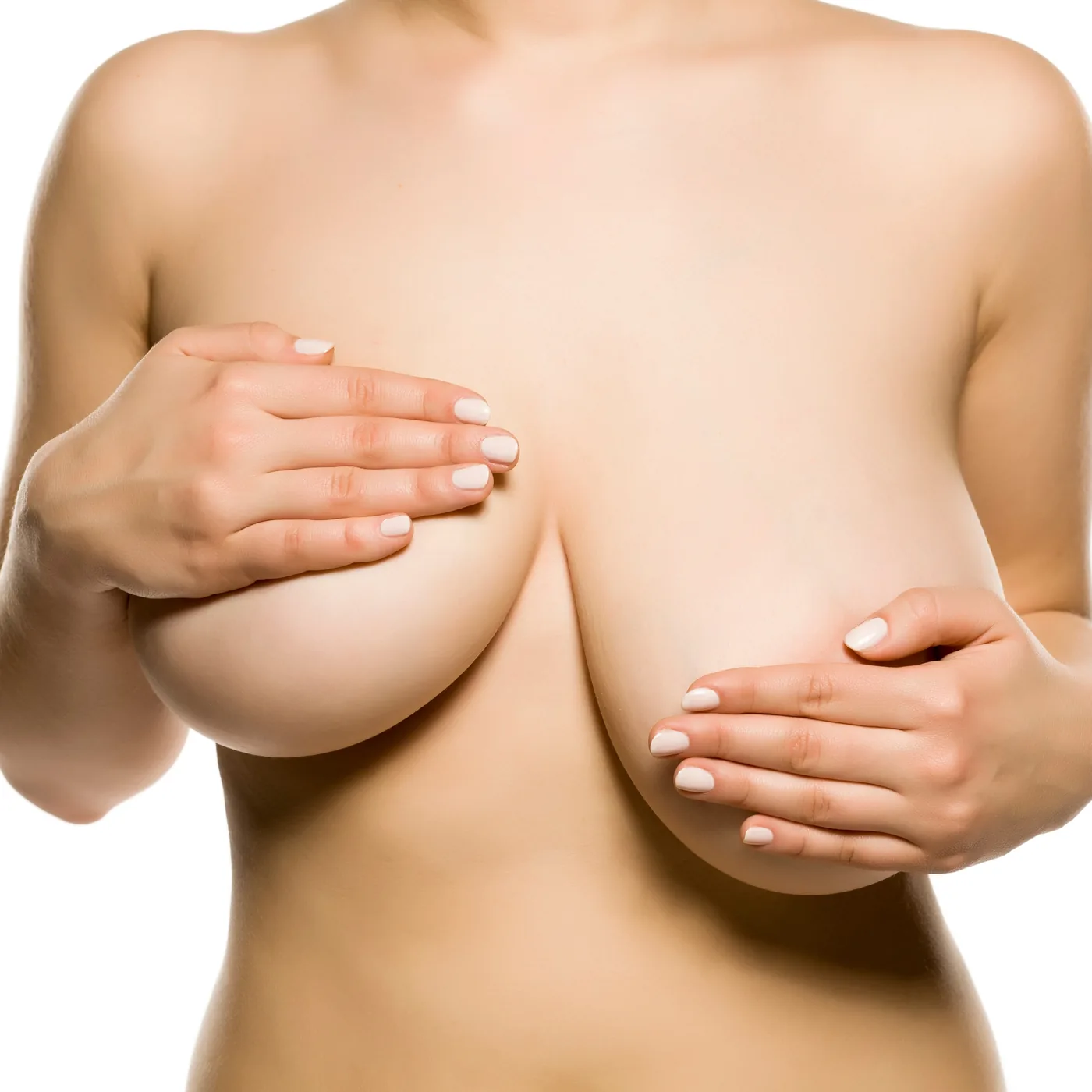
What is a breast reduction revision?
Revision reduction mammaplasty, the medical term for a breast reduction revision, is a second operation on a breast that has already been reduced. A first breast reduction removes tissue, fat and skin, reshapes what remains, raises the nipple and reduces the areola; done well, it takes the weight away for good. A revision is for the reduction that did not: the wrong amount removed, a shape never built, nipples set in the wrong place, scars that stretched, or a good result undone by pregnancy, weight gain or time.
What a breast reduction revision corrects
- Too little removed: breasts still large, heavy and painful
- Too much removed: breasts flat, deflated or empty above the nipple
- Recurrent sagging, or bottoming out: tissue settled below the nipple, so the nipple points up
- A nipple set too high, so it shows above a bra, or too low, or the two at different heights
- Uneven breasts: one larger, lower or differently shaped (read about uneven breasts)
- Scars that healed wide, thick, dark or raised, and dog ears, the puckers of skin where the crease incision ends
- A boxy shape or a flat upper pole, because the tissue was removed but not reshaped
- Firm lumps of fat necrosis, and breasts that grew back after weight gain or pregnancy (our post on breast growth after reduction surgery explains when)
What it is not
A lift that did not hold, on a breast with nothing to remove, is a revision breast lift, the sister operation for the breast that is low but not heavy. Capsular contracture, a shifted implant, a rupture or any other implant problem belongs to breast revision; the signs are on our breast implant problems page. A scar that is wrong on a breast that is right is a breast reduction scar revision.
A botched breast reduction: what went wrong, and what can be put right
A botched breast reduction usually means one of a few things, and most of them can be corrected. The most common is shape: a breast that came out boxy or square, flat across the top or long below the nipple, because the tissue was removed but never rebuilt into a breast. Next is the nipple: set too high, so it shows above a bra, or left too low on a breast that has since dropped, or an areola cut too large. Then size: still heavy because too little came out, or flat because too much did. Then the scars: wide, thick or dark, or puckered into a dog ear where the crease incision ends.
If this is where you are, two things are worth knowing. Some of what looks wrong at three months settles by a year: swelling flattens a shape, immature scars are red and raised, and a high, tight breast drops into its fold, which is why Dr. Cat waits six to twelve months before judging any reduction. What does not settle is not something you have to live with, and a second opinion is not a complaint about your first surgeon. Bring your photos and operative notes if you have them, and Dr. Cat will tell you plainly what a revision corrects, what it improves and what it cannot change.
Who is a good candidate for a breast reduction revision?
Time comes first. Dr. Cat's general rule is to wait at least six to twelve months from the first surgery before a breast reduction revision, so the plan is made on a settled breast rather than a shape that is still moving. Then comes what failed, which decides whether the whole anchor is reopened or one part of it.
You may be a good candidate if
- At least six to twelve months since your breast reduction, and the size, shape, nipple position or scars did not turn out as planned
- Your breasts are still heavy and still hurt, or smaller and flatter than you asked for
- One breast is larger, lower or shaped differently from the other
- Your weight is stable, you do not use nicotine, and at least three months have passed since breastfeeding
- You accept that a revision works through scar tissue and aims at improvement
Not yet, or a different plan, if
- Less than six months since the first reduction: swelling and immature scars can look like a poor result
- The breast is low but the size is right: that is a revision breast lift
- The complaint is an implant: contracture, malposition or rupture is a breast revision
- You are pregnant, breastfeeding or planning a pregnancy soon
- You use nicotine and cannot stop; the nipple's blood supply was already rearranged once
- You want it on the same day as a tummy tuck; Dr. Cat stages the two
Which breast reduction revision do you need?
Full revision: tissue removed or reshaped and the lift redone
The whole reduction redone through the anchor incision the first surgeon left: around the areola, down to the crease and along it. Dr. Cat removes more tissue where too little came out, reshapes and re-tightens what remains where the shape was never built or has dropped, re-centers the nipple, resizes the areola and excises the old scars with the skin that is removed. This is the operation for a reduction that is still too large, boxy, bottomed out or uneven, and for the breast that grew back after weight gain or pregnancy, followed by the first night in a plastic surgery aftercare center. Dr. Cat's surgeon's fee for a full revision is $75,000 to $79,000; the operating room, anesthesia and the aftercare night are quoted at your consultation.
Revision for a reduction that removed too much
A breast that was over-reduced is reshaped and re-lifted with the tissue that remains, so what is left sits higher and fills the upper breast. When volume itself is missing, the options are an implant or fat transfer; our comparison of implants vs fat transfer explains what fat can do, about one cup size, and why it follows the revision as a second surgery.
Breast reduction scar revision, and areola reduction alone
When the breast itself is right and only the scars are wrong, Dr. Cat excises the wide, thick or raised scar, or the dog ear at the end of the crease line, and closes the skin again in meticulous layers without tension; the breast is not re-tightened, which makes this the smallest revision, with a surgeon's fee of $22,000 to $25,000. An areola cut too large, or stretched again under the weight of the breast, is reduced on its own with an incision along the edge of the pigmented skin, a surgeon's fee of $12,500; for both, the operating room and anesthesia are quoted at your consultation.
How Dr. Cat does it
Dr. Cat is a board-certified plastic surgeon, trained in both head and neck surgery and plastic and reconstructive surgery, Harvard-educated and UCLA trained, and she has been a breast revision patient herself, after an augmentation of her own. She is known for minimal-scar breast reduction and for treating the shape as carefully as the size, and she calls breast revisions incredibly challenging, work that demands detailed analysis of the breast anatomy as well as extensive experience and technical skill. She performs every step of every breast reduction revision herself.
The first surgery is read before the second is planned
Before any incision is chosen, Dr. Cat works out what the first surgeon did: the pattern, read from the scars and from the operative notes when you have them; how the nipple was moved and on what tissue; how much came out of each side against how much is left. From that she picks the least surgery that will hold: not a bigger operation than the breast needs, and not a smaller one that leaves you where you started.
Through the anchor you already have, then reshaped
The revision is done through the existing scars, so no new scar is added: the areola, vertical and crease lines are reopened along the old ones. A scar that healed wide or thick is excised entirely, and a dog ear is taken out with the end of the crease line. Inside, she removes what the first surgery left behind, or repositions what remains when too much was taken, then sculpts it into a full, lifted teardrop and tailors the skin over it without tension, each side on its own measurements so the breasts finish level.
The nipple and areola, the second time
In a first reduction the nipple and areola keep their attachment to the breast tissue and the vessels under them, which is why sensation and breastfeeding are often preserved. That blood supply has already been rearranged once, so Dr. Cat keeps the nipple on the tissue that feeds it, moves it up or, more carefully, down, and reduces an areola cut too wide. Sensation changes are the subject of our post on lost feeling in the nipples after breast reduction.
Surgery day: one major surgery per surgical day
The surgery takes place under general anesthesia, with a board-certified physician anesthesiologist and a numbing solution in the breast, in Dr. Cat's QUAD A accredited surgery center on Rodeo Drive, the only major surgery scheduled that day. A revision takes longer than a first reduction because it works through scar tissue; the time is set at your consultation. You wake in a support bra her team measures for you, with small drains, and spend the first night in a plastic surgery aftercare center.
Breast reduction revision recovery timeline
Recovery after a breast reduction revision follows a first reduction: little pain, a support bra, drains for about a week, and the arms kept quiet for two weeks.
- The night of surgeryYou wake in your support bra, with little pain, and are on your feet within a few hours; the aftercare center takes over for the night, with nurses checking the drains.
- Day oneYou come to the office from the aftercare center. Dr. Cat checks the incisions and the drains and goes through the instructions. Most patients manage with Tylenol.
- One weekThe drains come out. Most patients are back at a desk and feel close to normal; the arms still stay below shoulder height, with no exercise until two weeks.
- Two weeksSilicone scar care starts on the revised scars and the arm restriction ends. Moderate exercise such as walking can begin.
- One monthDr. Cat clears most patients for vigorous exercise.
- Two to three monthsAfter at least two months the support bra can come off. The three-month visit with Dr. Cat is when the shape is close to final.
- Four to six monthsThe breast settles into its final shape. The revised scars keep fading for up to a year.
Breast reduction revision before and after photos
The six cases below are breast reductions by Dr. Cat; none is labeled a revision in the gallery. BRR-0676 and BRR-0040 had heavy, markedly asymmetric breasts, corrected by removing a different amount from each side; BRR-0930 and BRR-3653 are reductions with the lift finished as a round teardrop with a thin scar; BRR-3639 is a lift without implants for asymmetry, and BRR-3648 a lift with a small reduction after a weight loss of almost 100 pounds. Open each case in the breast reduction before and after photos.
Risks and safety
A revision carries the risks of a first reduction, and three are larger the second time: the blood supply to the nipple, healing through scar tissue, and the scars themselves.
What can go wrong
- A seroma (fluid collection) or hematoma (blood collection) in the first days, or an infection at an incision or a drain
- Slower healing through scar tissue, or a small opening where the vertical and crease lines meet
- Loss of blood supply to part of the nipple or areola, rare but likelier than in a first reduction, and much likelier in smokers
- Changed nipple or breast sensation, usually temporary, rarely a partial or total loss
- New fat necrosis, a scar that heals wide, raised or dark again, and keloids where a patient is prone to them
- Asymmetry, a shape needing a touch-up, and regrowth with weight gain or pregnancy
- Difficulty breastfeeding, the risks of anesthesia, and a rare but serious blood clot in the leg
How Dr. Cat reduces these risks
- Six to twelve months of waiting after the first surgery, so the plan is made on a settled breast
- The pattern of the first surgery worked out from the scars and the operative notes, and the nipple kept on the tissue that feeds it
- The least surgery that will hold, and every incision closed in meticulous layers without tension
- No nicotine, a stable weight, three months since breastfeeding, medical clearance and lab work
- Drains, a support bra measured for you, a QUAD A accredited surgery center, a board-certified physician anesthesiologist, one major surgery that day
- The aftercare night, two weeks of arm restrictions, silicone scar care, and visits at one day, one week, two weeks, one month and three months
How much does a breast reduction revision cost in Beverly Hills?
A revision of a previous breast reduction or lift with Dr. Cat, tissue removed or reshaped and the lift redone through the anchor incision, is $75,000 to $79,000 in surgeon's fees. The operating room, the board-certified physician anesthesiologist and the first night in a plastic surgery aftercare center, where every revision patient stays, are quoted at your consultation, once Dr. Cat has examined you and set the operating time your surgery needs; the quote is itemized in writing and includes your support bra and your follow-up visits. Surgeon's fees are typical ranges: a more complex case can cost more, and your fee is set at your consultation and is final only in your written quote. A breast reduction scar revision alone is $22,000 to $25,000 and an areola reduction alone $12,500 in surgeon's fees.
A breast reduction revision costs more than a first reduction, a surgeon's fee of $50,000 to $70,000 with Dr. Cat (see our plastic surgery cost guides), because the surgery is longer and less predictable: the tissue is scarred, the nipple's blood supply has already been rearranged once, and the plan has to undo what was done before it can build the shape. Behind the price is one surgeon doing every step herself, one major surgery per surgical day, a physician anesthesiologist and an accredited facility. What goes into a revision quote is explained in our breast revision cost guide.
Insurance, consultation fee and financing
Dr. Cat's practice does not accept insurance: a revision with her is self-pay, and the office gives you the paperwork to file a claim with your insurer after surgery, but does not verify coverage or bill insurance. A revision consultation with Dr. Cat is $1,500, credited in full toward your surgery. To pay over time, the practice partners with Cherry, its primary financing partner, and also accepts CareCredit and Alphaeon Credit; see financing and payment plans.
Your consultation with Dr. Cat
It starts with a free 15-minute discovery call with our Patient Concierge. At the consultation, in person on Rodeo Drive or, for out-of-town patients, by private video consultation through OnPatient, the HIPAA-secure patient portal, Dr. Cat listens first: what you asked for the first time, what you got, and what you want now. Then she measures both breasts, the nipples against the fold, the areolas and the scars, and tells you what a revision would correct, what it would improve and what it cannot change. You leave with an itemized written quote.


