
Dr. Cat Begovic, MD, FACS, board-certified plastic surgeon, Beverly Hills
Key Takeaways
- Capsular contracture happens when scar tissue around a breast implant tightens and hardens, affecting roughly 1 in 10 implant patients
- Early signs include firmness, rounded shape changes, and discomfort, usually appearing 2 to 12 months after surgery
- Prevention starts with surgeon technique: sterile no-touch insertion, Keller funnel use, and sub-muscular placement
- Daily implant massage and displacement exercises during the first 3 months reduce risk significantly
- Grades III and IV typically require a capsulectomy; Grades I and II may respond to non-surgical approaches
What Capsular Contracture Actually Is
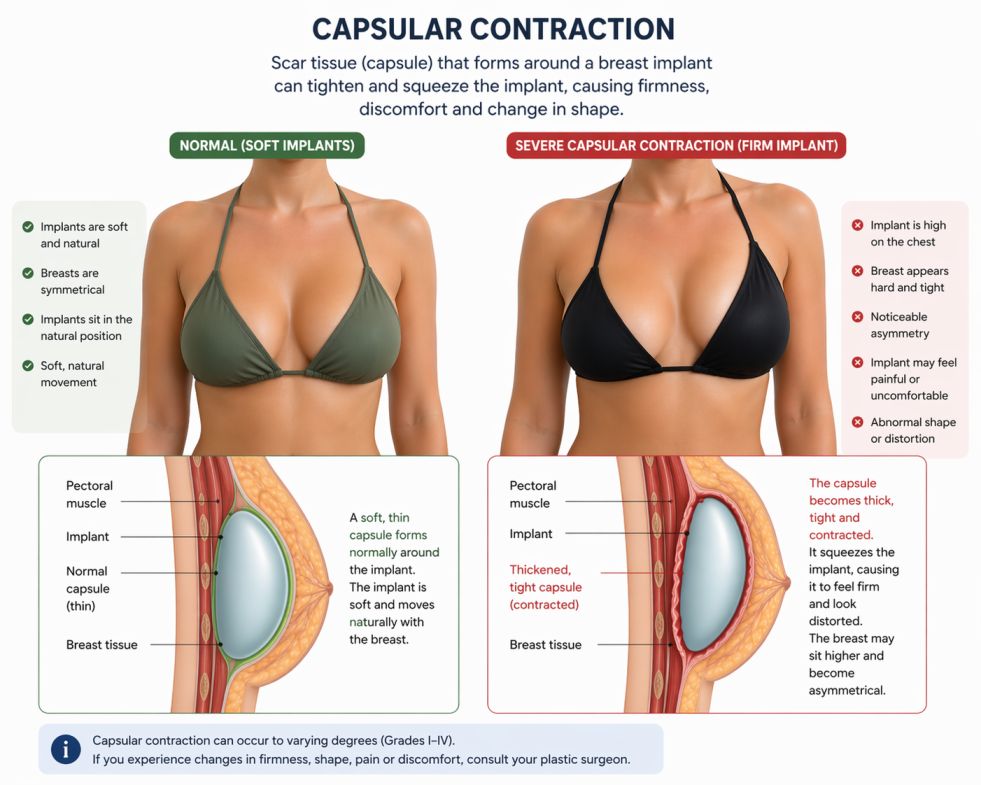
Every time the body receives an implant, whether a breast implant, pacemaker, or joint replacement, it forms a thin layer of scar tissue around the foreign object. This is called a capsule, and it's completely normal. The problem starts when that capsule thickens, contracts, and squeezes the implant inside it. That's capsular contracture.
So when patients ask what is capsular contracture and how can I avoid it, the short answer is: it's an overactive scar response, and most cases can be prevented or caught early with the right approach.
Early Warning Signs to Watch For
The first signs usually show up between 2 and 12 months post-op, though late-onset cases can appear years later. Look for the implant sitting higher than the other, a rounder or ball-like shape, firmness that wasn't there before, tightness across the chest, or aching that worsens when you lift your arms. Catching it at Grade I or II sometimes allows non-surgical intervention.
What Causes Capsular Contracture
Research points to three main culprits: bacterial contamination, hematoma or seroma, and chronic inflammation. The leading theory is biofilm: a thin layer of bacteria that adheres to the implant surface during surgery. These bacteria aren't enough to cause an obvious infection, but they trigger a low-grade immune response that drives excessive scar tissue formation.
Hematomas (blood collections) and seromas (fluid collections) after surgery also raise contracture risk by providing a medium for bacterial growth. Chronic inflammation from any source, even remote infections like dental abscesses, can theoretically seed the implant through the bloodstream years later.
The Biofilm Problem
Studies using bacterial cultures on removed capsules have found biofilm present in a majority of contracted capsules. The bacteria most often implicated are common skin flora like Staphylococcus epidermidis. They enter during the procedure, usually through skin contact with the implant during insertion. That single detail shapes most modern prevention protocols.
How We Prevent It During Surgery
Prevention starts before the implant ever touches the body. The surgical technique used during breast augmentation determines the vast majority of contracture risk. Evidence-based protocols, sometimes called the "14-point plan", have been shown to lower contracture rates substantially when followed consistently.
Key elements include intravenous antibiotics before incision, nipple shields to block bacteria from the milk ducts, irrigation of the pocket with antibiotic solution, minimizing implant handling, and using a Keller funnel for a completely no-touch insertion. Sub-muscular placement provides an additional layer of vascularized tissue over the implant, which further reduces contamination risk.
"Every step of our surgical protocol is designed around one goal: keeping the implant from ever touching anything it shouldn't. That means using a Keller funnel every time, triple antibiotic irrigation, nipple shields: the full protocol. These aren't extras; they're standard of care in my operating room."
Dr. Cat Begovic, MD, FACS
What You Can Do to Avoid It
Patients have more control than they realize. The first 6 to 12 weeks after augmentation are critical, and your daily habits during that window matter significantly.
Implant displacement exercises (IDEs) keep the pocket open and the capsule pliable. Starting around week 2, or whenever your surgeon clears you, gently press the implant up, down, and inward several times a day. Think of it like working out stiffness. This is the single most important thing most patients can do at home. Pectoral stretches, avoiding sleeping on your stomach, and not smoking are also important: nicotine constricts blood vessels and impairs healing.
Long-Term Habits That Help
Beyond the first few months, keep up gentle massage for at least a year. Treat any skin infections or dental work aggressively, because bacteria anywhere in the body can theoretically seed the implant. Report any new firmness or shape change early. Early-stage contracture is much easier to address than late-stage.
"The massage routine in those first few months is non-negotiable for my smooth sub-muscular implant patients. I've seen patients who skipped it develop contracture, and I've seen patients who were diligent have beautiful, soft results a decade out. That consistency genuinely changes outcomes."
Dr. Cat Begovic, MD, FACS
According to the U.S. Food and Drug Administration, capsular contracture is one of the most commonly reported complications in breast implant patients. The FDA recommends regular follow-up imaging and encourages patients to report any changes in breast feel or appearance to their surgeon promptly.