
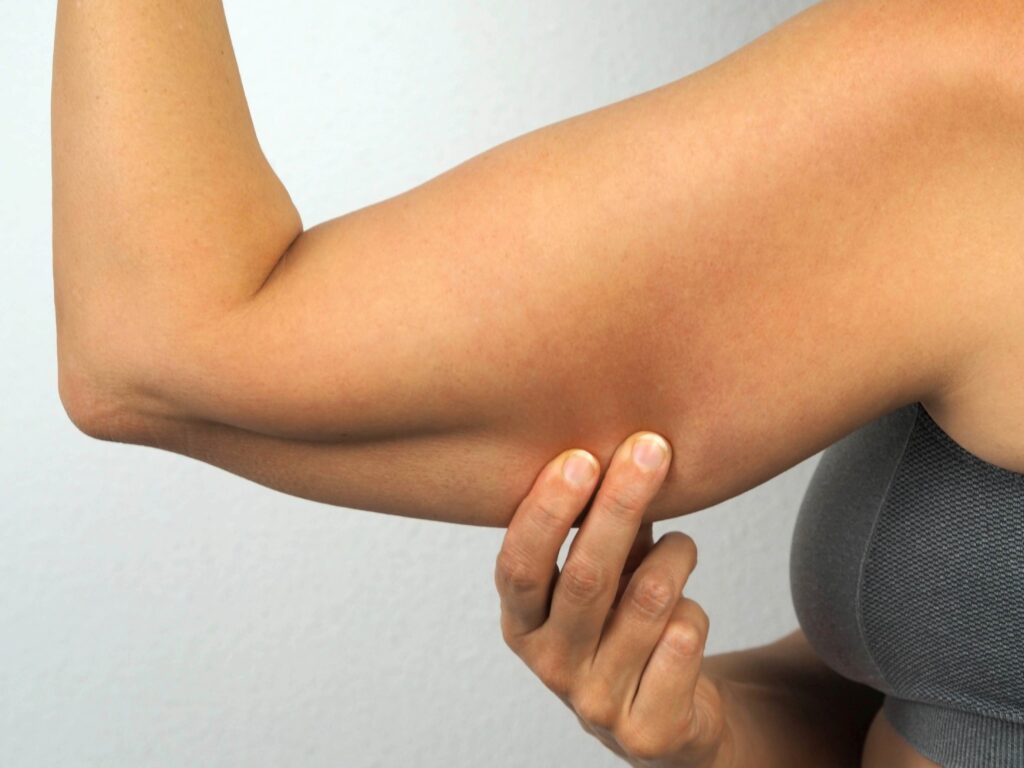
- Bat wings are caused by excess skin, excess fat, or a combination of both on the underside of the upper arms.
- Targeted triceps exercises combined with cardio and a caloric deficit can improve arm definition, but cannot tighten loose skin.
- Brachioplasty (arm lift surgery) is the most effective option for patients with moderate to severe skin laxity.
- Mini brachioplasty and posterior scar techniques offer less visible scarring for patients with milder concerns.
- Most patients return to normal activities within one to two weeks after surgical arm lift, with final results visible at three to six months.
How to Get Rid of Bat Wings: Exercises, Lifestyle Changes, and Surgical Solutions
Quick Answers
15-minute Patient Concierge call, no obligation. The consultation with Dr. Cat is $500, credited toward your surgery.

What Are Bat Wings and Why Do They Develop?
If you've been searching for how to get rid of bat wings, you're not alone. "Bat wings" is the common term for excess skin and fat that hangs from the underside of the upper arms, particularly along the triceps area. When you extend your arms outward, this loose tissue droops downward, creating a wing-like appearance that many patients find frustrating.
Several factors contribute to bat wing arms. As we age, skin loses elasticity due to decreased collagen and elastin production. Significant weight loss, especially rapid weight loss after bariatric surgery, often leaves behind stretched skin that cannot retract on its own. Genetics also play a major role; some people are simply predisposed to storing fat in the upper arms. Hormonal shifts, particularly during menopause, can accelerate fat redistribution to the arms and reduce skin firmness.
Understanding the root cause of your bat wings matters because it determines which treatment approach will be most effective. Excess fat responds differently than excess skin, and many patients have a combination of both. A qualified plastic surgeon can assess whether your concern is primarily fat accumulation, skin laxity, or both, and recommend the right path forward.
Fat vs. Skin Laxity: Knowing the Difference
Pinch the underside of your upper arm gently. If you feel a thick layer of soft tissue, excess fat is likely a significant contributor. If the tissue feels thin and papery, skin laxity is the primary issue. Most patients dealing with bat wings have some degree of both. This distinction is critical because exercise and diet can reduce fat, but they cannot tighten loose, stretched skin. Patients with mild fat deposits and good skin elasticity may see meaningful improvement through targeted exercise and body composition changes. Those with moderate to severe skin laxity, however, typically require a surgical approach to achieve the contour they want.
"The first thing I do during a bat wings consultation is help the patient understand what's actually causing the issue. If it's mostly fat, we have non-surgical options that can make a real difference. If it's loose skin, and it usually is after major weight loss or with aging, exercise alone is not going to fix it. Being honest about that upfront saves patients a lot of frustration."
, Dr. Cat Begovic, Board-Certified Plastic Surgeon
Targeted Exercises That Help Reduce Bat Wings
While exercise alone may not fully resolve bat wings, especially when excess skin is involved, building muscle in the triceps, deltoids, and upper back can significantly improve arm definition and reduce the appearance of sagging. Strength training increases muscle mass beneath the skin, creating a firmer, more toned look. Combined with overall fat loss through a caloric deficit, these exercises form the foundation of a non-surgical approach.
Consistency is key. Patients often report visible changes after several weeks of dedicated upper-body training performed two to three times per week. Pair these exercises with cardiovascular activity and a balanced diet to maximize fat loss throughout the body, since spot reduction of fat is not physiologically possible.
Best Triceps and Upper Arm Exercises
Pulley triceps extension: Using a cable machine, grip the rope attachment overhead and extend your arms downward, squeezing the triceps at the bottom. Perform three sets of 12 to 15 repetitions. This exercise isolates the triceps effectively.
Diamond pushups: Place your hands close together beneath your chest, forming a diamond shape with your thumbs and index fingers. Lower your body and push back up. This variation shifts emphasis from the chest to the triceps. Modify by performing on your knees if needed.
Tricep pushups: Keep your elbows tucked close to your sides during a standard pushup. This small adjustment dramatically increases triceps engagement compared to a wide-grip pushup.
Lying triceps extensions (skull crushers): Lie on a bench holding dumbbells above your chest, then bend at the elbows to lower the weights toward your forehead. Extend back to the starting position. Use a weight that allows controlled movement for 10 to 12 reps.
Supporting Exercises for Arm Definition
Lat pulldown: Sit at a cable machine and pull the bar down to your upper chest, engaging the latissimus dorsi muscles. Strong lats create a more defined upper body silhouette and support overall arm aesthetics. Aim for three sets of 10 to 12 reps.
Reverse fly: Bend forward at the hips holding light dumbbells, then raise your arms outward to shoulder height, squeezing the shoulder blades together. This targets the posterior deltoids and upper back, improving posture and arm appearance from behind.
Deltoid raise: Stand with dumbbells at your sides and raise them laterally to shoulder height. This builds the medial deltoid, creating broader shoulders that visually balance the upper arm. Keep the weight moderate so momentum doesn't take over.
For exercise modifications, beginners can reduce weight, use resistance bands instead of cables, or perform pushup variations on an inclined surface. The goal is progressive overload over time, not immediate heavy lifting.
When Exercise Isn't Enough: Brachioplasty and Surgical Options
For many patients, learning how to get rid of bat wings through exercise alone leads to disappointment, not because they didn't work hard enough, but because their concern is primarily excess skin. No amount of triceps work can shrink stretched, inelastic skin. This is where brachioplasty, commonly called an arm lift, becomes the most effective solution.
Brachioplasty removes excess skin and fat from the upper arm, typically through an incision along the inner arm or the back of the arm. The remaining skin is redraped and tightened to create a smoother, more contoured arm profile. Arm lift procedures have seen significant growth in demand over the past decade, particularly among patients who have lost substantial weight or experienced age-related skin changes.
Candidates for brachioplasty are generally at or near a stable weight, in good overall health, and have realistic expectations about scarring and recovery. The procedure is performed under general anesthesia and typically takes one to three hours depending on the extent of correction needed.
Types of Arm Lift Techniques
Several brachioplasty techniques exist, and the right choice depends on the degree of skin excess and fat present. A standard brachioplasty involves an incision from the armpit to the elbow along the inner arm, allowing removal of significant skin and fat. A mini brachioplasty uses a shorter incision limited to the armpit area and is suited for patients with mild to moderate laxity concentrated near the underarm. Some surgeons use a posterior scar brachioplasty technique, which places the incision along the back of the arm rather than the inner surface, making the scar less visible when arms are at rest. For patients whose bat wings are primarily caused by fat rather than skin, liposuction alone, or combined with a limited skin excision, may provide adequate improvement with smaller scars and shorter recovery.
"I use the posterior scar technique for a lot of my arm lift patients because it hides the scar where most people won't see it. When you're standing with your arms at your sides, the scar sits along the back of the arm instead of the inner surface. Patients are much more comfortable wearing sleeveless tops after healing, which is really the whole point of the procedure."
, Dr. Cat Begovic, Board-Certified Plastic Surgeon
Recovery and What to Expect
Most patients return to desk work within one to two weeks following brachioplasty. Swelling and bruising are common during the first few weeks, and compression garments are typically worn for several weeks to support healing and minimize swelling. Patients should avoid heavy lifting and strenuous upper-body exercise for approximately four to six weeks, or as directed by their surgeon. Scars mature over several months to a year, gradually fading from red or pink to a lighter tone. Final results become apparent as swelling fully resolves, usually within three to six months. Results vary based on individual healing, skin quality, and adherence to post-operative instructions.
Feeling Confident in Your Body: Choosing the Right Approach
Deciding how to get rid of bat wings is a personal decision that depends on your anatomy, goals, and lifestyle. For patients with good skin elasticity and mild fat deposits, a dedicated exercise program targeting the triceps, deltoids, and back, combined with overall body fat reduction, may produce satisfying results over time. HIIT moves that strengthen arms, such as burpees with pushups or battle rope intervals, can accelerate fat loss while building muscle simultaneously.
For those with moderate to severe skin laxity, particularly after major weight loss or due to aging, surgical intervention through brachioplasty offers the most dramatic and lasting improvement. Many patients pursue a combination approach: building muscle through exercise first, then addressing residual skin surgically once they've reached a stable weight.
A board-certified plastic surgeon can evaluate your upper arms, discuss your aesthetic goals, and recommend a personalized treatment plan. During a consultation, expect a physical examination of your arm skin quality, a discussion of your medical history, and an honest conversation about what each option can realistically achieve.
Whatever path you choose, the goal is the same: feeling comfortable and confident in your own skin. Bat wings are an extremely common concern, and effective solutions exist for every severity level. The first step is understanding your options and consulting with a qualified professional who can guide you toward the right one.
Frequently Asked Questions About How to Get Rid of Bat Wings
Answers reviewed by Dr. Cat Begovic, MD, FACS. Updated September 2026.
Exercise can reduce upper arm fat and build triceps muscle, which improves arm definition. However, if your bat wings are primarily caused by loose, excess skin (common after significant weight loss or due to aging) exercise alone cannot tighten that skin. A surgical arm lift may be necessary for patients with moderate to severe skin laxity.
Most patients notice improved muscle tone and firmness in the upper arms after six to eight weeks of consistent strength training performed two to three times per week. Visible fat reduction depends on maintaining a caloric deficit alongside exercise. Results vary based on starting body composition, genetics, and workout intensity.
Brachioplasty, or arm lift surgery, removes excess skin and fat from the upper arms to create a smoother contour. Good candidates are at or near a stable weight, in good general health, and have realistic expectations about scarring. It is especially popular among patients who have lost significant weight and have hanging skin that does not respond to exercise.
Brachioplasty does leave scars, typically along the inner arm or the back of the arm depending on the technique used. Scars fade significantly over several months to a year. Posterior scar techniques place the incision where it is less visible when arms are at your sides. Your surgeon will discuss scar placement options during your consultation.
Non-surgical approaches include targeted strength training focusing on triceps exercises like diamond pushups, tricep extensions, and lying triceps extensions. Combining these with cardiovascular exercise and a healthy diet supports overall fat loss. Some patients also explore non-invasive body contouring treatments, though results are typically modest compared to surgery for significant skin laxity.
Cost varies depending on the technique used, the surgeon's experience, geographic location, and whether liposuction is included. Brachioplasty is typically considered a cosmetic procedure and is not covered by insurance unless there is a documented functional issue such as skin rashes or infections caused by excess tissue. Discuss pricing and financing options during your consultation.
Yes. Many patients combine brachioplasty with other body contouring procedures such as a tummy tuck, breast lift, or liposuction, particularly as part of a post-weight-loss body transformation. Combining procedures can reduce overall recovery time compared to staging them separately. Your surgeon will evaluate whether combining is safe based on your health and the extent of work planned.
Keep reading
More body articles from Dr. Cat's practice.
 BodyHow Much Does a Mommy Makeover Cost in Beverly Hills?Mommy makeover cost with Dr. Cat in Beverly Hills, priced from its parts: tummy tuck, breast surgery, liposuction. Ranges, the quote, staging,...
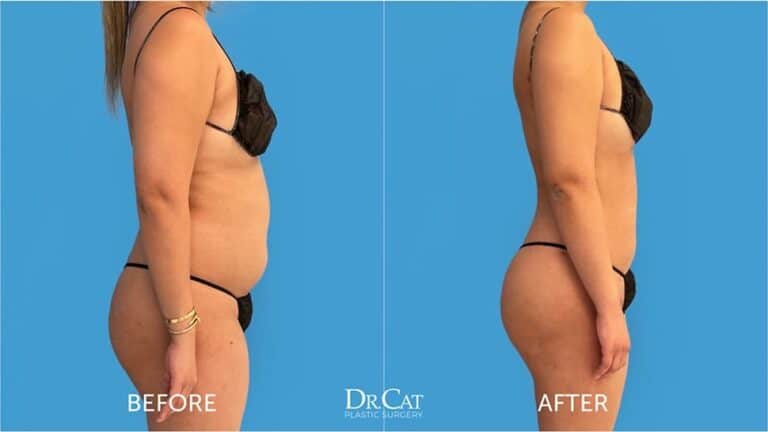 BodyHow Much Does Liposuction Cost? Liposuction Pricing in Beverly HillsWhat liposuction costs with Dr. Cat in Beverly Hills: one area, several areas, lipo 360 and fat transfer, with national averages, insurance...
 BodyHow Much Does a Tummy Tuck Cost? Tummy Tuck Pricing in Beverly HillsTummy tuck cost is often the deciding factor when patients choose a surgeon. Here is what a tummy tuck with Dr. Cat...
About the author
Dr. Cat Begovic, MD, FACS
Board-certified plastic surgeon, trained in both head and neck surgery and plastic and reconstructive surgery. Harvard-educated, UCLA trained.
Dr. Cat Begovic is a board-certified plastic surgeon in Beverly Hills known for her gentle techniques, compassionate patient care, natural-looking results, and virtually painless recoveries. With Harvard and UCLA training, she brings world-class precision to every procedure she performs. Her articles come from her practice: the questions patients ask at consultations, answered with the prices and techniques in use today.
- 17 years in private practice, 6 years of surgical training
- Named one of the world's top 5 plastic surgeons by Chic Icon Magazine
- Featured on E!'s Dr. 90210 and founder of the luxury skincare brand MD GLAM
- Patients from all over the world
Have a question this article did not answer?
A 15-minute discovery call with our Patient Concierge answers your first questions and books your consultation with Dr. Cat, in person or by video.
15-minute Patient Concierge call, no obligation. The consultation with Dr. Cat is $500, credited toward your surgery.