

Why Lips Swell After Filler
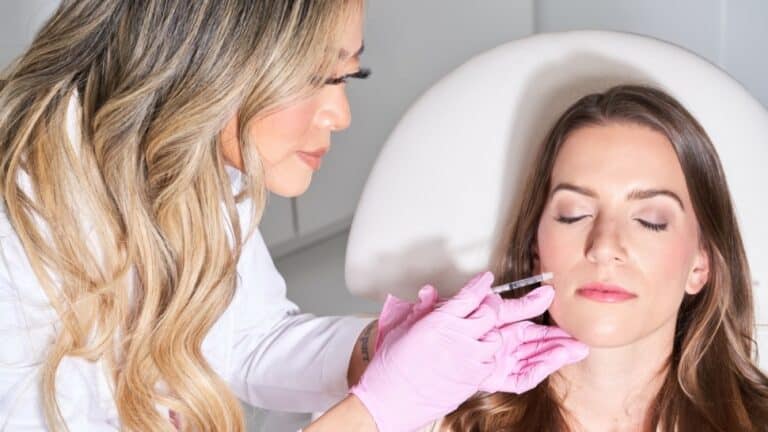
Three things swell a lip after filler. The needle passes cause a small amount of bleeding and inflammation, as any injection does. The gel is hyaluronic acid, a sugar that binds water, so for the first days it pulls fluid into the lip on top of its own volume; Juvederm draws in a little more water than Restylane, so early swelling is often milder with Restylane. And the lips have a richer blood supply than the cheeks or the folds, so fluid arrives faster and bruises are more common. How much you swell also depends on how much gel goes in and how it is placed: Dr. Cat's multi-layer, multi-directional technique places small amounts through a very thin needle from more than one direction, so the filler blends into the tissue instead of clumping, and it is also why her patients bruise and swell less.
Next step: if you are still deciding on lip filler, read about facial fillers in Beverly Hills with Dr. Cat, who injects the lips herself, or book a free discovery call and our Patient Concierge will arrange your appointment.
Lip Filler Swelling Stages, Day by Day
Day 1: the day of treatment
The lips look fuller the moment the needle comes out, and over the evening they keep swelling as fluid moves in. They feel numb from the topical anesthetic for an hour or two, then tender, tight and warm, and a bruise may start to show. This is the day ice does the most: start as soon as you are home, 10 to 15 minutes at a time. No makeup, lipstick or balm on the lips for 24 hours, nothing that could carry bacteria onto fresh needle marks, and no strenuous exercise, sauna or hot yoga. Skip alcohol, drink water, and avoid straws, puckering and kissing for the first day.
Day 2: peak swelling
Swelling peaks at 24 to 48 hours, so the morning of day two is usually the worst the lips will look: bigger than the result, often uneven, sometimes with a bruise on one side and not the other, and stiff when you smile. None of this is the filler; it is water and inflammation around it. Keep icing, keep your head raised, and do not press or massage the lips to even them out unless Dr. Cat told you to.
Days 3 to 4: swelling starts to fall
The lips soften and shrink noticeably from day three, the tightness eases and a bruise turns from purple to yellow. Small firm spots you can feel are swelling around the gel and settle on their own. Ice is optional now; use it if the lips still feel hot, otherwise stop. Exercise is allowed after the first 24 hours, but a hard workout can bring the swelling back for a day, so many patients wait until the end of the first week. Swelling that is getting worse rather than better from day three is the exception, and it is a reason to call.
Week 1: close to the final shape
By day seven most of the swelling is gone and the lips are close to their final shape: a little fuller than they will be, with the border and the proportions showing. A faint yellow bruise, a small firm spot and slight stiffness when you pucker are normal at one week and resolve by two. Makeup and lipstick are fine, and the lips feel like your own again when you eat and talk.
Week 2: the final look and the follow-up visit
The final look shows at about two weeks, once the last swelling has left and the gel has settled into the tissue. This is when Dr. Cat checks the two sides at your follow-up visit, and when a small touch-up is planned if one is needed. Judge symmetry, fullness and the border now, not before; a lip that looked uneven on day two almost always looks even at two weeks.
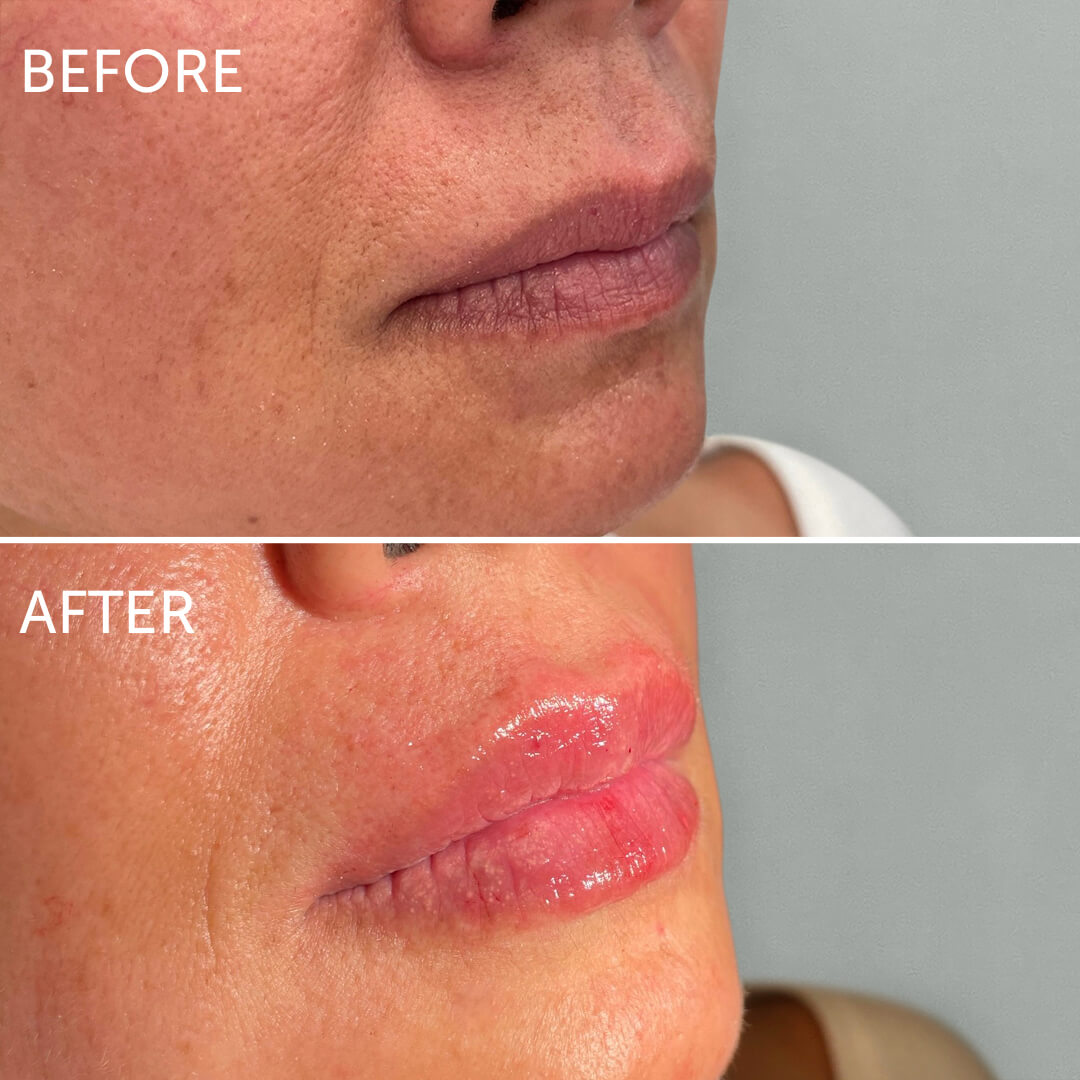
Lip filler before and after at Dr. Cat Plastic Surgery, side view. An after photograph should be dated two weeks or later, once the swelling has settled.
Week 4: settled
By four weeks the gel has fully integrated and the lips are what they will be for the life of the filler: soft, mobile, with no firmness left. Lip filler lasts 6 to 12 months, the shortest of any area, because the lips move constantly and their blood flow clears hyaluronic acid quickly; a touch-up on the maintenance schedule Dr. Cat writes for you usually needs less gel than the first visit. Our post on making dermal filler results last longer covers the aftercare that stretches a syringe.
Icing Your Lips After Filler: How Long and How Often
Ice is the one home measure that visibly reduces lip filler swelling and bruising, and it is part of Dr. Cat's protocol from the start: in the office, a topical anesthetic, ice and a probe that reduces the sting keep the treatment close to painless. At home the rules are these:
- Should you ice? Yes, starting as soon as you are home on the day of treatment.
- How long each time: 10 to 15 minutes. Longer sessions do not reduce swelling further and can numb or damage the thin skin of the lips.
- How often: three to five rounds a day for the first 48 hours, with at least 30 minutes between rounds. Ice most on day one and the morning of day two, when swelling peaks, and taper off through day three.
- How long to keep icing: two days. After day two, ice only if the lips still feel hot or tender; by day four most patients have stopped.
- How to ice: wrap a cold pack, a bag of frozen peas or ice cubes in a thin clean cloth; never put ice directly on the lips. Hold the pack lightly without pressing, and do not rub or massage; the gel is still settling.
- When to stop: if the skin turns pale or numb, or icing hurts, take the pack off and let the lips warm before the next round.
Cold narrows the small vessels leaking fluid into the lip; it does nothing to the filler itself, so there is no risk of icing away your result.
Lip Filler After 1 Week: What Is Normal
At one week the swelling has mostly gone and the shape is close to final, but the lips are not finished. Normal at day seven: lips slightly fuller than the result, a small firm spot you can feel but not see, a fading yellow bruise, a little stiffness when you pucker or whistle, and a faint asymmetry, because the two sides rarely swell at the same rate. Filler placed by Dr. Cat stays within the lip, so a ridge above the upper lip line should not be there; if you feel gel outside the border, mention it at the two-week visit. Not normal at one week, and a reason to call the same day: swelling that is growing rather than shrinking, spreading redness or warmth, fever, a lump that is getting bigger or more painful, or a cold sore, which lip injections can reactivate in patients who get them.
How to Reduce Lip Filler Swelling Faster
These are the aftercare rules Dr. Cat's patients follow, and they are the same for Juvederm and Restylane:
- Ice for the first two days, as above.
- No makeup, lipstick or balm on the lips for 24 hours, and no strenuous exercise for 24 hours.
- Sleep on your back with your head raised on two pillows for two nights, so fluid drains rather than pools.
- No saunas, hot yoga, hot baths or direct sun on the face for a few days; heat brings blood to the lips and swelling with it.
- No alcohol for 24 to 48 hours, because it dilates vessels and worsens bruising; drink water instead.
- Tylenol for an ache if you need it. Aspirin, ibuprofen and other anti-inflammatories add bruising, so they are best avoided for the first day or two unless your prescriber needs you on them.
- No massage, pressing or squeezing of the lips unless Dr. Cat told you to; the gel is settling for two weeks.
- Avoid straws, puckering, kissing and hot drinks on the first day.
- Book at least two weeks before an event, so the swelling has settled.
Before treatment, the list matters as much: for a week beforehand, no aspirin, anti-inflammatories, alcohol or herbal supplements, and no treatment over an active cold sore until it has healed.
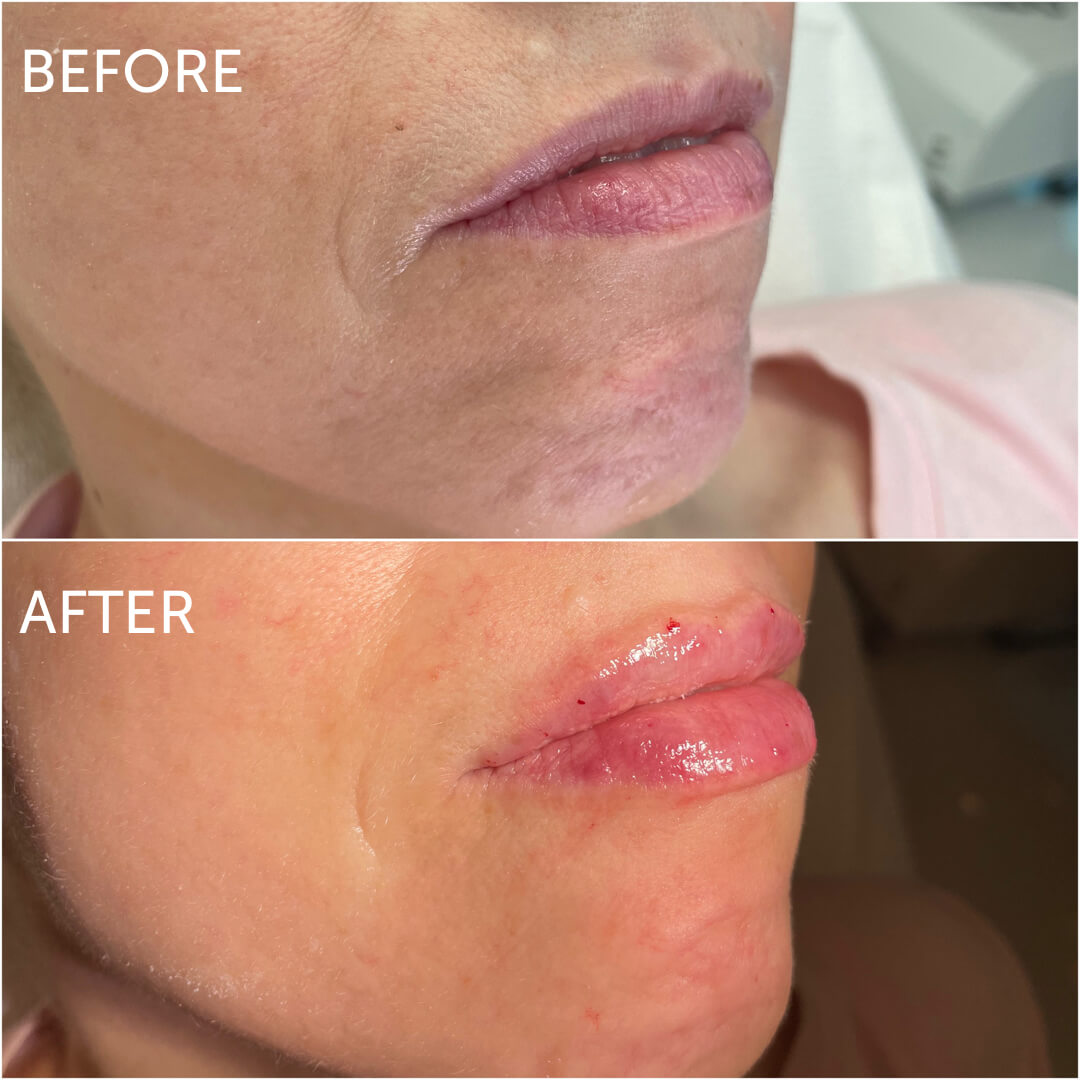
Lip filler before and after at Dr. Cat Plastic Surgery: fuller in the patient's own shape, with no gel outside the lip line.
When Swelling Is Not Normal: Signs to Call About
Ordinary swelling is soft, warm, worst at 24 to 48 hours and better every day after day three. The serious risk of any filler is vascular occlusion: gel injected into an artery blocks the blood supply to the skin it feeds, and in the rarest cases gel that reaches the vessels behind the eye costs vision. It is rare, and it announces itself. Call the office at once, day or night, if the skin over or near the lips turns white, mottled or dusky, if pain is severe or out of proportion to what you expected, or if your vision changes; a hyaluronic acid filler can be dissolved at once with hyaluronidase, an enzyme the practice keeps in the room, and the hours matter. Call the same day for swelling that worsens after day three, spreading redness, a fever, or a lump that keeps growing. Dr. Cat trained in head and neck surgery and knows where the arteries run, injects small amounts slowly and in layers, and keeps hyaluronidase on hand for exactly this reason; it is also why every syringe at the practice is placed by a surgeon, never by a nurse injector or physician assistant.
Dr. Cat's Lip Filler Rules
Lip filler at the practice is Dr. Cat's own area, and her rule is short: naturally fuller, in your own shape, never the duck look, and no gel outside the lip line. She uses Juvederm and Restylane, both hyaluronic acid, both dissolvable, at $1,250 per syringe, sold in full syringes and the same price whichever of the practice's two surgeons injects; a lip enhancement is often one syringe, and very thin lips start with about 1 ml and build later, as our post on filler for thin lips explains. Syringe counts and what drives the total are in our lip filler pricing guide. A long upper lip is a different problem, because filler lengthens it and a lip lift, performed by our board-certified facial plastic surgeon, shortens it; our post on a lip lift vs lip filler draws that line. Lines around the mouth that appear only when you purse are muscle, not volume; our Botox vs fillers comparison explains which one your lines need. Fillers are cosmetic and not covered by insurance; the practice partners with Cherry, its primary financing partner, and also accepts CareCredit and Alphaeon Credit.
Book Lip Filler With Dr. Cat
Start with a free 15-minute discovery call with our Patient Concierge, or book a free discovery call online; injectable visits are booked directly, and the injections are with Dr. Cat herself, in her office on Rodeo Drive. Your appointment is reserved with a $500 deposit credited to your treatment; new patients are evaluated and treated at the same visit, and the $500 stays as a credit if treatment is not right for you.