
Why You Itch After Plastic Surgery, and How Long Each Cause Lasts
Five things cause post-op itching, and most patients have more than one at once:
- The healing incision. As a wound closes, the cells that build new skin and collagen release histamine, the same chemical behind a mosquito bite, and the skin along the line itches. It begins as the incision seals, at about day three, is strongest in the second and third week, and is gone by week four.
- Nerves regrowing. Every incision cuts the small nerves of the skin, and a surgery that lifts skin, a tummy tuck, a breast lift or liposuction, interrupts many of them. The area is numb at first; as the nerves grow back you feel tingling, sharp zings and an itch that scratching does not satisfy, in short bursts from the second week for two to three months. After a tummy tuck the numbness below the belly button fades over months, and a small patch above the incision can stay numb for good.
- The scar remodeling. A scar is at its reddest between one and three months, when collagen is laid down faster than it is organized, and it itches then. Occasional itching continues to about six months and stops as the scar turns white, by about one year.
- Dressings, tape and the garment. Adhesive tape, skin glue, gauze and a compression garment trap sweat and rub. A red, itchy patch in the exact shape of the tape or the garment's edge is contact dermatitis, an irritation or an allergy to the adhesive or the fabric, not a problem with the incision. It clears within days of removing the product.
- Medication and anesthesia. Opioid pain medication releases histamine and makes the whole body itch; the drugs used during general anesthesia and some antibiotics do the same in some patients. It ends within a day of the last dose. Most of Dr. Cat's patients take a few Tylenol and no prescription pain medication, which is one reason whole-body itching is uncommon in her practice.
Dry skin adds to all five: antimicrobial washes, air conditioning and drinking less water than usual dry the skin, and dry skin itches. The rule that separates healing from a problem is direction: itching that eases week by week is healing; itching that gets worse after the first week, spreads, or arrives with new redness, swelling or drainage is not.
Next step: if you are planning surgery and want to know what the recovery involves before you book, read about a tummy tuck in Beverly Hills with Dr. Cat, or book a free discovery call to ask about your procedure.
How to Relieve Post-Op Itching Safely
Scratching a fresh incision, lifting a dressing to get at it, and putting cream on a line that has not closed are the three things that turn an itch into a wound problem. These relieve the itch without any of them:
- Press, tap or pat the skin or the garment over the itch. Pressure and cold quiet the nerves that carry itch; scratching does not, and on numb skin it breaks the surface without your feeling it.
- Keep the skin cool. A fan, light clothing, a cool damp cloth beside the dressing. An ice pack goes over a cloth, never directly on skin, and never on skin that is numb.
- Shower lukewarm, not hot. The first shower is about 48 hours after surgery, once you are cleared, with a mild or antimicrobial soap, letting the water run over the incision rather than scrubbing it; hot water sets the itch off for hours. The steps are in our post on showering after plastic surgery.
- Moisturize around, not on. A fragrance-free moisturizer on the intact skin around the incision after each shower stops the dry-skin itch. Nothing goes on the incision itself, no hydrocortisone, ointment, oil or home remedy, until it is sealed and Dr. Cat has cleared it.
- Drink water and keep salt low. Swollen, stretched skin itches more; water and low salt keep the swelling down, and alcohol does the opposite.
- Fix the garment or the bra rather than removing it. Wash it, wear a thin cotton layer under it, and ask us to check the fit if it rolls or digs at the edges.
- Start silicone at two weeks. Dr. Cat starts scar treatment at the two-week visit with silicone strips, worn for six weeks, then silicone gel. Silicone holds moisture in the healing scar, and a hydrated scar itches less than a dry one.
Itching is worst at night, when there is nothing else to notice, so a cool bedroom, water at the bedside and the rest of the setup in our post on preparing for a smooth plastic surgery recovery are worth arranging before surgery.
Antihistamines After Surgery
An oral antihistamine is the usual medication for post-op itching, because most of the itch is histamine. Diphenhydramine (Benadryl) works within an hour and makes you drowsy, which is useful at night; cetirizine (Zyrtec) or loratadine (Claritin) are non-drowsy for the day. Antihistamines do not increase bleeding and do not slow healing. Call the office before you add any medication, prescription or over the counter, so we can check it against what you are already taking and confirm your symptoms are the ordinary itch. Ibuprofen, naproxen and aspirin are not itch remedies and increase bleeding, so they stay out unless Dr. Cat has told you otherwise.
Itching After a Tummy Tuck
A tummy tuck itches more than most operations because more skin is involved. Dr. Cat lifts the abdominal skin up to the ribs, repairs the muscles with her double-layer technique, removes the excess and closes a low hip-to-hip incision, so the whole lower abdomen is numb at first and wakes up in patches over months. Patients describe a crawling or prickling itch under the compression garment, worst in the evening and after a warm shower, and an itch along the incision they cannot reach. The garment is worn for about six weeks and stays on; the drains come out at one to two weeks, and the tape holding them is a common source of an itchy patch.
How to Relieve Itching After a Tummy Tuck
- Tap on the garment over the itch. The skin under it is numb for months, and a scratch you cannot feel can open the skin.
- Shower from day two or three once cleared, with the drain bulbs on a lanyard, then moisturize the abdomen above and below the incision and the hips where the garment edges sit, never the incision or the belly button until Dr. Cat clears them.
- Keep salt low and walk every other hour while awake; the swelling above the incision is the tightest, itchiest skin on the abdomen, and both keep it down.
- At two weeks, when you stand straight and the incision is sealed, the silicone strips begin, and the line itches less within days. An oral antihistamine at night, after a call to the office, covers the weeks when the itch keeps you awake.
The week-by-week detail is in our tummy tuck recovery guide; the stages of the scar and the silicone protocol are in the tummy tuck scar guide.
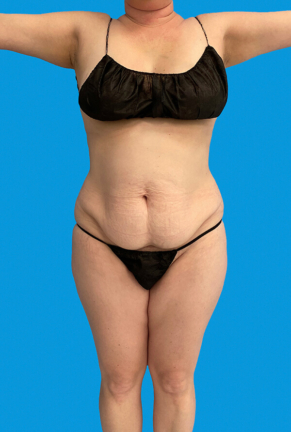
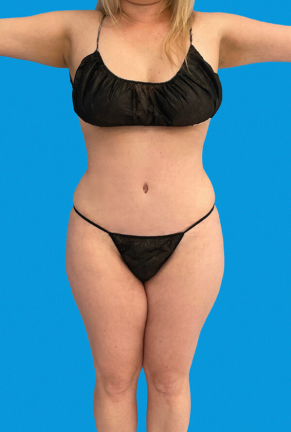
Before and three months after a full tummy tuck with muscle repair and pubic lift by Dr. Cat, front view: loose skin and 5.5 inches of separated muscle after three children; about 3.5 pounds of skin removed and the abdominal wall repaired. At three months the incision is at its reddest, itchiest stage and already hidden under the underwear line.
Why Is My Whole Body Itchy After Surgery?
Itching everywhere, rather than at the incision, is almost always the medication. Opioid pain medication (oxycodone, hydrocodone, codeine, tramadol) releases histamine throughout the body, and the itch is felt most on the face and nose; the drugs given during anesthesia can do the same for the first day, and antibiotics, especially the penicillin family, cause itching or hives in patients who react to them. The fix is to stop the drug that is causing it: most of Dr. Cat's patients never fill the prescription and take a few Tylenol instead, an oral antihistamine clears the histamine itch within a day, and the office can change an antibiotic. Hives, raised pink welts that come and go, mean an allergic reaction to a drug, a dressing or a suture and need a same-day call.
Itching After Breast Surgery, a BBL or a Labiaplasty
Breast Augmentation and Breast Lift
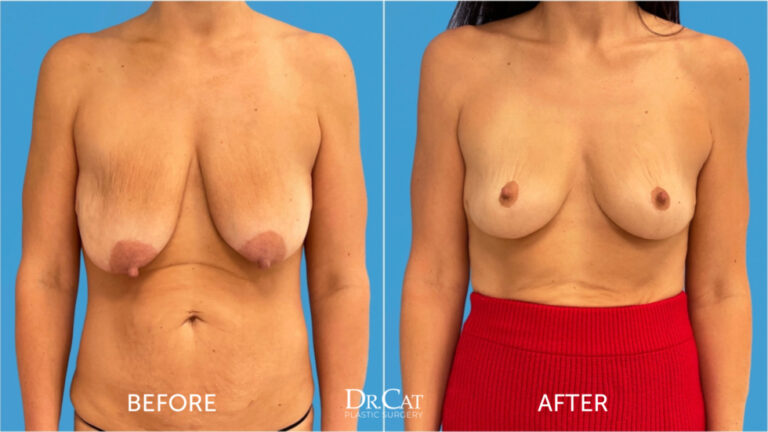
The skin of the breast and the nipple is numb, hypersensitive or both for weeks after surgery, and the nerve zings and itching of the second and third week are the nerves reconnecting. The surgical bra is worn day and night for about four to six weeks, so the itch under it is treated as under a garment: wash the bra, a cotton layer if needed, moisturizer on the skin around the incisions, and silicone sheets at the two-week visit. Dr. Cat's patients go home the same day after a breast augmentation and after a breast lift that is not a revision with implants, and most are on Tylenol alone within a day or two. Our breast augmentation recovery guide has the week-by-week.
BBL and Liposuction
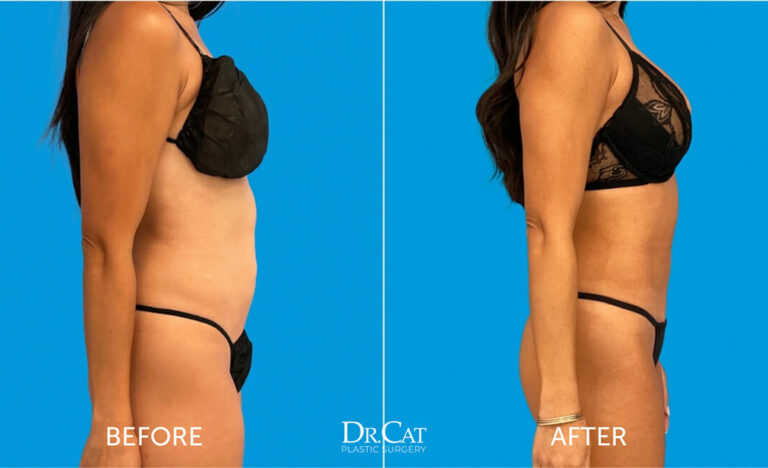
Liposuction cuts the skin nerves across every treated area, so the abdomen, waist and back are numb and then itchy in patches for two to three months, under a compression garment with foam that is worn for six weeks. Over the buttocks, the transferred fat is establishing its blood supply in the first weeks, and the skin over it tingles and itches as its nerves reconnect; more than 80 to 90 percent of the fat Dr. Cat transfers survives, and the itch says nothing about how much stays. Never scratch the buttocks, where the skin is numb and the fat beneath it is still fragile. The sitting and sleeping rules are in our BBL recovery guide.
Labiaplasty
After a labiaplasty the itch arrives at about three weeks, when the dissolvable sutures loosen and come away on their own at about three and a half weeks. Dr. Cat's first-week routine is Tylenol, antibiotic ointment and ice, and her rule for the shower is no scratching, rubbing or scrubbing of the area at any stage; loose cotton underwear and no tight clothing keep the edge comfortable until the sutures are gone. Wound edges pulling apart, fever, spreading redness or a foul-smelling discharge are the signs to call about. The operation and its timeline are on our labiaplasty page.
When Itching Is an Infection or an Allergic Reaction Instead
The healing itch is steady, eases week by week, and comes with skin that looks calm or a scar that looks pink. Call the office the same day for any of these:
- Infection: redness spreading outward from the incision, warmth over it, swelling that increases after day three, cloudy or foul-smelling drainage, an incision that opens, pain that worsens instead of easing, or a fever.
- Allergic contact dermatitis: an intensely itchy red rash, sometimes with tiny blisters, in the exact shape of the tape, the dressing, the skin glue or the garment's edge. It is treated by removing the product and calming the skin, not by treating the incision.
- Drug allergy: hives anywhere on the body, or a spreading flat rash, after a new antibiotic or painkiller. With swelling of the lips, tongue or face, wheezing or trouble breathing, call 911 first, then us.
Dr. Cat and her staff are available to her patients throughout recovery. A call about an itch that turns out to be nothing is always welcome; an early infection is far easier to treat on the day it starts.
Talk to Dr. Cat About Your Surgery
Start with a free 15-minute discovery call with our Patient Concierge, who answers your first questions and books your consultation. The consultation with Dr. Cat is $500 for a first consultation and $1,500 for a revision consultation, credited in full toward your surgery; out-of-town patients consult by private video through OnPatient, the practice's HIPAA-secure patient portal. Book a free discovery call to get started.