

Tummy tuck recovery takes about two weeks of real downtime, six weeks before full exercise, and six months for the final result. With Dr. Cat you walk the evening of surgery, most patients take a few Tylenol and no prescription pain medication, the drains come out at one to two weeks, you stand fully straight at two weeks, you are back to all daily activities at one month, and the incision fades to a thin white line by one year.
This guide follows that timeline week by week: what is normal, what to do, what to avoid and when to call us, with the general rules of tummy tuck surgery marked as such. For the operation itself, see the tummy tuck in Beverly Hills page; for the scar, the tummy tuck scar guide.
Tummy Tuck Recovery at a Glance
| Milestone | When, with Dr. Cat |
|---|---|
| First walk | The evening of surgery, at the aftercare recovery center |
| First post-op visit | The day after surgery |
| Standing almost straight; most drains out | One week |
| Standing straight; all drains out; cleared to fly home; scar treatment begins | Two weeks |
| All daily activities; light exercise such as walking | One month |
| Full exercise, including core work | Six weeks (three months for sit-ups, planks and crunches after a hernia repair) |
| Final result fully visible | Six months |
| Scar faded to a thin white line | One year |
What Affects Your Tummy Tuck Recovery Time
The operation matters most. A mini tummy tuck removes skin below the belly button only, so the early tightness is mild. A full tummy tuck with muscle repair lifts the skin up to the ribs and tightens the abdominal wall with a precise double-layer repair, which produces the pulled-tight feeling and the bent-over walk of the first week. An extended tummy tuck carries the incision around to the back, with more to protect and more swelling to clear. Your health sets the pace after that: Dr. Cat operates on patients at a stable weight, within 10 to 15 pounds of their goal, with a BMI of around 30 or less, and off nicotine, which narrows the vessels that keep the lifted skin alive (see the pre-op instructions).
Tummy Tuck Recovery Week by Week
Surgery day
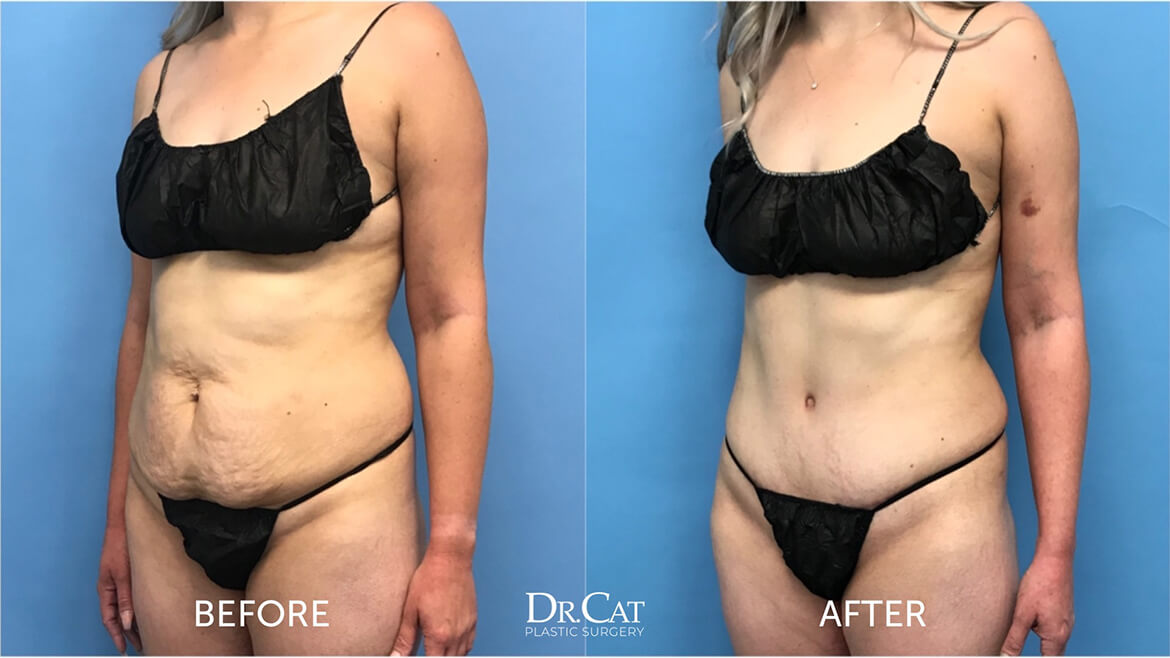
Dr. Cat performs one tummy tuck per surgical day, with a board-certified anesthesiologist for the whole case, in an accredited facility. You wake calmly, are fully awake after about an hour, and go to a plastic surgery aftercare recovery center, where nurses give your medication, monitor your vital signs and drains, and get you up for a first short walk that evening, slightly bent and with help. Normal: tightness and pressure rather than sharp pain. Do: sip water, and walk every other hour while awake to protect against a blood clot. Avoid: sitting up with your abdominal muscles, straightening fully, lying flat.
Days 1 to 3
The recovery center brings you to our office the next morning. Dr. Cat checks the incision, the belly button and the drains, and goes through every instruction with you and your caretaker. Most patients arrive with little to no pain and a few Tylenol behind them, minimal bruising and mild swelling under a comfortable compression garment. Normal: walking bent, needing help in and out of bed. Do: use a front-wheel walker so your back is not carrying the posture, and walk every other hour. Avoid: reaching overhead, twisting, lifting anything heavier than a plate. Call us if drain output suddenly rises or turns bright red, one side swells far more than the other, or you run a fever.
Week 1
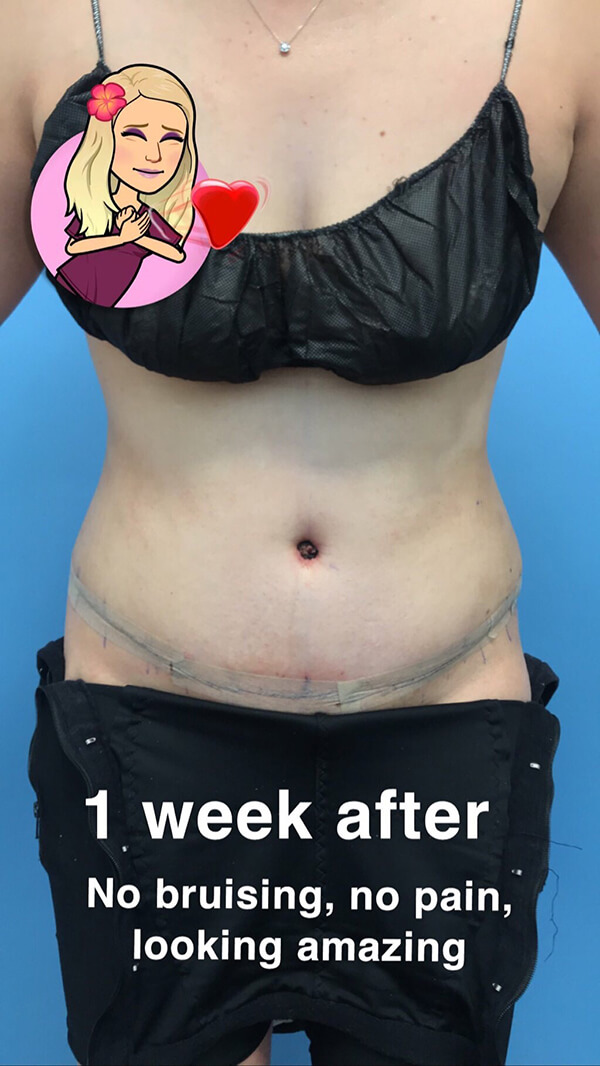
Your energy is returning, the incision is sealing, and you can stand almost straight. Dr. Cat sees you for the one-week visit, shows you how far to straighten, and removes all or almost all of the drains, gently and without pain. Most patients feel close to normal now, which is exactly when they need reminding to do only gentle walks. Normal: a tight band across the lower abdomen when you stand, numbness below the belly button, evening swelling. Avoid: driving, bending to lift, anything beyond walking. Call us for spreading redness or warmth, drainage that smells, a fever over 100.4 F, or calf pain.
Week 2
You are almost healed: you stand fully upright, any remaining drains come out, and you start scar treatment with the silicone strips Dr. Cat gives you. Patients who traveled for surgery are cleared to fly home. Normal: residual swelling, firmness along the incision, and a flat mood for a day or two now that the excitement has faded and the restrictions have not. Do: longer walks. Avoid: lifting children, vacuuming, carrying groceries, workouts. Call us for a new soft bulge that feels like water under the skin, which can be a seroma and is simple to treat early.
Weeks 3 to 4
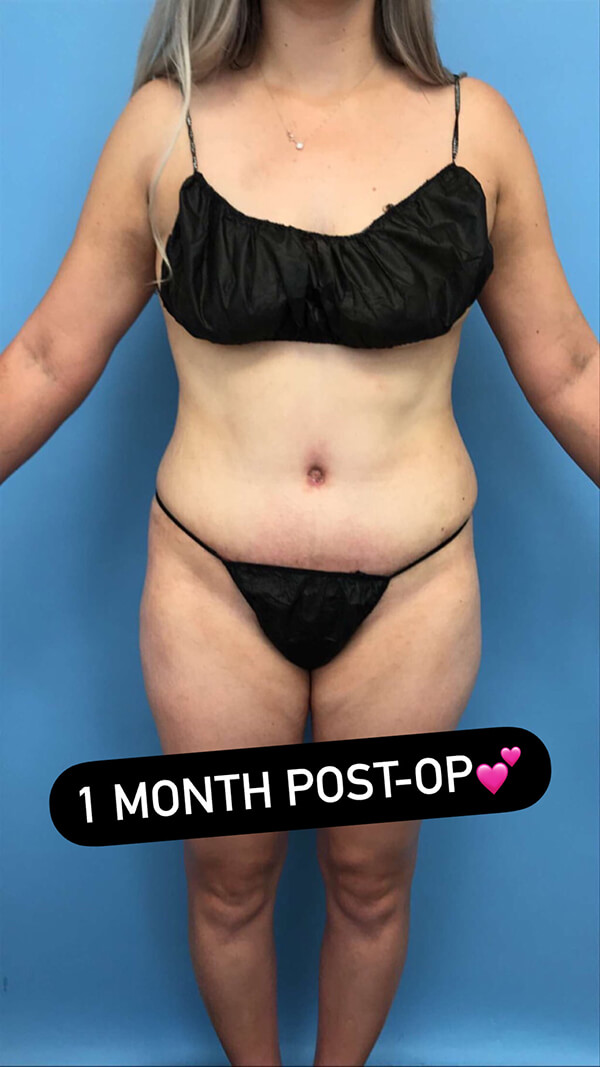
By one month you feel like yourself: you resume all daily activities, drive, return to work and add light exercise such as brisk walking. Dr. Cat sees you for the one-month visit, checks the incision, which is thin and healed, and reviews your scar treatment. Normal: a little swelling at the end of an active day. Avoid: core exercise, running, heavy lifting, and pools or hot tubs until cleared.
Weeks 5 to 6
Six weeks is the milestone for full exercise, including core work, unless a hernia was repaired during your surgery, in which case sit-ups, planks and crunches wait until three months. The silicone strips end and you continue with silicone gel; most visible swelling has settled and the incision is a pink line. Do: ease back into the gym with cardio and legs first, then core work. Call us if exercise brings a new bulge or a popping feeling in the abdomen.
Months 2 to 3
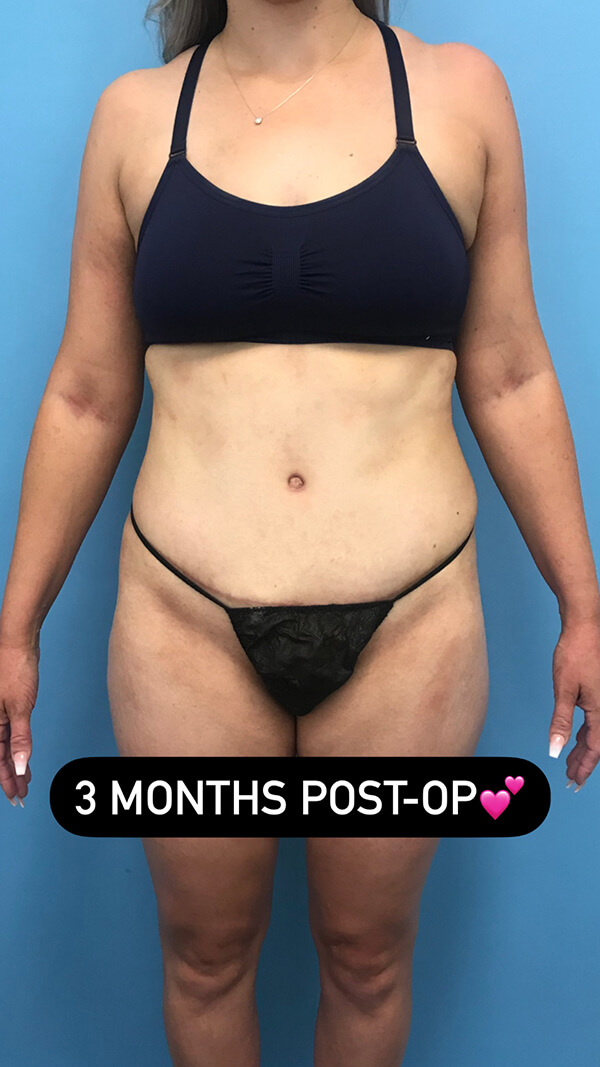
By three months there is no bulge, your waist is smaller, and clothes fit differently. Patients tell us their core feels stronger than before surgery and their back pain has gone. Dr. Cat sees you for the three-month visit and reviews your before-and-after photos with you; the incision is thin and fading and you continue with silicone gel. Normal: an evening fullness above the incision on long days, and a scar that still looks pink.
Months 6 to 12
At six months the result is fully visible, with an incision that is thin and fading; at one year it is a thin white line. A small patch of permanent numbness above the incision is common and harmless. The result lasts as long as your weight stays stable; a future pregnancy will likely stretch the repair. Our post on how to maintain your tummy tuck results covers weight, exercise and the timing of pregnancies.
Pain and Medication After a Tummy Tuck
With Dr. Cat's gentle technique, most patients need no prescription pain medication and take a few Tylenol in the first days. What you feel is tightness: the muscle repair pulls the abdominal wall together like an internal corset and the skin is re-draped tighter, so standing straight or coughing feels like the end of a hard core workout. It peaks in the first three days and is mostly gone by two weeks. As a general rule, anti-inflammatory painkillers such as ibuprofen are avoided around surgery because they increase bleeding, so add nothing without asking us. Numbness across the lower abdomen is expected: the small skin nerves are interrupted when the skin is lifted and regrow over months.
The Compression Garment
You wake in a comfortable compression garment and wear it continuously in the early weeks. It supports the muscle repair while the sutures take hold, applies even pressure so fluid does not pool under the lifted skin, and keeps the swelling down; it should never roll or bunch at the edges, so ask us to check the fit if it feels wrong. Our patients wear it for about six weeks, and Dr. Cat then tells you whether to move to a lighter second-stage garment or stop.
Drains: What They Do and When They Come Out
Dr. Cat uses drains after a tummy tuck. Lifting the skin off the abdominal wall creates a space where fluid collects; thin drains carry that fluid into small bulbs so the skin can settle back onto the wall and heal flat. At the day-one visit you learn to empty them and record the output, and within days the routine is automatic. All or almost all of the drains come out at the one-week visit, gently and without pain, and any that remain come out at two weeks. Our post on caring for drains after a tummy tuck covers the daily routine and showering with drains in place.
Walking Hunched Over and Standing Straight
You walk bent forward for the first week because the abdominal wall has been tightened and the skin closed under tension; bending keeps that tension off both while they gain strength, so the hunch is a sign the repair is doing its job. Dr. Cat recommends a front-wheel walker for that week so your back does not hold the posture, and a helper for getting out of bed so you never push up with your abdominal muscles. At one week she shows you how far to straighten; at two weeks you stand fully straight. Our post on being hunched over after a tummy tuck covers posture once you are upright.
How to Sleep After a Tummy Tuck
Sleep on your back with your upper body raised and your knees bent, at roughly 45 degrees, so the abdomen stays slightly flexed. A recliner is the easiest way to hold the position, and we recommend renting one if you do not own one. Plan on it for at least three weeks, then flatten gradually. Side sleeping returns when it no longer pulls, usually around four to six weeks.
Showering After a Tummy Tuck
Incisions need about 48 hours to seal, so the first shower is usually on day two or three, once we have cleared you. Use lukewarm water and a mild or antimicrobial soap, let the water run over the incision rather than scrubbing it, and keep the drain bulbs on a lanyard so they do not tug. No baths, pools, hot tubs or ocean until the drains are out and the incision is fully sealed; our post on showering after plastic surgery has the steps.
Diet, Water and the Stages of Swelling
Eat light in the first days, then normal meals with plenty of protein for tissue repair. Drink water through the day, skip alcohol and sodas in the early weeks, and keep salt low, because salt holds fluid in the tissue you are trying to settle. Our post on what to eat after a tummy tuck has the full list, including the supplements to stop before surgery.
Swelling follows a pattern. It peaks around the end of the first week and eases so that most visible swelling is gone by six weeks. After that, a fullness above the incision comes and goes for months, worse in the evening, because the lymphatic channels that drain the lower abdomen were interrupted when the skin was lifted and take time to reconnect; the last of it clears over six to twelve months.
Driving, Desk Work and Exercise
Driving waits until you can brake hard without pain and are taking no sedating medication; since most of Dr. Cat's patients never take prescription pain medication, that usually means the second week. Plan for two to four weeks away from a desk job: some manage laptop work from a recliner in the second or third week, and Dr. Cat clears all daily activities, including a full return to the office, at one month.
Exercise returns in stages: gentle walking from the first night, light exercise such as brisk walking at one month, including an easy treadmill walk with no incline, and full exercise at six weeks; after a hernia repair, sit-ups, planks and crunches wait until three months. Our post on exercise after a tummy tuck goes deeper, and Dr. Cat's rule is simple: if something causes swelling or discomfort, stop doing it and give it more time.
Sex After a Tummy Tuck
The general guidance is to wait until the incision is sealed, the drains are out and the tightness has eased, about four weeks for most patients, and to avoid positions that stretch or press on the abdomen until the six-week clearance. Dr. Cat gives you a specific answer at the two-week visit based on how you are healing.
The Belly Button and the Scar
In a full tummy tuck Dr. Cat creates a new belly button: centered where your natural one sits, an oval in proportion to your frame, with a dimple in the middle and the incision inset deep at its base. It looks swollen for two weeks and settles over months into a natural innie. The main incision sits low, in a gentle curve that hides under any underwear or bikini bottom. Scar treatment starts at the two-week visit with silicone strips for six weeks, then silicone gel; the scar is at its reddest between one and three months and fades to a thin white line by one year. The full protocol and the healing stages are in the tummy tuck scar guide.
Warning Signs: When to Call Us
Problems are rare and far easier to fix when we hear about them early. Call the office the same day for signs of infection: spreading redness or warmth around the incision, cloudy or foul-smelling drainage, a fever over 100.4 F, or pain that worsens after day three. Call for signs of a seroma, a pocket of fluid under the skin: a new soft bulge, a feeling of water moving, or swelling clearly greater on one side. Call for any opening of the incision.
Go to an emergency room, then call us, for signs of a blood clot: pain or swelling in one calf, chest pain, shortness of breath, or coughing up blood. A sudden sharp pain with a popping sensation or a new bulge in the abdominal wall can mean an internal suture has given way; our post on torn internal stitches after a tummy tuck explains what is done. If a tummy tuck performed elsewhere has not healed as it should, Dr. Cat sees patients for revision tummy tuck consultations.
Recovery After a Mini, Full or Extended Tummy Tuck
A mini tummy tuck removes skin below the belly button through a shorter incision, usually with no belly button incision and no muscle repair, so the recovery is easier. It suits a narrow anatomy, laxity below the navel only, and most patients who ask Dr. Cat about a mini turn out to need a full tummy tuck with muscle repair; an easier recovery is no reason to choose an operation that cannot fix your anatomy. Our comparison of mini vs full tummy tuck recovery sets the two side by side.
The full tummy tuck with muscle repair is the timeline on this page; the muscle repair for diastasis recti is what produces the tightness of the first week. An extended tummy tuck, usually after major weight loss, carries the incision around to the back, so expect the swelling, the drains and the fatigue to run toward the longer end of every range above. Loose skin after pregnancy or weight loss is covered on our apron belly page.
Recovery With Liposuction or as Part of a Mommy Makeover
Conservative liposuction of the love handles or the mons pubis can be done in the same surgery and adds little to the timeline beyond some bruising in those areas. Dr. Cat does not perform aggressive or 360-degree liposuction with a tummy tuck, because the blood supply to the lifted abdominal skin runs through the fat; lipo 360 is a separate surgery. She also never performs a Brazilian butt lift on the same day as a tummy tuck, because a BBL patient must keep pressure off the buttocks and a tummy tuck patient off the abdomen.
A mommy makeover with Dr. Cat is staged on separate days for a related reason: a tummy tuck is never done on the same day as a breast augmentation with implants, a breast lift with a tummy tuck is staged, a labiaplasty is never done the same day as a tummy tuck, and a BBL is never done the same day as either a tummy tuck or a breast augmentation. After a tummy tuck you push up with your arms to get out of bed; after breast surgery you cannot use your arms, so you rely on your core. Doing both at once makes it hard to get up and walk, and walking prevents blood clots. Each stage has its own recovery, and both are quoted together at the consultation.
Recovery Tips for Out-of-Town Patients
Many of Dr. Cat's patients travel to Beverly Hills for surgery. You arrive two to three days before surgery for the final pre-operative visit, spend the first night at the aftercare recovery center, and stay in Los Angeles for at least a week, usually two for a tummy tuck, so that Dr. Cat can see you at the day-one, one-week and two-week visits; she clears you to fly home at two weeks, once the drains are out. You need an adult with you for the whole stay; if no one can travel with you, we help arrange a caretaker. See out-of-town patients for the consultation and clearance steps and plan your stay for our partner hotel and post-operative nursing options.
Tummy Tuck Recovery Must-Haves
Have these at home before surgery day:
- A front-wheel walker for the first week
- A recliner, rented if needed, or a wedge pillow and knee pillows
- Your compression garment and a spare
- Gauze pads and paper tape
- Tylenol, and nothing anti-inflammatory unless we say otherwise
- A lanyard or drain belt for showering
- Broths, yogurt, easy protein and a large water bottle
- Loose, front-opening clothes and slip-on shoes
- A grabber tool for anything on the floor
- Someone to stay with you for the first days and to lift children for six weeks
Frequently Asked Questions About Tummy Tuck Recovery
How long is tummy tuck recovery?
About two weeks of real downtime. With Dr. Cat you walk the evening of surgery, the drains are out and you stand straight at two weeks, you return to all daily activities at one month and full exercise at six weeks, the result is fully visible at six months, and the scar fades to a thin white line by one year.
How painful is a tummy tuck recovery?
Less than most patients expect. Most of Dr. Cat's patients take a few Tylenol and no prescription pain medication. The first three days feel tight and sore, like the end of a hard core workout, and the tightness eases over two weeks as the muscle repair settles.
What I wish I knew before getting a tummy tuck?
Patients tell us the same things: how much help you need getting out of bed in the first days, that a walker and a recliner are worth having, that swelling returns in the evenings for months, that there is a low day or two around week two, and that the scar looks redder at two months than at two weeks before it fades.
How long to sleep elevated after a tummy tuck?
On your back with the upper body raised and the knees bent, at about 45 degrees, for at least three weeks. Then flatten gradually as the tightness eases; most patients sleep flat or on their side comfortably by four to six weeks.
When can I walk on a treadmill after a tummy tuck?
Gentle walking starts the first night, on the ground and with support. An easy treadmill walk with no incline is fine once Dr. Cat clears light exercise at one month. Faster walking, incline and running wait for the six-week clearance.
When can I fly home after a tummy tuck?
Dr. Cat clears out-of-town patients to fly home at the two-week visit, once all the drains are out and you are standing straight. Wear the garment, book an aisle seat and walk the aisle every hour on the flight.
When do the drains come out?
Dr. Cat removes all or almost all of the drains at the one-week visit, gently and without pain, and any that remain at two weeks. The timing depends on how much fluid each drain is still collecting.
When can I exercise or lift my kids?
Walking only until one month, light exercise such as brisk walking from one month, and full exercise including core work at six weeks. Heavy lifting, including small children, waits for the same six-week clearance. After a hernia repair, sit-ups, planks and crunches wait until three months.
Why am I walking hunched over?
Because the abdominal wall has been tightened and the skin closed under tension, and bending forward keeps the strain off both while they heal. Dr. Cat recommends a front-wheel walker for the first week, and most patients stand fully upright at two weeks.
When can I sleep flat?
After about three weeks in the reclined position you can flatten the bed gradually, as long as lying flat does not pull on the incision. Most patients sleep flat by four to six weeks; Dr. Cat confirms the timing at your visits.
How long does tummy tuck swelling last?
Most visible swelling is gone by six weeks. A fullness above the incision then comes and goes for months, worse in the evening and after long days, and clears over six to twelve months. The compression garment, walking and low salt all help.
Talk to Dr. Cat About Your Tummy Tuck
Start with a free discovery call with our team, or call (310) 858-8808; the consultation with Dr. Cat is $500, or $1,500 for a revision consultation, credited toward your surgery. Look through the tummy tuck before and after photos, read patient recovery stories, see the tummy tuck cost guide, and read about the operation on the tummy tuck in Beverly Hills page. Our other patient guides cover the scar, other recoveries and costs.
Medically reviewed by Dr. Cat Begovic, MD, FACS, board-certified plastic surgeon. Last reviewed September 2026.